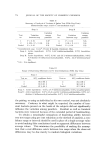
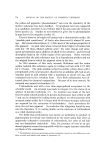
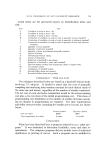
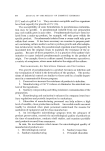
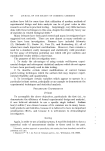
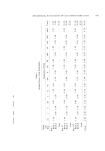
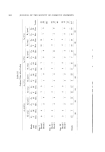
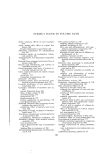
82O JOURNAL OF THE SOCIETY OF COSMETIC CHEMISTS Table II Analysis of Variance Source of Variation DF SS MS F' Between concentrations (A) 1 Between types of patch (B) 1 Between contact times (C) 1 Between observation times (D) 1 Concentration X patch type (AB) Concentration X contact time (AC) 1 Concentration X observation time (AD) 1 Patch type X contact time (BC) 1 Patch type X observation time (BD) 1 Contact time X observation time (CD) 1 Concentration X pressure X contact time (ABC) 1 Concentration X pressure X observation time (ABD) 1 Concentration X contact time X observation time (ACD) 1 Prcssure X contact time X observation time (BCD) Among replicates ABCD (within replicates, between blocks) Between block differences Total among blocks Residual (error) Total 1 2 1 2 __ I•l I__[ __ 47 o. 5208 o. 0469 9.6302 o. 1875 o. 7500 o. 0208 o. 1302 o. 1302 o. 02o8 o. 1875 o. 0208 o. 6302 0.0469 0. 0000 12.3228 8.0026 1 1719 3 7109 0.5208 0.0469 9 6302 0 1875 0 7500 0 0208 0 1302 0 1302 0 O2O8 0 1875 0 0208 0 6302 0.0469 0.0000 4.0013 1.1719 1.8555 12 8854 2.5771 6 5366 0.2335 31 7448 ... 2.23 1 41.24 1 3.21 1 1 1 1 1 1 2.70 1 1 2.16 1 . . . Sig. (P)'* Notes: (1) All main effects and interactions except ABCD tested against residual. (2) ABCD and replicates tested against the "between block differences M.S." (3) Definitions of column head symbols: DF = degrees of freedom, SS = sum of squares of deviations from the mean, MS = mean square, F' = value obtained in F test of significance, and P = probability of the observed difference having occurred by chance. "This column shows the probability that the given effect is not real. If P (probability of Ho or unreality) was over about 0.15, no entry was made in this column and the effect was considered "not significant."

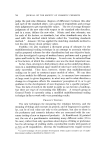
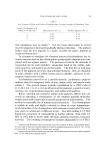
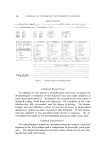
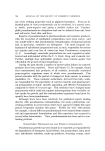
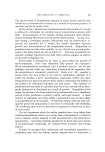
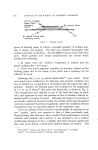
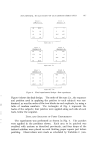
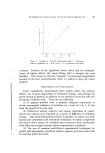
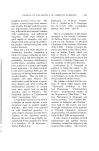
STATISTICAL EVALUATION OF CUTANEOUS IRRITANTS 821 2.00 -- • Lgo • •o .-- 140 ._ = 120 "Pressure" Patch / B I "Regular" Patch o/ At D, (Zhrs. Obs. Time) 2.00 180 160 1.40 120 o B2 •..' Pre$sure" Patch/ ß I "•egu or" Pa c At Dg (18hrs. Obs. Time) Loo I I Ioo I A• A 2 A• (• O/o) (4%) (• O/o) Irritant Conc., % Figure ,5. Triple interaction (ABD). Concentration X type of patch X ohs. time I (4%) Irritant Conc., % greater irritation effect with the pressure patch, the difference, if any, between pressure and regular patches is the same at both concentrations. DESIGN OF SECOND EXPERIMENT The second design was worked out and run after noting and dis- cussing the findings just given. Several important differences were to be built into this new experiment. From the beginning, it had been felt desirable to run an experiment in which concentration was used at more than two levels, so that the nature of the concentration response (e.g., curved or linear) could be studied. Such a procedure carries additional advantages in that it is often possible to obtain greater sensitivity in the analysis of the data. Additional levels of concentration were usable only if one or more of the original four variables was eliminated and no new ones added, or if the new experiment was made larger. For practical reasons, the latter was undesirable. Since contact time had been found not to interact with any of the other variables in the first experiment, it was possible to eliminate this factor from the second one, because all neces- sary information about its main effect response was already available.
Purchased for the exclusive use of nofirst nolast (unknown)
From: SCC Media Library & Resource Center (library.scconline.org)