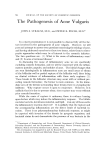
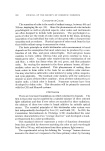
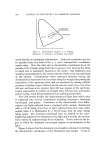
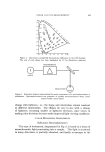
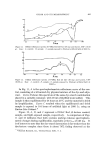
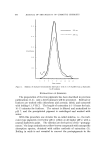
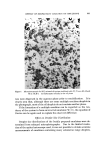
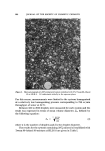
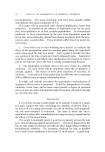
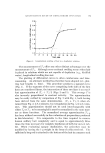
692 JOURNAL OF THE SOCIETY OF COSMETIC CHEMISTS Figure 8. Microphotograph of a 30% mineral oil system stabilized with 5% Tween 80-Arlacel 80 at HLB 6. All surfactants initially in the aqueous phase For this reason, measurements were limited to the systems homogenized at a relatively low homogenizing pressure corresponding to 786 cc/min throughput of water at 24 øC. Between 500 to 2000 droplets were measured for each system and the result was expressed in terms of mean volume diameter, din, defined by the following equation: dm= (2) • Zn where n is the number of droplets and d is the droplet diameter. The results for the systems containing 30% mineral oil stabilized with Tween 80-Arlacel 80 mixture at HLB 10 are given in Table I.

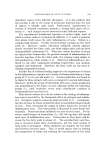
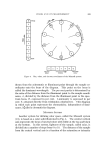
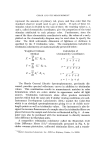
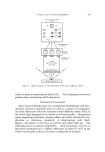
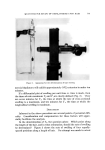
EFFECT OF SURFACTANT LOCATION ON EMULSIONS 098 Table I Effect of Initial Surfactant Locations on Mean Droplet Diameter (Tween 80-Arlacel 80 at HLB 10, All Arlacel 80 Dissolved in the Oil Phase Prior to Emulsification) Combined Surfactant Concentration in the System (% by weight) Tween 80 Initially in the Aqueous Phase (% of total) Mean Volume Diameter, d• (cm) 1 100 2.8 X 10 -3 1 40 2.8 X 10⁻³ 1 0 4.8 X 10 -3 8 100 2.8 X 10 -3 3 20 2.5 X 10 -3 3 0 3.2 X 10⁻³ Although the amount of data presented here does not allow generali- zation, for the systems investigated, however, there is a tendency to produce a coarser emulsion as less hydrophilic surfactant is present in the aqueous phase prior to emulsification. A possible explanation for the observed difference in the droplet size distribution may be given from the surfactant migration viewpoint. In order that the freshly formed droplets remain stable, the surfactant molecules must be adsorbed at the oil-water interface. From the dy- namic surface tension measurements made by a number of authors using the oscillating jet method, it is evident that a finite time is required for the system containing surfactants to reach its surface equilibrium (12- 14). Conceivably, the presence of a surfactant in the oil phase or aque- ous phase prior to emulsification can affect the accessibility of the sur- factant at the interface and hence the droplet size distribution. Effect of Emulsion Stability The effect of the initial surfactant location on emulsion stability was studied both by a shaking method as well as by using the emulsification vessd described in Fig. 1. In the shaking experiment, the oil phase and the aqueous phase con- taining various amount of surfactants were shaken together in an en- closed jar using a mechanical shaker for a predetermined length of time. The emulsion thus formed was then poured into a graduated cylinder and the amount of separation was observed as a function of time. However, in many systems, shaking produced a considerable amount of foam which made it difficult to interpret the data obtained. For example, in a series of experiments using Tween 80 and Arlacd 80, the emulsion prepared by
Purchased for the exclusive use of nofirst nolast (unknown)
From: SCC Media Library & Resource Center (library.scconline.org)