TOXICOLOGY OF HEXACHLOROPHENE 179

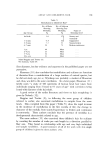
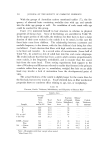
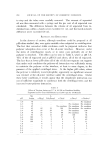
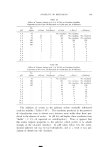
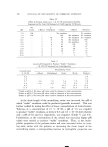
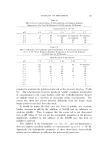
180 JOURNAL OF THE SOCIETY OF COSMETIC CHEMISTS In the rats, the skin area treated was about 9 X 2 cm, ,in the guinea pigs 10 X 3 cm. Approximately 10% of the body surface of the rabbits was covered. It should be mentioned that isopropyl myristate alone applied to the shaved skin of rabbits in daily doses of 0.5 ml/kg produced severe irritation single doses were without effect. Urine analysis was normal and failed to show any evidence of metabolic derangement or kidney damage after the application of hexachlorophene in isopropyl myristate or of isopropyl myristate alone. No changes in the hemoglobin or red blood' cell counts were noted there was a significant increase in the total white blood cell count of the rabbits which received 6 and 9 ml/kg. The results of these studies show that solutions of hexachlorophene are irritating to the shaved skins of experimental animals however, subsequent tests on human skin failed to show irritation. It will be noted that the damage to the skin of the animals was often severe enough to lead to absorption of the hexachlorophene and thus to systemic toxicity and even death. From a study (30) with radioactive hexachlorophene, it would appear that hexachlorophene is not absorbed to any significant degree when applied to the shaven, intact skin of rats. After several washings with a soap containing 2% hexachlorophene-C •4, smnples of fat and liver, believed to be the most likely sites of systemic accumulation, were taken from 7 rats after varying periods of time following washing. Samples of the dried tissues were burned to carbon dioxide which was precipitated as barium carbonate. The counts of this substance were identical with the background values showing that there was no radioactive hexachlorophene present in the tissues. Kehoe (31 ) made a study of the effects of hexachlorophene when put on the abdominal skin of rabbits over longer periods. Animals subjected to applications of a solution of hexachlorophene in dimethyl phthalate at a dosage of 75 mg/kg on 5 days weekly for 7 weeks exhibited slight retarda- tion in growth. There was moderately severe irritation of the skin no specific microscopic changes in the tissues were noted. When 20 mg/kg of hexachlorophene was applied for 18 weeks, the rabbits showed neither systemic reactions nor pathologic alteration of tissues induced by the absorp- tion of the compound. To determine the irritating and sensitizing properties of products for the human skin, various methods of patch testing were employed. The pro- cedure recommended by Schwartz et al. (32) was used by Traub et al. ($$) on about 600 subjects with 0.5 and 1% hexachlorophene in petrolatum. The particles were applied in the usual manner and the tests were read after 5 days. The results were all negative. To find out whether sensitivity
Purchased for the exclusive use of nofirst nolast (unknown)
From: SCC Media Library & Resource Center (library.scconline.org)