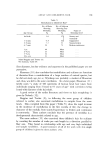
TOXICOLOGY OF HEXACHLOROPHENE 177 and 25 mg/kg remained well during the two-week test period. More than 25 mg/kg caused death within 30 minutes amidst convulsions and respiratory paralysis. REACTIONS IN HUMANS Oral toxicity in humans does not present a great problem as long as hexachlorophene is not ingested accidentally. Cases of poisoning, caused by improper use of hexachlorophene-containing preparations, have been reported. Wear et al. (20) described 10 preoperative patients who swal- lowed an emulsion with 3 •o hexachlorophene (pHisoilex©) '• which was mistaken for milk of magnesia. The major toxic symptoms were anorexia, nausea, vomiting, abdominal cramps, and diarrhea. Dehydration was some- times severe and adequate fluid and electrolyte replacement was essential. Lustig (21) reported a case where a girl, aged 6 years, died 9 hours after the ingestion of about 4 or 5 oz. of pHisoilex, or approximately 250 mg/kg of body weight. The autopsy revealed congestion of organs and severe inflammation of the stomach. No specific antidote to hexachlorophene is known. Another case of hexachlorophcne intoxication after continued oral admin- istration of pHisoilex to an infant was reported by Pilapil (22). The infant received approximately 37 mg/kg per day for one week. He recovered completely with no known residual effect from the poisoning. A case of poisoning in an infant where a 3 c/o hexachlorophcne emulsion was put on the skin after a bath and left there was cited by Herter (23). After four days of these applications, slight twitchings of arms, legs, and face were observed which progressed to convulsions. As the skin of the buttocks and the face became severely cxcoriated, the toxic symptoms were caused by absorption of the hexachlorophene through the broken skin. Carrol et al. (24) showed that the absorption of radioactive hexachloro- phene-C x4 in pHisoilex through lacerated or burned rat tails is much greater than the penetration through the intact, normal skin. In view of these observations, hexachlorophene-containing preparations should not be left on damaged skin, and especially on large denuded areas of burns where systemic toxicity may lead to convulsions. If products with hexachlorophene are being used on burns to protect against the spread of infection, they must be washed off thoroughly after a short period of contact. To our knowledge, hexachlorophene has not been employed orally for therapeutic purposes, except in China. In that country, a group of in- * Winthrop Laboratories, New York, N.Y.

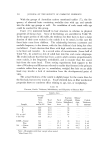
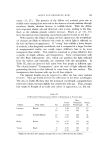
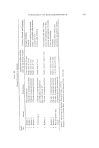
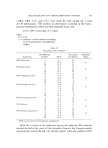
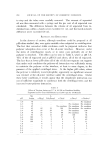
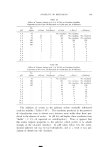
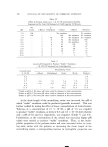
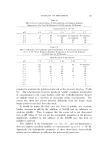
178 JOURNAL OF THE SOCIETY OF COSMETIC CHEMISTS vestigators (25) have started to administer it successfully for the treatment of a parasitic infestation, clonorchiasis sinensis, especially in children. At a dosage of 20 mg/kg per day for one, two, and three successive days, the toxic symptoms were not severe they were most pronounced where the drug was given for three days. The toxicity was noted mainly in the gastro- intestinal tract in form of diarrhea, mild abdominal pain, and vomiting. Apparently there were no toxic effects to the liver and kidney. A single dose of 20 mg/kg given in two equal portions is considered safe. Similar toxic reactions were observed by another group in China (26) in 2 healthy volunteers and 5 clonorchiasis patients. These investigators state that hexa- chlorophene, when dissolved, seems to be fairly rapidly absorbed through the intestinal wall into the blood stream. On the other hand, its excretion in the urine is rather slow. However, the total amount of the drug absorbed appears to be small as obzervations on cats indicate that over 80% of the ingested hexachlorophene was excreted as such in the stool. Similarly, Wit and Van Genderen (27), who gave radioactive hexachlorophene (labeled with C TM in the methylene bridge) orally to rabbits and rats for metabolic studies, found that most of the radioactivity appeared in the feces, partly as unchanged hexachlorophene and partly as unidentified metabolites. Only in rabbits was a considerable part of hexachlorophene excreted in the urine. In cows, where unlabeled hexachlorophene was used, the urine contained very little or none. EYE IRRITATION In view of its use in shampoo and other hair preparations which accidentally might come into the eye3, hexachlorophene was studied (28) for potential eye mucosa irritation. As neither hexachlorophene nor its monotodium salt is sufficiently soluble in water, a solution of 2% of the monosodium salt in 40% (by weight) of aqueous propylene glycol was re-ted in the eyes of rabbits according to the method of Draize et al. (29). It was found that a single instillation of 0.1 ml of the solution into the conjunctival sac of the rabbit's eye is nonirritating. DERMAL TOXICITY As the preponderant use of hexachlorophene is as an antiseptic or deodorizing topical agent, it is of prime importance to know whether it is irritating or sensitizing to the human skin. Data from rather limited initial studies on animals are presented in Table III.
Purchased for the exclusive use of nofirst nolast (unknown)
From: SCC Media Library & Resource Center (library.scconline.org)