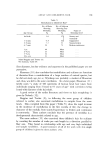
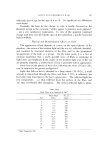
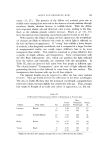
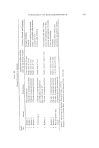
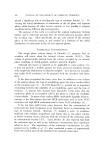
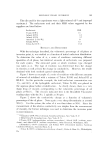
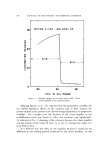
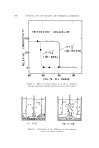
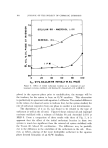
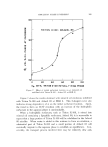
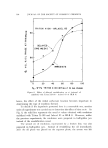
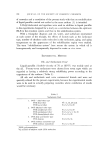
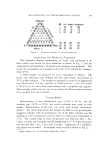
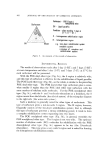
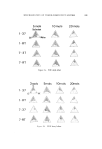
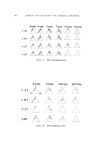
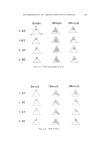
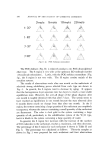
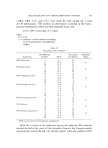
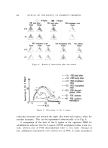
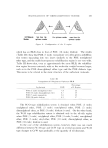
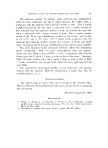
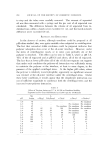
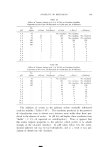
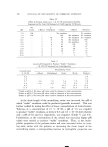
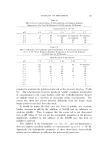
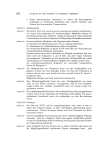
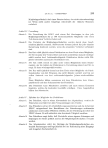
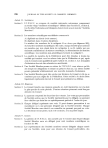
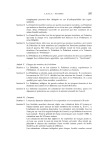
SOLUBII,IZATION OF THREE-COMPONENT SYSTEM 2ll 2-Oct I•nol I POE oleyl ether 10mols 15mols 20mols S. POE oleyl ether 5mols 7mols 10mols POE dinonylphenyl ether 10mols 15mols 20 mols Figure 7. POE dinonylphenyl ether 5mols 10 mols 15mols Result of observations on the solubilization state of 2-octyl dedecanol and squalane tration of the surfactant from 4 to 12• (1). The optimum EO molecule numbers for emulsification and solubilization thus obtained are compared in Table IV. Table IV Comparison of the Optimum EO Molecule Number for Emulsification and Solubilization The Optimum EO Molecule Number For Emulsification For Solubilization EO EO Moleculc Molccule Oil Surfactant Numbcr HLB Number HLB Liquid POE oleyl ether 5 6.7 7 8.3 paraffin POE dinonylphenyl ether 10 8.7 10 8.7 2-Octyl POE oleyl ether 7 8.3 15 12.0 dodecanol POE dinonylphenyl ether 12 9.6 15 10.7 Squalane POE oleyl ether 5 6.7 7 8.3 POE dinonylphenyl ether 10 8.7 10 8.7 As shown in Table IV, the optimum HLB for solubilization was larger than that for emulsification by 1 to 3. When the surfactant is more hydrophilic than at the optimum number of EO molecules, the viscosities of the solubilization and emulsion regions in the triangular diagram become as shown in Fig. 8 in most of the cases studied.

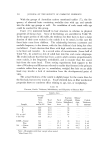
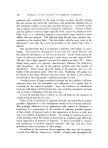
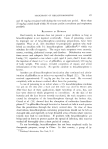
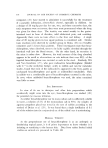
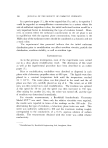
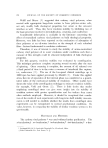
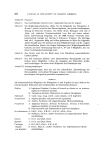
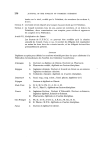
212 JOURNAL OF THE SOCIETY OF COSMETIC CHEMISTS 0il Surfactant /• S ... SolubilizatioRegion / .,,•, E '--Emulsion Region /S. ,,," • s... solid state liquid state Water Figure 8. The state anti the viscosity of samples when hydrophilic surfactants are used The solubilization systems appear in a region which is rich in surfactant. In this region, the system containing a relatively large amount of water (in the upper right region in the diagram) appears as a transparent gel. On the other hand, the system containing a relatively large amount of oil (in the upper left region in the diagram) appears as a transparent liquid. The emulsion systems are formed in a region containing a sin all quantity o[ the surfactant. The system containing a large quantity of oil (in the lower left region in the diagram) forms O/W type emulsions with a large quantity o[ the internal phase, and gives solid emulsions. On the other hand, the system containing a large quantity of water (in the lower right region in the diagram) forms O/W type emulsions with a large quantity of the external phase, and gives liquid emulsions. SUMMARY Solubilization experiments were carried out on a three-component system of oil-water-surfactant using liquid paraffin as the oil and 27 surfactants selected froin seven types which are regarded as having a relatively strong' solubilizing power. Four types of surfactants, that is, the POE oleyl ether type, POE lauryl ether type, POE dinonylphenyl ether type, and POE dioleate type were found to have a strong solubilizing power and form a wide homogeneous solubilization region (the S region).
Purchased for the exclusive use of nofirst nolast (unknown)
From: SCC Media Library & Resource Center (library.scconline.org)