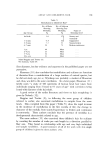
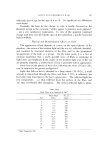
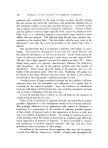
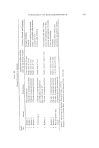
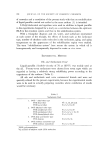
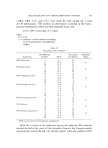
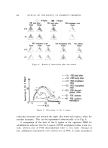
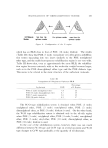
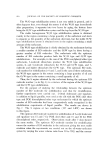
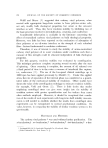
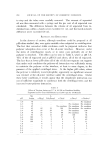
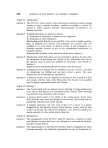
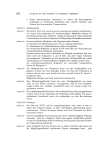
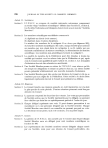
218 JOURXAL OF THE SOCIETY OF COSMETIC CHEMISTS to stop and the tubes were carefully removed. The amount of separated oil was then measured with a syringe and the per cent of oil separated was calculated. The difference between the volume of oil separated from in- dividual runs within a batch never exceeded 0.1 ml, and the batch-to-batch difference never exceeded 0.4 ml. RESULTS AND DXSCUSSXOr• In the absence of amincs, although emulsions could be prepared at all pH values studied, they were quite unstable when subjected to centrifugation. The fact that somewhat stable emulsions could be prepared indicates that polymer adsorption does occur at the oil-water interface. However, under the stress of centrifugation much, or in some cases probably all, of the polymer is desorbed. This effect can be seen in Table I, where at pH 5.4, 435/0 of the oil separated and at pH 6.6 and above, all of the oil separated. The fact that at lower pH values all of the oil did not separate out suggests that under such conditions the polymer-oil interaction was sufficiently strong to maintain the polymer at the interface, at least to some degree, in the presence of the applied centrifugal stress. At the higher pH values, where the polymer is relatively more hydrophilic, apparently no significant amount was retained at the oil-water interface under thc centrifugal stress. Under thesc latter conditions, it would appear that the oil-polymer interaction was not of sufficient magnitude to counteract both the centrifugal stress and the increased water-polymer interaction. Table I Effect of Various Amines at 2.7 X 10-aM on Emulsion Stability Expressed as Pcr Cent Oil Releascd at 13,000 rpm for 30 Minutes No 2- pH Amine n-Hcxy I Ethylhexyl •-Octyl n-Decyl •-Dodccyl 3.8 78 .......... No emulsion 4.2 70 ....... No emulsion No cmulsion 4.6 69 .... No emulsion No emulsion No emulsion 5.0 65 62 35 100 No emulsion No cmulsion 5.4 43 66 29 99 No emulsion 100 5.8 70 55 l 9 88 No emulsion 96 6.2 95 23 15 68 100 94 6.6 100 3 9 27 87 82 7.0 100 3 2 8 72 42 7.4 100 4 2 4 19 7.8 ... 4 2 4 5 4 8,2 ... 5 I 3 3 4 8.6 ... 5 1 3 3 6 9.0 .......... 3 ... 9.4 .......... 3 ...

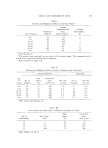
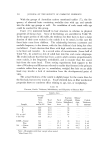
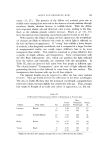
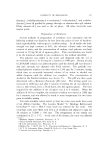
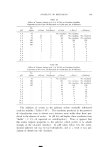
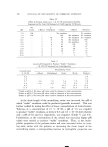
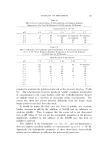
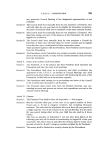
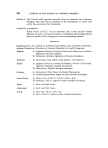
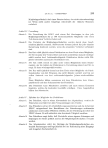
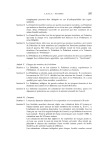
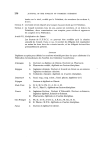
STABILITY OF EMULSIONS 219 Table II Effect of Various Amines at 5.4 X 10-aM on Emulsion Stability Expressed as Per Cent Oil Released at 13,000 rpm for 30 Minutes No 2- pH Amine n-Hexyl Ethylhexyl n-Octyl n-Decyl n-Dodecyl 5.4 5.8 6.2 6.6 7.0 7.4 7.8 8.2 8.6 9.0 9.4 9.8 10.2 43 70 95 100 100 100 .... No emulsion No emulsion ... 66 6 100 No emulsion No emulsion 17 3 88 No emulsion No emulsion 3 3 71 100 100 3 3 43 97 97 3 3 6 50 75 3 2 4 22 27 3 2 4 6 9 3 2 4 3 6 .. 2 3 3 5 .. 2 3 3 4 .. 1 2 3 4 .... l 3 4 Table Ill Effect of Various Amines at 8.1 X 10⁻³M on Emulsion Stability Expressed as Per Cent Oil Released at 13,000 rpm for 30 Minutes No 2- pH Amine n-Hexyl Ethylhexyl n-Octyl n-Decyl n-Dodecyl 6.2 6.6 7.0 7.4 7.8 8.2 8.6 9.0 9.4 9.8 0.2 0.6 95 100 100 100 .. 4 No emulsion ... No emulsion 2 3 100 No emulsion No emulsion 2 2 92 No emulsion No emulsion 1 2 80 100 100 1 2 63 87 75 2 2 46 47 56 3 2 30 27 44 3 2 14 17 31 3 2 9 11 23 3 2 6 6 17 3 2 4 3 11 .. I 2 3 3 The addition of amines to the polymer system markedly influenced emulsion stability (Tables I-IV). The emulsions produced in the presence of n-hexylamine were in almost every in•:tance more stable than those pro- duced in the absence of amine. At ?H 6.6 and higher, these emulsions were "stable" ( 5• oil separated on centrifugation). Thus, it appears that this amine imparts properties to the polymer which permit it to adsorb strongly at the oil-water interface. At pH values below 6.6, the n-hex- ylamine--polymer salt may be too hydrophobic, and as a result it may pre- cipitate or desorb into the oil phase.
Purchased for the exclusive use of nofirst nolast (unknown)
From: SCC Media Library & Resource Center (library.scconline.org)