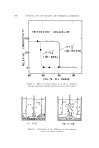
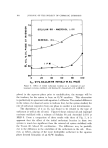
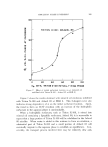
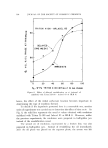
216 JOURNAL OF THE SOCIETY OF COSMETIC CHEMISTS Wolff and Meyer (1) suggested that carboxy vinyl polymers, when reacted with appropriate long-chain amines to form polymer-amine salts, not only modify bulk rheological properties, but orient at the oil-water interface as well. Thus, they favor emulsion stability by inhibiting two of the basic processes involved in demulsification, creaming, and coalescence. Considerable information is available in the literature concerning the effect of neutralized carboxy vinyl polymers on bulk rheological properties. However, very little has been reported on the mechanism of adsorption of these polymers at an oil-water interface or the strength of such adsorbed films--factors fundamental to emulsion coalescence. Therefore, it was of interest to study the stability of amine-neutralized carboxy vinyl polymer oil in water emulsions under conditions such that a measure of film strength could be obtained independent of bulk rheological properties. For this purpose, emulsion stability was evaluated by centrifugation. This technique produces complete creaming several seconds after the start of spinning. Once creaming is complete, the amount of oil released over a fixed period of time is in the main a measure of interfacial film rupture, i.e., coale,•cence (2). The use of the low-speed clinical centrifuge up to 3600 rpm has been applied previously by Merrill (3). Under this applied stress, the rate of separation of the internal phase was considered as a quanti- tative index of the mechanical stability of emulsions. Other studies have shown the value of the centrifugation technique to estimate emulsion atability, for example, Vold and Groot (2). There is little doubt that studies employing centrifugal stress can give some insight into the stability of emulsion systems with greater quantification and less tedium than many other methods employed. However, it should be recognized that correla- tion of the results of such experiments with long-term shelf stability measure- ments is still needed to establish whether the results from centrifugal stress experiments can be extrapolated to normal gravitational conditions. Its value, however, in comparing the stability of similar emulsion systems is lets questionable. MATERIALS AND METHODS The carboxy vinyl polymer •' was used without further purification. The n-butylamine,•' sec-butylamine, • iso-butylamine, • tert-butylamine, • n-hex- Carbopol 941, B. F. Goodrich Chemical Co., Cleveland, Ohio. Fisher Scientific Co., Fair Lawn, N.J.

STABILITY OF EMULSIONS 217 ylamine,• 2-ethylhexylamine,'• n-octylamine, •' n-decylamine, • and n-dodec- ylamine :1: were all purified by passage through an alumina-silica gel column. White mineral oil õ was used as the oil phase. All other chemicals were reagent grade. Preparation o[ Emulsions Several methods of preparation of emulsions were attempted and the following method was found to be best from the point of view of batch-to- batch reproducibility with respect to stability testing. In all studies the ionic strength was kept constant at 0.01, the oil-water volume ratio was kept constant at unity, and the concentration of carboxy vinyl polymer was kept conztant at 50 mg/50 ml of aqueous phase. This concentration was found to be the minimum needed to give emulsions by the method described. The polymer was added to the water and dispersed with the a' d of an overhead stirrer ii by stirring for 2 minutes at 1000 rpm. During stirring 0.1M NaOH solution was added dropwise until the desired pH was obtaine:t and ionic strength was adjusted with NaC1 solution. The partially neu- tralized polymer solution was then stirred at 1250 rpm for 2 minutes, during which time an accurately measured volume of an amine in alcohol was added dropwise until the addition was complete. The concentration of alcohol in the finished emulsion was always 2•. The pH was then again determined with a Beckman Zeromatic pH meter. The stirring speed was increased to 1500 rpm and after 2 minutes of stirring the oil was allowed to run in a thin stream, from a 50-ml buret, into the aqueous phase. The time required for the addition of the oil phase was 8 to 9 minutes. When the addition of oil was complete, the resultant emulsion was stirred at 2500 rpm for 5 minutes, and was allowed to stand at room temperature for two hours prior to stability testing. For each emulsion system tested, at least two runs were made from each of six different batches. The Lourdes Model "A" Betafuge Refrigerated Centrifuge ** with a 9RA-V rotor head was selected for the study. The centrifuge tubes were filled with 29.2 g of emulsion and allowed to spin for 30 minutes at 13,000 ñ 100 rpm. The temperature of the system was maintained at 25 ñ 1 øC. At the end of 30 minutes, the rotor was allowed * Eastman Organic Chemicals, Rochester, N.Y. •' Union Carbide Chemicals, New York, N.Y. :• K & K Laboratories, Inc., Plainview, N.Y. õ Drakeol No. 7, 65/75 Vis. N. F., Pennsylvania Refining Co., Edgewater, N.J. I] G. T. 21 Laboratory Mixer, Gerald K. Heller Co., Las Vegas, Nev. '•'• Lourdes Instrument Corp., Brooklyn, N.Y.
Purchased for the exclusive use of nofirst nolast (unknown)
From: SCC Media Library & Resource Center (library.scconline.org)