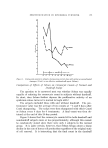
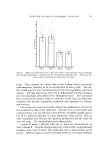
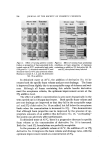
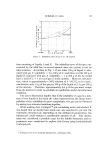
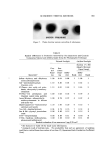
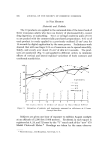
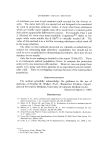
770 JOURNAL OF THE SOCIETY OF COSMETIC CHEMISTS hemocytometer* following accepted procedures for white blood cell counting. Small clumps of cells are disregarded these are never numer- ous and are often absent altogether. Appropriate calculations are then made to establish the quantity of sloughed horny cells collected per square centimeter. The percentage of parakeratotic, nucleated cells can be determined at the same time, though this measurement was neglected in the present study. An experienced person can make a count in 10-15 minutes from the time of scrubbing. RESULTS AND COMMENTS Sequential Corneocyte Counts After Conti and Selsun in Dandruff Subjects Figure 1 presents the mean corneocyte counts of 8 nondandruff sub- jects shampooed every 4 days for 9 times with Conti, and 9 dandruff subjects similarly shampooed with Selsun. In this instance, the first count at -8 days was from the unprepared scalp, i.e., not previously shampooed. Immediately after sampling, the scalps in both groups were shampooed with Conti, sampled again 4 days later (- 4 days), followed immediately by another Conti shampooing. On day 0, one group continued on a 4-day shampooing schedule. The chief information to be gleaned from the Conti group is the variability inherent in the procedure. It should be noted that the first count (- 8 days) is not really meaningful since the scalps were not sham- pooed and the scales had collected for an unknown period. Four days later (--4 days), the count fell from about 1,250,000 cells/cm 2 to about 800,000 cells/cm 2. This is actually the first true value and in the rou- tine treatment sequence is the time of the first count. The drop from the initial count in both groups simply reflects the debriding effect of sham- pooing and is typical of heavy dandruff subjects. Thereafter, the Conti counts varied from a low of 650,000 cells/cm 2 at the end of 32 days to 950,000 cells/cm 2 at 40 days. Fluctuations of this magnitude are un- avoidable and have to be tolerated as experimental error. These oscilla- tions, however, stand in striking contrast to the Selsun group in which the counts fell sharply and steadily throughout the treatment period from a high at 0 days of 1,650,000 cells/cm • to a low of 300,000 cells/cm s at the end of 32 days, a decrease of about 80%. Apparently the effect persists for the count at 48 days after four nonmedicated shampoos was still !ower than at the end of the treatment period. * Manufactured by C. A. Hausser and Son, Philadelphia, Pa.

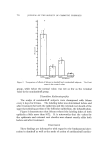
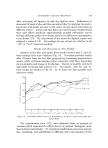
SELENIUM SULFIDE ON EPIDERMAL TURNOVER 771 10 /• Conti(Smen) •l•su n{•) (9 rnerO kConh-•Conti or Selsun©---.l-- Conti [ Figure 1. Corneocyte counts in subjects shampooing every 4 days with either a nonmedicated shampoo (Conti) or an effective antidandruff agent (Selsun) Comparison of Effects of Selsun on Corneocyte Counts of Normal and Dandruff Scalps The question to be answered next was whether Selsun was equally capable of reducing the corneocyte count in subjects without dandruff. In short, does Selsun further depress the proliferative activity of an epidermis whose turnover is normal to begin with ? The subjects included those with and without dandruff. The pre- treatment value was the average of two counts at --4 and 0 days after Conti shampooing. The scalps were then shampooed with either Conti or Selsun every 4 days for 6 treatments. A final count was then ob- tained at the end of this 24-day period. Figure 2 shows that the corneocyte counts fell in both dandruff and nondandruff subjects more or less proportionately, although this cannot be conclusively stated since there were only 5 subjects in the normal group. It is quite certain, however, that Selsun brings about a sharp decline in the rate of horny cell production regardless of the original state of cell renewal. It is interesting that the final count in the dandruff
Purchased for the exclusive use of nofirst nolast (unknown)
From: SCC Media Library & Resource Center (library.scconline.org)