768 JOURNAL OF THE SOCIETY OF COSMETIC CHEMISTS It was concluded that the cardinal sign of dandruff, excess scaling, was due to an increased production of horny cells, rendered more con- spicuous by their sloughing in large cellular aggregates. The current study was conducted to test the thesis of increased epidermopoesis by ob- serving the effect on epidermal kinetics of an effective antidandruff agent, selenium sulfide. The hypothesis requires that such agents abolish scaling as a result of reducing epidermal turnover. MATERIALS AND METHODS Subjects These were healthy adult, negro prisoner volunteers. Subjects with intense dandruff were contrasted to those with normal or minimum scal- ing. Whether the subject had dandruff or not was determined 4 days .after a standard washing with a nonmedicated shampoo (Conti).* It was necessary to screen a large number of subjects in order to locate the .small minority whose scaling over a 4-day period may be considered normal. Subjects with heavy dandruff were easier to find. Care was taken to exclude those whose scaling was attributable to seborrheic dermatitis or psoriasis. Treatment The scalps were shampooed with either Conti or Selsun©t by lathering for 1 minute, rinsing 1 minute, lathering another minute, then rinsing again for 1 minute. Throughout, the interval between shampoos was 4 days. Thymidine Radioautography Standard procedures were followed (2, 3). Five microcuries of H '•- thymidine, specific activity 6.0 C/mM, in 0.1 ml of saline was injected into the clipped scalp with a 27-gauge needle, raising a wheal. One hour later the site was biopsied by full thickness scalpel excision. The specimens were fixed in formalin and 6-/• cuts were mounted on glass slides. These were then coated with Kodak NTB-2 liquid photo- graphic emulsion. After 21 days of exposure, the slides were developed in Kodak D-19 for 4 minutes, fixed in Kodak F-5 for 7 minutes, and washed in running water. Finally, they were lightly stained with Har- ris' hematoxylin, dehydrated, and mounted in synthetic resin. * J. B. Williams Co., Inc., Cranford, N.J. } Selenium Sulfide Detergent Suspension, Abbott Laboratories, North Chicago, Ill.

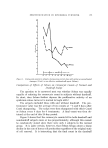
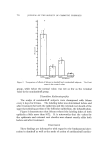
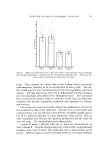
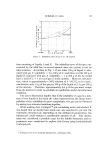
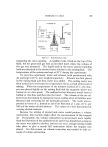
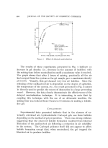
SELENIUM SULFIDE ON EPIDERMAL TURNOVER 769 The parameter sought is the labeling index, defined as the percentage of labeled germinative eelIs. In this study, 800-1200 basal eelIs were scanned, counting all those whose nuclei contained at least 6 grains. It is important to note that all labeled eelIs were counted whether they were in the basal layer or not in dandruff, a distinctly greater number of suprabasalar eelIs become labeled. This is, in fact, a feature of condi- tions in which epidermopoesis is increased, such as psoriasis (4). No effort was made to correct for the loss of grains in the emulsion. The multiplication factor of 1.4 recommended by Iverson and Evenson is at Best dubious (5). All the labeled cells were arbitrarily related to the dermo-epidermal distance bounded by 100 basal eelIs in order to express the labeling index in a convenient, though inexaet, way. Counting was limited to the interfollieular epidermis, avoiding the external root sheath of the upper hair follicle. The labeling index of the external root sheath of the hair follicles was determined in the same fashion. This requires careful sectioning so that the cut is along the long axis of the follicle. Corneocyte Counting The eorneoeyte count is the number of desquamating horny eelIs per square centimeter. The procedure is described in detail elsewhere (6). It fulfills a long recognized need in replacing subjective clinical assess- ment of sealing by an objective measurement. Two control values were obtained, each at 4 days after a standard scalp washing with a non- medicated shampoo. The scalp was then shampooed at 4-day intervals with Selsun and eorneoeyte counts were made at even intervals, usually 8 days, but always 4 days after shampooing. The scalp was not washed or anointed between shampoos. The plot of eorneoeyte counts against time describes a curve whose steepness is a measurement of effectiveness. The 4-day period was selected because this is long enough to permit a reasonable quantity of scales to accumulate, but not so long as to allow excessive loss through combing and other activities. The technique of eorneoeyte counting was adapted from Williamson and Kligman's method for quantitatively sampling the bacterial micro- flora (7). Briefly, the scales are collected by two 1-minute scrubs with a nonionic detergent solution contained in a glass cup having an area of 3.8 emL The cup is placed in a site where sealing is judged to be maximal. The wash fluids are pooled, stained with crystal violet and earbol fuehsin, and mechanically agitated by vortexing to disperse the scales into indi- vidual horny eelis. These are then counted in a Fuehs-Rosenthal
Purchased for the exclusive use of nofirst nolast (unknown)
From: SCC Media Library & Resource Center (library.scconline.org)