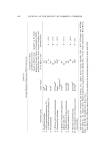
J. Soc. Cosmetic Chemists, 20, 807-824 (Dec. 9, 1969) Comparison of in Vitro and Sunscreen Testing Methods* i gi ?y o GUINTER KAHN, M.D.,t and GEORGE WILCOX{ Synopsis---Ten sunscreening agents have been tested by seven methods, six in vitro and one in vivo. Five of the six in vitro methods employ a spectrophotometer while the sixth uses sunshine, photography, and densitometry. The photographic test appears to correlate most closely with the in vivo, but not to a statistically significant degree proposed modifications are suggested to devise an in vitro test for sunscreens that will accurately reflect the protection achieved in vivo. An in vivo test was done on the low back of three people using precise areas, qu antities, and application methods. The study was "blinded" and the sunscreens were placed in different order on each patient. The protection achieved was recorded by multiple random reflectometer readings at 8, 24, and 72 hours through blue and amber filters deviation from mean readings varied by about 5%. Statistical analysis showed the experiment was re- producibly performed and that there is much patient, treatment, and interaction effect when applying sunscreens to skin. The results show that no one sunscreen is always the best, but that a mean ranking and grouping is obtainable even in a small population. INTRODUCTION The ideal method for measuring the ability of a product to shield skin from sunlight has not yet been devised. The variety of testing methods used by industrial and biological researchers only emphasizes the need to find a suitable, reproducible, standard method for testing light absorbers. This paper is concerned with problems encountered while testing the ability of 10 commercial sunscreening products to filter damaging ultraviolet light. Seven methods, six in vitro and one in vivo, are employed to test the agents. A spectrophotometer is used in five of the in vitro methods the sixth utilizes sunshine, photography, and densitometry. The protection achieved by each agent is ranked and in vitro results are compared to in vivo results. * This study was supported in part by the American Cancer Society Grant Photosensitivity IN-SJ #8, by USPHS Research Training Grant 5 T01 AM05527, and by CA 08408. • Division of Dermatology, University of Colorado Medical Center, Denver, Colo. 80220. • Columbia University, New York, N.Y. 8O7

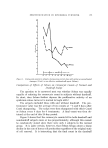
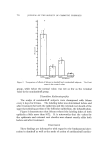
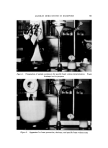
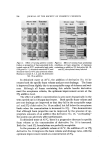
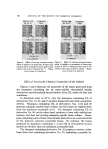
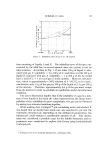
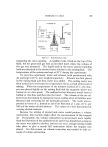
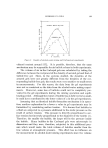
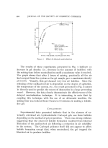
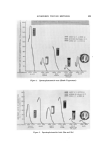
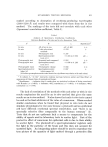
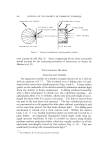
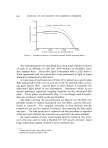
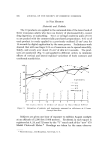
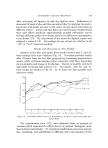
808 JOURNAL OF THE SOCIETY OF COSMETIC CHEMISTS Evaluating sunscreens is difficult because of the complex physical, chemical, and biological interactions possible when a chemical comes into contact with human skin and energy of inconstant intensities and wave- lengths (sunlight) is applied. Skin varies in structure, composition, and surface characteristics, depending on past and present activity, genetic background, age, etc. In addition, physical properties of sunscreens, including viscosity, solubility, stability, light scattering potential, etc., introduce another group of variables. Attaining uniform measurement in a system lacking consonance appears overwhelming and it may be that the real problem is finding the "right" sunprotectant for a person's skin for a given intensity of sunlight, and then learning how to measure the protection achieved. Measurement would be much easier if the skin contained a photocell, the protective agent were a clear solution in a cuvette (1), and the sun were the light of a spectrophotometer. Unfortunately, this is not the case. SPECTROPHOTOMETRIC METHODS Materials and Methods The instrument used for the first five testing methods is a Cary Recording Spectrophotometer, Model 14, whose prism system easily resolves and emits with equal intensity the wavelengths tested (Figs. 1 and 2). Method #1 This method measures the ultraviolet absorbing capacity of a thin film of sunscreen on quartz glass. Substances tested are rubbed into one side of a quartz cuvette as thinly as possible a clean cuvette serves as a control. A major limitation is the difficulty in producing a layer of equal thickness by digital application of the various products. The thinner the layer of sunscreen, the less it absorbs (Fig. 2, Sea & Ski "Glass"). Method #• In this method absorption capacity of the products is measured when they are applied to white onionskin copying paper. Following applica- tion, the products are briskly wiped off the paper 12 times with a sharp- edged ruler. After about four wipes there is no evidence that further substance is being removed but the extra strokes assure that the prod- ucts are spread equally thinly. The sunscreen-containing papers are
Purchased for the exclusive use of nofirst nolast (unknown)
From: SCC Media Library & Resource Center (library.scconline.org)