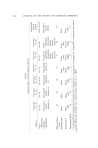
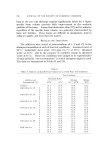
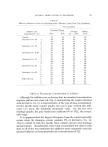
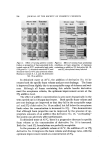
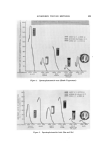
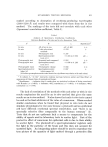
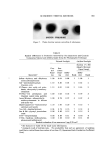
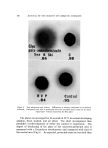
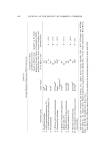
SUNSCREEN TESTING METHODS 817 controls this difference provides the basis for computation of the amount of protection given by each sunscreen (Table II). Results and Discussion Photographic Method Most of the sunscreening agents showed similar capabilities when either artificial or natural sunlight was used. However, some differences were expected, since about 30% of the filtered energy emitted by the sun lamp (2600-4000 fk) was of wavelength less than 3000 • (5), while only a miniscule amount of the sun's energy reaching the earth is of wavelength less than 3000 A. Light of wavelength less than 2950 • is absorbed by the ozone of the atmosphere (6). There is a progressively greater amount of light in the range from 3000 to 4000 • in the atmosphere (7). Since some sun protectants screen over the entire ultraviolet range while others act only in the sunburn range (2900-3200 fk) (8), differences are expected when two such diverse light sources are compared. Harber studied protection afforded by six ultraviolet-absorbing compounds against sunlight and that from a Hanovia quartz mercury lamp (which has an output somewhat similar to that of the Burdick lamp) as light sources. His results showed identical rankings of protection with either light source (9). The fact that those sunscreens with "broad-spectrum" ultraviolet protection have their maximum absorption in the sunburn range may account for the unexpected similarity of the present results when comparing protection in artificial and natural light. It is emphasized that the rankings in Table II are not valid rankings of product efficacy, but are primarily presented to show the closeness of ranks when using either artificial or natural sunlight. The further development of this test to produce the results obtained in vivo will then also have the advantage of using artificial light, an agent far less capri- cious than sunlight. The method presented employs photography and densitometry to measure the differences between sun protectants and controls. The advantage of the system is that it gives results which can be permanently recorded, compared, and analyzed with the assurance that equal amounts of light bombard the sensor for an equal length of time, traversing through a uniformly spread-out barrier, to a film uniformly sensi- tive in the ultraviolet spectrum. The precision of photography and the accuracy of instrumental readings eliminate the errors inherent in visual evaluation in the density of products used and color changes in the skin. It is felt that this is the best method yet devised for measuring the effectiveness of sunscreens in vitro.

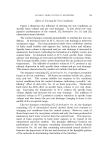
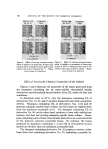
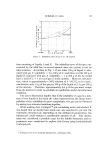
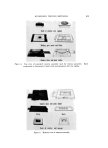
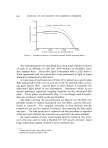
818 JOURNAL OF THE SOCIETY OF COSMETIC CHEMISTS in l/ivo Materials and Methods The 10 products are applied to the untanned skin of the lower back of three Caucasian adults who have no history of photosensitivity, recent drug ingestion, or sunbathing. Ten 1-cc syringes scaled in units of 0.01 cc are packed with the commercially purchased preparations 0.05 cc of each product is evenly applied to a previously outlined 25-cm" area for 15 seconds by digital application by the same person. Preliminary work showed that with one finger 0.05 cc of sunscreen can be spread smoothly, thinly, and evenly over about 25 cm 2 of skin in 15 seconds. The prod- ucts are numbered (Fig. 9) and applied in different orders to minimize effects of vertical and lateral regional variations of body contours and erythemal sensitivities. Figure 9. 100 [ •.-• ..... ß 'x '- / ....... ..'"' ".- 6 0 J'""'"'J'"'•- 'e".-" "•'"'"•'"'J ?" "'"' '"" P A T I E N T S ....' ...... #1 40 •#2 ......... R N• S V A C • R •MEAN O A U t V R 1 20 -P S f A v o P s S y 1 e q P r 1 i i i i i i i I I 9 4 5 10 2 8 7 3 1 6 Ten Sunscreens in Order of Least to Mast Mean Affect Interaction of patients and treatments measured as reflectance at 8 hours through blue filter Subjects are given one hour of exposure to midday August sunlight at an altitude of 5,280 feet (1600 meters). Erythema in each square is registered at 8, 24, and 72 hours by the "Y" search unit of the "new" 670 Model Photovolt Meter.* Readings are taken by the same observer * Photovolt Corp., 1115 Broadway, New York, N.Y.
Purchased for the exclusive use of nofirst nolast (unknown)
From: SCC Media Library & Resource Center (library.scconline.org)