]. Soc. Cosmetic Chemists, 21, 141-154 (Mar. 4, 1970) Geometry of Emulsions K. j. LISSANT, Ph.D.* Presented September 8-9, 1969, Seminar, St. Louis, Mo. Synopsis--Most of the theoretical work done in the area of EMULSIONS has been concentrated in the study of interfacial phenomena and surfactant chemistry. Practical emulsion tech- nology is still as much an art as a science. This paper attempts to integrate the theoretical and practical knowledge into a single framework. The approach taken is to consider emulsions as "constructs" and to classify emulsions according to their physical form rather than their chemical composition. When this is done, •nany disparate facts are brought together and the prediction of the physical properties of new emulsions is made easier. Emphasis is placed on the PHASES RELATIONSHIPS, the STnTE OF Sum)•vISION, and the PHYSICAL PROPERTIES of the phases and interfaces rather than the bulk chemical composition of the phases or emulsifiers. INTRODUCTION Most emulsion research has concentrated on the chemical aspect ot• the problem. Many studies have been made on the physics of inter- faces and the chemical aspects of surface active agents. Emulsion forma- tion and stabilization have been related to chemical composition of the emulsification agents. Much information has been collected on the variation of emulsion properties with the concentration and the charge of the surface active agents. In this paper a different approach is taken. Emulsions are studied as geometrical constructs and the constraints im- posed by the geometry of the situation are related to the behavior and properties of the emulsions. For the purpose of this paper, an emulsion is defined as a reasonably stable dispersion of one liquid phase in another, immiscible, liquid phase. Emulsions are further subdivided into six general classes as indicated in * Petrolite Corp., St. Louis, Mo. 141

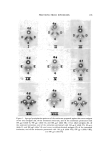
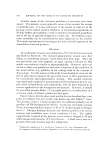
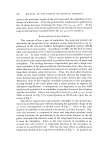
142 JOURNAL OF THE SOCIETY OF COSMETIC CHEMISTS OIL LIPE MIPlR I-I I PlR WATE• L I PR 1',4 I PIR H I PR IN Oil w'//ø w/ø Figure 1. Emulsion types Fig. 1. The first step is to divide emulsions on the basis of the nature of the internal and external phase into two loose classes, oil-in-water and water-in-oil. Each class is then further broken down into three sub- divisions on the basis of the volume per cent disperse phase into low (LIPR), medium (MIPR), and high (HIPR) internal-phase ratio emul- sions. LIPR emulsions contain up to about 30% internal phase, MIPR emulsions contain 30% to about 70% internal phase, and HIPR emul- sions more than about 70% internal phase. As a general model for emulsions, a system of more or less rigid spheres suspended in a somewhat viscous medium is used. Monodisperse rigid sphere systems are examined first, then more general cases. Low INTERNAL PHASE RATIO EMULSIONS When the phase ratio is below about 2 vol % disperse phase it is found that many emulsions do indeed behave like a classical dispersion of rigid spheres in a liquid medium. The viscosity of the system is es- sentially that of the external phase and indeed all the physical properties of the system are dominated by the external phase properties. Many studies have been made in this region and, in general, confirm this result. Emulsions of this type are stabilized primarily by small particle size and charge repulsion, although inhibition of coalescence by film-forming agents may also play a part. In general, the LIPR emulsions behave like Newtonian fluids where the viscosity is approximated by Einstein's equation (1), or modifications such as those proposed_ by Guth and Simka (2), Eilers (3), Sherman (4), and others. Other empirical equations have been found to apply up to about 20 vol %. Mooney (5) has suggested an equation containing a "self-crowding" factor for emulsions up to about 50 vol 70. Briefly then, if an appropriate emulsifying agent is present, LIPR emulsions behave as expected from the model whenever the droplets behave as discrete, non- sticking, spheres.
Purchased for the exclusive use of nofirst nolast (unknown)
From: SCC Media Library & Resource Center (library.scconline.org)