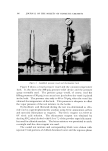
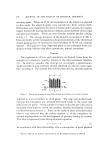
182 JOURNAL OF THE SOCIETY OF COSMETIC CHEMISTS (11) Rothbcrg, S., Crounse, R. G., Davis, L., Jr., Awgardo, L., and Lamas, J., The amino acid composition of protein fractions from normal and abnormal epidermis, Ibid., 44, 32O-5 (1965). (12) Woernley, D. L., Carruthers, C., Regent, L., and Baumler, A., The effect of extraction procedures on sedimentation properties of epidermal proteins, Arch. Biochem. Biophys., 66, 167-76 (1957). (13) Carruthers, C., Woernley, D. L., and Baumler, A., Unpublished observations, 1958. SCC Medal Award to Charles Zviak The Society of Cosmetic Chemists has presented its 1969 Medal Award to Mr. Charles Zviak, Vice President Development and Applied Research, L'Oreal, Paris, France. The Society's Medal Award, its highest honor, recognizes Mr. Zviak's outstanding contributions to cosmetic science, cosmetic scientists, and the cosmetic industry during his entire professional career. The Medal was formally presented to Mr. Zviak at a dinner dance in his honor on December 2, 1969, at the Americana Hotel, New York City. Mr. Jacques Corr•ze, Chairman of the Board, I•'Oreal of Paris, U.S., served as eulogist for Mr. Zviak. Le[t to right: the Society's President, Mr. Harry Isacoff Eulogist, Mr. Jacques Corrdze and Medalist Charles Zviak

J. Soc. Cosmetic Chemi.sts, 21, 183-191 (Mar. 4, 1970) Alcohol Quality and the Degradation of Aerosol Products and Packages R. F. ROBEY, Ph.D.* Presented September 12, 1968, Seminar, Boston, Mass. Synopsis--To determine the amount of CORgOSIVE ACIDITY released by a given lot of anhydrous ETHANOL when aged in admixture with a hydrolyzable chlorofluorocarbon aerosol propellant, a 24-hour accelerated test has been developed. Instability is measured by spectrophoto- metric analysis for HC1 generated. The test is conducted on a mixture of the alcohol sample with Propdlant 11 in an ordinary bottle with a Teflon-lined cap. The bottle is placed in a pressure vessel which is then charged with nitrogen and heated at 75øC for 24 hours. A blank test is run on a portion of the same mixture kept in a refrigerator. Test results show satisfactory repeatability. Application of the test to undenatured alcohol samples from various sources shows that they differ in the degree of chemical instability as applied to aerosols. Results of the test on synthetic mixtures are reported to show individually the profound effect of W^TE• CON- TZNT, IX•P•E DVNATtmAN• S, and other possible impurities on the instability. l NTRODUCTION Aerosol products such as hair sprays, colognes, etc., are generally formulated with some Propellant 11 and anhydrous ethyl alcohol. Under certain conditions, Propellant 11 can react with ethyl alcohol via a free- radical mechanism to form products that may degrade the aerosol product or package. The primary reaction has been indicated to be (1): CCI.•F q- CH•CH•OH--,- CHaCHO q- HCLCF q- HC1. The free-radical producing substances that catalyze this reaction and pro- mote release of corrosive hydrochloric acid may include the active ingTe- dients of the formulation, the perfume, impurities therein, and impuri- ties in the alcohol or propellant. * Enjay Chemical I,aboratory, Linden, N.J. 07036. 183
Purchased for the exclusive use of nofirst nolast (unknown)
From: SCC Media Library & Resource Center (library.scconline.org)