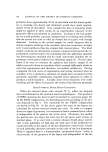
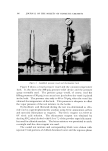
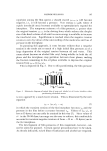
184 JOURNAL OF THE SOCIETY OF COSMETIC CHEMISTS Actually, many of the corrosion problems of yesteryear have been solved. The industry is now generally aware of the necessity for storage or shelf-life tests. It is also well aware of the benefit of some air in the package as free-radical reaction inhibitor, of formulating ingredients to include buffers and stabilizers, of the availability of stabilized propellant, and of the use of specially designed or coated cans. Nevertheless, some- times instability can be contributed by trace impurities in the alcohol. This study was instituted to investigate the role of alcohol quality on the degradation of aerosol products. METHODS An accelerated corrosion test conducted at 93øC for 24 hours has been described by Reed (2). He enclosed plain-interior aerosol cans, after filling, in close-fitting pressure vessels fabricated from pipe. After the test period the cans were emptied, cut open, and the corrosion by HC1 acidity was evaluated visually or photographically. However, such eval- uation is often very qualitative and more a function of the condition of the metal surface (e.g., pinholes in tin coating) than of the contents of the package. For this reason, in this study it was decided to carry out the test in glass and to measure the generated traces of HC1 quantitatively by conventional spectrophotometric analysis. This seemed relatively uncomplicated compared to measurement of electrochemical factors, e.g., pH, metal cell potentials, and conductivity, with all their limitations in routine application to the nonaqueous test mixture. However, it should be noted that recently Bohac (3) has made good use of condnctivity in a corrosion study of ethanol systems [or hair spray. Figure 1 shows that the ,glass vessel used in the test described here com- priscs an ordinary 2-oz glass bottle with plastic cap and Teflon © v liner. The pressure vessel is a bomb designed for an oxidation stability test o[ gasoline (ASTM Designation D 525-55). In the test, the bottle contains 50 ml of nitrogen-flushed solution o[ 18 wt % alcohol sample in Propel- lant 11.t Nitrogen flushing eliminates the inhibiting effect of air on the reaction and establishes more severe conditions of test. The tightly capped bottle is placed in the pressure vessel which is charged to 50 psig with nitrogen and heated at 75øC for 24 hours. A blank test is run on a portion of the same mixture kept in a refrigerator. * Registered trademark of E. I. du Pont de Nemours & Co.. Inc., Wilmington, I)el. t In comparison of alcohol products, Propellant 11 was always taken from the same lot.

1)EGRA1)\rI'ION OF -\ER()SOLS 185 l•igure 1. Glass and pressure vessel assembly
Purchased for the exclusive use of nofirst nolast (unknown)
From: SCC Media Library & Resource Center (library.scconline.org)