J. Soc. Cosmetic Chemists, 21, 155-167 (Mar. 4, 1970) Monomolecular Films as a Model to Study Photosensitized Reactions ALVIN FELMEISTER, Ph.D., and RONALD SCHAUBMAN, M.S.* Presented before the New York Chapter, March 5, 1969 Synopsis--The effect of drugs on the permeability of cell membranes has been related to their surface activity and ability to interact with MONOMOLEGULAR FILMS. It was of interest, therefore, to determine the influence of ULTR•.V•OLET IRRADIATION on these properties of a series of potential PI•OTOSENS•TIZ•Ng DRWS. Chlorpromazine, promazine, triflupromazine, prochlorperazine, trifluoperazine, and fluphenazine were the drugs used. Monomolecular films of dipahnitoyl lecith,_'n (DPL) were spread onto an aqueous subphase into which one ot the drugs had been dissolved. The drug-film system was exposed to ultraviolet irradia- tion and resultant changes in the DRUG-F•LM INTERACTION were determined. Only chloropro- mazine and prochlorperazine exhibited an immediate, increased interaction with the film tollowing irradiation. Solutions of these same drugs also were irradiated in the absence of the film and changes in surface pressure were determined. Only chlorpromazine and pro- chlorperazine showed a steady increase in surface pressure during the period of irradiation. A relationship between irradiation-induced changes in surface pressure and reactivity toward a monomolecular film and in vivo photosensitizing properties was developed. A PUOTO- TOXIC INDEX was calculated and related to in vivo data. INTRODUCTION Over 70 years ago Raab reported the first phototoxic reaction in a biological system, noting that the killing power ot5 acridine on parame- cium was markedly increased in the presence ot• light (1). Since that time numerous other compounds have been implicated as photosensitizers, in- cluding such modern medicinal agents as the sult5onamides, phenothi- azines, tetracyclines, and recently the salicylanilide antibacterials (2). * Rutgers University, College of Pharmacy, Newark, N.J. 07104. 155

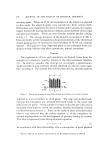
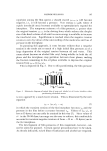
156 JOURNAL OF THE SOCIETY OF COSMETIC CHEMISTS While a number of theories have been advanced to explain this phenom- enon (1-3), neither the exact mechanism of photosensitization nor the cellular constituents involved have been clearly established (4). However, since a change in membrane permeability may be a critical factor in photosensitized reactions, it was of interest to develop a model that would permit the investigation of such changes without the com- plicating factors usually inherent in biological systexns. A number of physical models have been utilized successfully to investigate interactions that occur at the membrane surface o.f cells, particularly where changes in permeability are involved. Foremost among such model systems is the monomolecular film. The literature is replete with studies in which interactions of drugs with such films have been correlated with observed it• vivo effects, and which have been useful in helping to establish the mechanism of drug action at the cellular or molecular level (5). EXPERIMENTAL In these studies, a synthetic dipalmitoyl lecithin (DPI,) was used to form the monomolecular film. This phospholipid was selected be- cause its composition is specifically defined, in contrast to natural phos- pholipids it is stable to the ultraviolet radiation under the conditions of the study and it is representative of one of the principal components of cell membranes. The monomolecular films were formed by dropping about 0.05 ml of a hexane-alcohol solution of DPI, onto the surface of an aqueous buffer solution (the subphase) contained in a Langmuir-type trough. The fihns were compressed by use of a Teflon© * barrier that could be moved over the surface of the subphase. Changes in surface tension were determined by the Wilhelmy plate method (5) either at various trough areas (i.e., areas/molecule) or at fixed areas as a function oF time of irradiation. The surface pressure, •, was calculated as the difference between the surface tension of the pure subphase and that of the film-covered subphase in the film studies or that of the drug-sub- phase solution in the case of studies done in the absence of a film. Ultra- violet irradiation of all systems was accomplished by means of a Mineral- ite Model V-41 UV lamp* fitted with a filter to screen out radiation be- low 280 nm. The lamp was secured about 50 mm above the surface of the subphase. * Registered tradelnark of E. I. du Pont de Nemours Co., Inc., Wihnington, Del. * Ultra-Violet Products, Inc., San Gabriel, Calif.
Purchased for the exclusive use of nofirst nolast (unknown)
From: SCC Media Library & Resource Center (library.scconline.org)