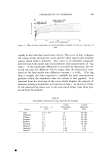
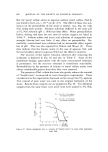
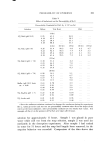
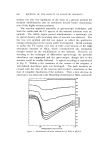
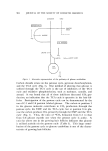
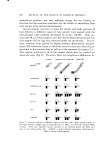
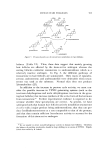
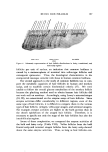
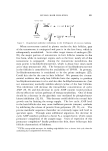
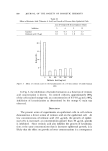
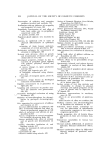
HUMAN HAIR FOLLICLES 921 Ter m•n(:l Type TPNH TPN + '"'""•- •T + •',S'-•,M• •, + •F• ( Pl•sm0 ) Vel lu Factor Type• (?) Figure 7. Hypothetical molecular mechanisms in the development of common baldness When testosterone carried in plasma reaches the hair follicles, part of the testosterone is conjugated and part is in the free form, which is subsequently metabolized. As in other target tissues of androgen (26- 28), the major portion of testosterone in hair follicles remains in the free form, while in nontarget organs, such as the liver, nearly all of the testosterone is conjugated. Among the testosterone metabolites, the most potent is 5a-dihydrotestosterone, which is about four times more active than testosterone (42). The formation of 5a-dihydrotestosterone in the follicles is controlled by the availability of TPNH. In prostate, 5a-dihydrotestosterone is considered to be the prime androgen (27). Could this also be the case in hair follicles? We present the circum- stantial evidence that scalp hair follicles have the capacity to produce 5a-dihydrotestosterone in vitro and also that 5a-dihydrotestosterone (but not testosterone) markedly inhibits adenyl cyc]ase of the hair follicles. This inhibition will decrease the intrace]]u]ar concentration of cyclic AMP (32, 33) and this decrease in cyclic AMP content would produce diverse effects on various pathways of energy metabolism. One of them should be a decrease in the glycolytic rate mediated by phosphofructo- kinase inhibition (32, 33). This decrease could inhibit the normal hair growth rate by limiting the energy supply. The low cyclic AMP level in the hair follicles also may cause inefficient protein (enzyme) synthesis by inhibiting the release of protein from polysomes (32, 33), etc. The precise metabolic sequences thereafter are extremely vague and hard to speculate upon. Through some additional sequences, the decrease in cyclic AMP somehow produces a factor X, a catagen factor, which causes premature completion of the anagen stage. Years of repetition of this premature completion * finally produces the thin, short veilus-type hair follicles characteristic of baldness. ß In the stump-tailed macaque, the balding scalp follicles have a shorter hair cycle than the nonbalding have (unpublished observation).

922 JOURNAL OF THE SOCIETY OF COSMETIC CHEMISTS In order to prove the proposed hypothesis, each step must be meticu- lously studied, and clearly many experiments remain to be performed. Our data accumulated in the past three years have just begun to eluci- date a phase of the molecular mechanisms related to the etiology of alo- pecia. The roles played by 5o•-dihydrotestosterone and adenyl cyclase ap- pear to be highly significant in this complex mechanism. (Received June 18, 1970) REFERENCES (i) Rogers, G. E., Structural and Biochemical Features of the Hair Follicles, in Montagna, W., and Lobitz, %f. C., Jr., The Epidermis, Academic Press, New York, 1964, pp. 179-236. (2) Matoltsy, A. G., Soluble Prekeratin, in Lyne, A. G., and Short, B. F., Biology of the Skin and Hair Growth, American Elsevier Publishing Co., Inc., New York, 1965, pp. 291-305. (3) Crounse, R. G., An Approach to a Common Keratin Sub-Unit, Ibid., pp. 307-12. (4) Rogers, G. E., and Clarke, R. M., An Approach to the Investigation o[ Protein Bio- synthesis in Hair Follicles, Ibid., pp. 329-43. (5) Gillespie, J. M., The High-Sulphur Proteins of Normal and Aberrant Keratins, Ibid., pp. 377-98. (6) Montagna, ¾V., Gonsiderazioni sulla filogenesi del cuoico capelluto, Mineroa Dermatol., 38, Suppl. No. 1,202-8 (1963). (7) Montagna, ¾V., Machida, H., and Perkins, E., The skin of primates. XXVIII. The stump-tail macaque, Amer. J. Phys. Anthropol, 24, 71-85 (1966). (8) Montagna, •'., and Uno, H., Baldness in nonhuman primates, .1. Sac. Cosmet. Chem., 19, 173-85 (1968). (9) Bullough, •'. S., and Laurence, E. B., The Miratic ,4ctivity of the Follicle, in Montagna. W., and Ellis, R.A., The Biology of Hair Growth, Academic Press, New York, 1958, pp. 171-87. (10) Van Scott, E. J., Reinertson, R. P., and Steinmuller, R., The growing hair roots of the human scalp and morphologic changes therein following amethopterin therapy, ]. Invest. Dermatol., 29, 197-204 (1957). (11) Adachi, K., and Uno. H., Glucose metabolism of growing and resting human hair follicles, Amer. J. Physiol., 215, 1234-9 (1968). (12) Adachi, K., and Uno, H., Some Metabolic Profiles of Human Hair Follicles, in Montagna, %', and Dobson, R. L., Hair Growth, Pergamon Press, Oxford and New York, 1969, pp. 511-34. (13) Uno, H., Adachi, K., and Montagna, W., Morphological and Biochemical Studies of Hair Follicle in Common Baldness of Stump-Tailed Macaque (Macaca speciosa), Ibid., pp. 221-45. (14) •'ood, H. G., Katz, J., and Landau, B. R., Estimation of pathways of carbohydrate metabolism, Biochem. Z., 338, 809-47 (1963). (15) Katz, .1., Landau, B. R., and Bartsch, G. E., The pentose cycle, triose phosphate isomerization, and lipagenesis in rat adipose tissue, J. Biol. ½hern., 241, 727-40 (1966). (16) Rognstad, R., and Katz, J., The balance of pyridine nucleotides and ATP in adipose tissue, Proc. Nat. Acad. Yci. U.S., 55, 1148-56 (1966).
Purchased for the exclusive use of nofirst nolast (unknown)
From: SCC Media Library & Resource Center (library.scconline.org)