]. Soc. Cosmet. Chem., 22, 95-107 (Feb. 4, 1971) Problems Involved in the Isolation of Subcellular Components from Human Epidermis* MALAYA BHATTACHARAYA, Ph.D., and CHRISTOPHER CARRUTHERS, Ph.D.* Synopsis--The enzyme KERATINASE was shown to be capable of separating human epi- dermal cells, apparently by dissolving the intercellular keratin-like substances. Attempts were made to fractionate these keratinase-treated, as well as untreated, epidermal cells into their SUBCELLULAR COMPONENTS. The maximum yield of cell particulates was ob- tained after digestion of the intact EPIDERMIS with keratinase at 25øC for 20 or 25 minutes. Assay of the marker enzymes of the subcellular components showed that kerati- nase had no apparent deleterious effect on these enzyme activities. However, the micro- somal glucose-6-phoslahate dehydrogenase activity in both untrcated and keratinase-treated epidermal samples was localized into the supernatant fraction. This displacement of en- zyme activity •nay have been due to the fragmentation of the microsomal membranes re- sulting from either the delay in securing fresh skin or the force needed to disrupt epidermal cells. These two conditions also may have led to contamination of the mitochondria with such epidermal structures as desmosomes, fragqnented keratohyalin granules, and perhaps ]ysosomes. INTRODUCTION Several methods are available for the preparation of mammalian cell particulates. For soft, nonfibrous tissues, homogenization is best performed with a manual or a motorized Potter-Elvehjem, Dounce,* or other type of homogenizer. Difficulty arises, however, in the disruption * Supported in part by Grant No. CA07236 from the National Cancer Institute. * Department of Biochemistry Research, Roswell Park Memorial Institute, and the New York State Department of Health, Buffalo, N.Y. 14203. Reprint requests should be sent to Dr. Carruthers. $ Lab Glass, Inc., 1172 Northwest Blvd., Vineland, N. I. 08360. 95

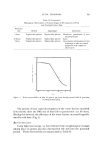
96 JOURNAL OF THE SOCIETY OF COSMETIC CHEMISTS of fibrous or hard tissues by homgenization alone. One possible ap- proach is the application of great mechanical force which causes cell breakage and also damages a variable proportion of the subcellular pop- ulation the problem then is to separate the damaged from the un- damaged particulates. This method was used with beef heart (1). A second approach is to incubate the chopped tissue or tissue suspension with enzymes which remove the intercellular binding materials. The enzyme procedure has been used for the preparation of morphologically and biochemically intact mitochondria from muscle and from yeast (2, 3). Human epidermal cells, in the process of synthesizing keratin as a protective coat (4), also produce intercellular structures, the desmo- somes, which firmly bind the epidermal cells to each other. The loosen- ing or separation of the cells from epidermis had not been adequately investigated, and so the object of the present paper was to determine whether keratinase* could be employed to separate epidermal cells so that their particulates could be isolated. Keratinase was first isolated from Streptomyces fradiae, crystallized, and its properties were studied by Nickerson et al. (5, 6). Dobson and Bosley (7) showed that keratinase separates human epidermal cells, but no attempt was made to isolate the subcellular components. In this report the epidermal cells were loosened with keratinase and then conventional procedures were employed to re- lease the mitochondria, microsomes, and nuclei. These particulates were then isolated by differential centrifugation. MATERIALS AND METHODS Separation of Epidermal Cells Skin was obtained after surgery or autopsy as soon as possible. Epi- dermis was separated in sheets from the skin (generally breast) by the method of Baumberger et al. (8). The optimum conditions for kerati- nase concentration and time of enzyme action required to loosen the epi- dermal cells from each other and from the surface keratin so that the cells could be separated by homogenization were first determined micro- scopically. Flat pieces (50-60 mm 2) of epidermis were shaken with a mechanical shaker for 5, 10, 15, 20, or 30 min in 10 ml of various concen- trations of keratinase in 0.1M tris buffer, pH 8.0, at 25øC. The kerati- * A gift (L583556-0-52) from Merck Sharp and Dohme Rcsearch Laboratories, Rahway, N.J.
Purchased for the exclusive use of nofirst nolast (unknown)
From: SCC Media Library & Resource Center (library.scconline.org)