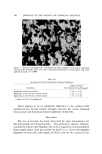
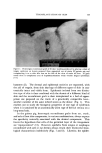
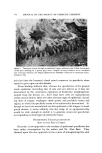
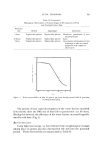
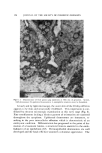
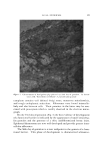
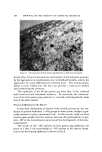
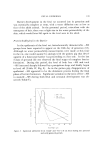
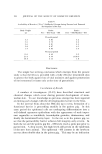
TRANSPLANTATION OF SKIN 117 fur at first but then become bald. Evidently, the defective gene exerts its influence within the skin. To determine whether the site of action of the mutant gene is within the epidermis or the dermis required the production of heterotypic re- combinant grafts. With the aid of collagenase, skin from neonatal mice of normal and abnormal genotypes was separated into its epidermal and dermal components and recombinant grafts were transplanted to ge- netically normal hosts. It was found that when epidermis from puta- tively abnormal skin was combined with phenotypically normal dermis, a permanent fur crop developed. The converse experiment, entailing recombination of normal epidermis with the dermis from mutant new- born mice, is in progress. Subject to confirmation by the results of this latter experiment, the present findings indicate that the genetic defect operates at the level of the derreal components of the hair follicles. One important prerequisite fo.r the experimental approach outlined above is that the grafts had to be accepted by their hosts for long periods. In most cases titis was ensured by the use of appropriate inbred strains of mice and their F• hybrid progeny. In some instances in which it was necessary to tra•splant skin grafts to genetically incompatible hosts, the latter were tree, ted with rabbit antimouse lymphocyte serum (ALS) to suppress the homograft rejection reaction that would otherwise have been incited (18). The approach outlined above should be applicable to elucidate cer- tain enigmatic skin lesions in man, genetically determined or otherwise. Lance and Mcdawar (19) have shown that treatment of mice with ALS enables them •o accept heterografts of human skin for many weeks. It should thereft•re be possible to prepare dermo-epidermal recombinant grafts using skin components from normal persons and from persons af- fected by such conditions as ichthyoses and psoriasis and maintain them on murine hosts to determine whether the abnormalities are at the level of the dermis c, r the epidermis. (Received August 5, 1970) REFERENCES (1) Billingham, R. E., and Silvers, W. K., Some Unsolved Problem, in the Biology of Skin, in Lyne, A. G., and Short, B. F., Biology of the Shin and Hair Growth, Angus and Robertson, Sydney, 1965, pp. 1-24. (2) Billingham, R. E., and Silvers, W. K., Studies on the conservation of epidermal specifici- ties of skin and certain mucosas in adult matnmals, J. Exp. Med., 125, 429-46 (1967). (3) Grobstein, C., Mechanisms of Organogenetic Tissue Interaction, Nat. Cancer Inst., Monogr. No. 26, 279-99 (1967).

118 .JOURNAL OF THE SOCIETY OF COSMETIC CHEMISTS (4) Wessells, N. K., Differentiation of epidermis and epidermal derivatives, New Engl. J. Med., 277, 21-33 (1967). (5) Billingham, R. E., and Medawar, P. B., Pigment spread and cell heredity in guinea- pigs' skin, Heredity, 2, 29-47 (1948). (6) Billingham, R. E., and Medawar, P. B., The technique of free skin grafting in mam- mals, J. Exp. Biol., 28, 385-402 (1951). (7) Russell, P.S., and Billingham, R. E., Some aspects of the repair process in mammals, Progr. Surg., 2, 1-72 (1962). (8) McMinn, R. M. H., Tissue Repair, Academic Press, New York, 1969. (9) Billingham, R. E., and Medawar, P. B., A note oxi the specificity of the corncal epi- thelium, J. dnat., 84, 50-6 (1950). (10) Krohn, P. L., The behaviour of autografts and homografts of vaginal tissue in rabbits, Ibid., 89, 269-82 (1955). (11) Montagna, W., The Structure and Function of Skin, Academic Press, New York, 1962. (12) Beer, A. E., and Billingham, R. E., hnplantation, transplantation, and epithelial- mesenchymal relationships in the rat's uterus, J. Exp. Med., 1•2, 721-36 (1970). (13) Cohen, J., Interactions in the skin, Brit. ]. Derrnatol., 81, Suppl. 3, 46-54 (1969). (14) Oliver, R. F., The vibrissa dermal papilla an,d its influence on epidermal tissues, Ibid., 81, Suppl. 3, 55 (1969). (15) Green, M. C., Mutant Genes and Linkages, in Green, E. I,, Biology of the Laboratory Mouse, McGraw-Hill, New York, 1966, pp. 87-150. (16) Shaffer, C. F., Billingham, R. E., and Mann, G., Work in progress, 1970. (17) Tsuji, S., and Yosida, T., Reciprocal skin transplantation between normal and hereditary hairless mice, Jap. J. Genet., 40, 50-62 (1965). (18) Medawar, P. B., Biological Effect of Heterologous Antilyrnphocyte Sera, in Rapaport, F. T., and Dausset, J., Human Transplantation, Grune and Stratton, New York, 1968, pp. 501-9. (19) Lance, E. M., and Medawar, P. B., Suiwival of skin heterografts under treatment with antilymph ocytic serum, Lancet, 1, 1174-6 (1968).
Purchased for the exclusive use of nofirst nolast (unknown)
From: SCC Media Library & Resource Center (library.scconline.org)