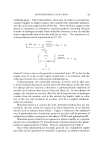
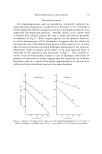
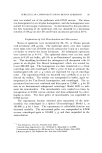
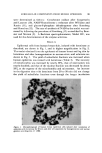
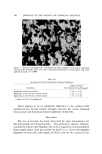
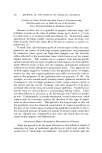
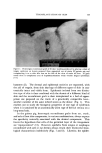
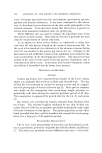
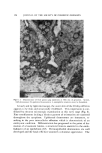
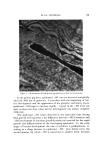
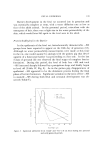
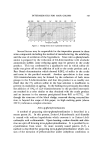
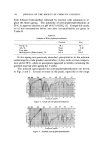
FETAL EPIDERMIS 127 Figure 3. Ultrastructure of fetal guinea pig epidermis at 53rd day of gestation. D, desmo- somes DB, "Dark Bodies of Odland" K, keratohyalin granule cytoplasm contains well defined Golgi zones, numerous mitochondria, and rough endoplasmic reticulum. Ribosomes were found intracellu- larly and also between cells. Their presence in the latter may be asso- ciated with pinocytosis which is readily observed in the electron micro- graph. On the 53rd day of gestation (Fig. 3) the first evidence of development of a functional barrier is indicated by the appearance of small keratohya- lin granules and the presence of a thin, undifferentiated horny layer. Epidermal desmosomes are now well developed and provide greater inter- cellular adherence. The 56th day of gestation is a near midpoint in the genesis of a func- tional barrier. This phase of development is characterized ultrastruc-

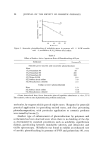
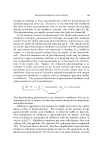
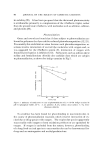
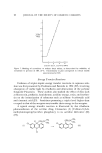
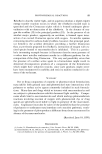
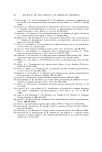
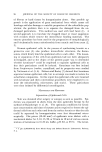
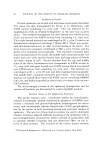
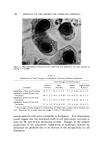
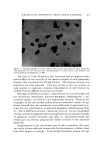
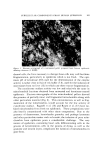
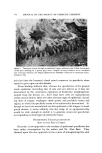
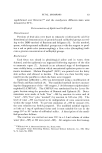
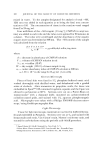
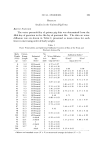
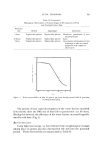
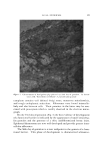
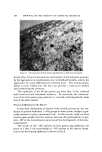
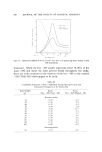
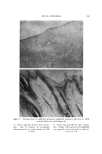
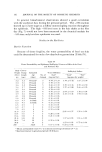
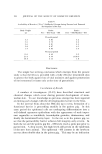
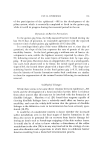
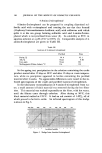
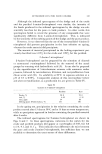
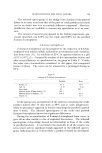
128 JOURNAL OF THE SOCIETY OF COSMETIC CHEMISTS Figure 4. Ultrastructure of fetal guinea pig epidcrmis at 56th (lay of gestation turally (Fig. 4) by an increased size and number of keratohyalin gTanules, by the aggregation of tonofilaments into well-defined bundles, and by the appearance of a more differentiated corneum layer. The stratum granu- losurn is more evident but still does not provide a continuous mature layer underlying the corneum. The epidermis of the 61-day guinea pig fetus (Fig. 5) has achieved both structural and functional maturity. At near-term, the ultrastruc- ture of the fetal guinea pig epidermis is virtually indistinguishable from that of the adult animal. Protein-Sulfhydryl in the Barrier In the final elaboration of keratin from soluble precursors, the oxi- dation of protein-sulfhydryl (--SH) groups to form cystine bridges is gen- erally assumed to play a prominent role. In the present study we have tried to gain insight into the relation between the participation of pro- tein --SH in the keratinization process and the development of the func- tional barrier. The results of the --SH analyses on fetal guinea pig epidermis are given in Table I the relationship of --SH content to the barrier forma- tion in the developing epidermis is shown in Fig. 6.
Purchased for the exclusive use of nofirst nolast (unknown)
From: SCC Media Library & Resource Center (library.scconline.org)