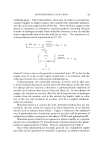
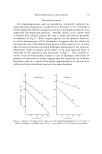
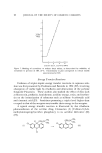
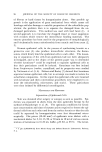
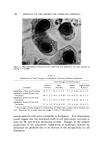
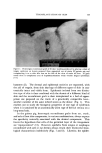
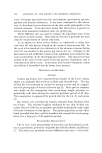
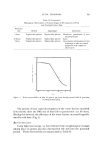
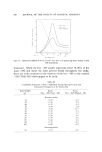
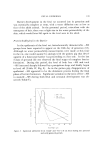
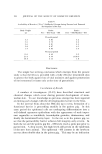
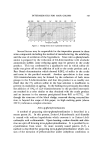
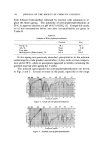
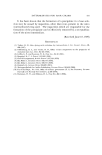
FETAL EPIDERMIS 133 Barrier development in the fetal rat occurred late in gestation and was essentially complete at term, with a water diffusion rate as low as that of the adult animal. In the postnatal period, coincident with the emergence of hair, there was a slight rise in the water permeability of the skin, which would later fall again to the level seen in the adult. Protein-Sulfhydryl in the Barrier In the epidermis of the fetal rat, histochemically demonstrable --SH groups have been reported to appear on the 16th day of gestation (13). Although no water permeability measurements were made at this time in the rat, one would assume by analogy with the guinea pig that devel- opment of a functional barrier was proceeding at a fast rate. In the last 3 days of prenatal life one observed the final stages of complete barrier formation. During this period, the level of both free --SH and total --SH increased sharply followed by a precipitous drop, and finally began to level off (Table IV, Fig. 8). As in the guinea pig, disappearance of epidermal --SH appeared to be the dominant process during the final phase of barrier formation. Significant variation in the ratio of free --SH to masked --SH during both fetal and neonatal development was ob- served (Table V). ½' "total" • "free" --SH ...... water permeablhty x .2• .... x F-T--- 0 2'0 Term Body Weight (gin.) •'0 •0 Figure 8. Epidermal sulfhydryl levcls ("total" and "free") of rat fetus during late prenatal and early postnatal periods

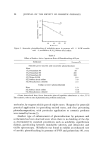
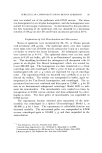
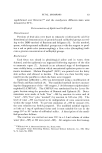
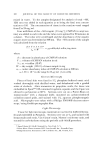
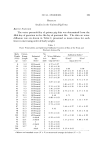
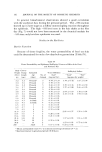
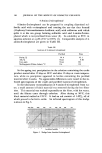
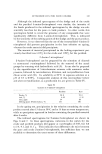
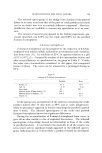
134 JOURNAL OF THE SOCIETY OF COSMETIC CHEMISTS Table V Availability of Reactive ("Free") Sulfhydryl Groups during Prenatal and Postnatal Development of the Rat Body Weight Ratio: Ratio: (g) Frec •--SH/Total --SH Free --SH/Masked --SH Prenatal period 3.2 0.86 6.2 3.6 0.72 2.6 3.6 0.81 4.4 3.8 0.87 6.9 3.9 0.83 5.0 Neonatal period l1.0 0.69 2.2 21.0 0.99 100.0 34.8 0.65 1.8 DISCUSSION The simple but striking conclusion which emerges from the present study is that the fetus is provided with a fully effective keratinized skin to protect the body against loss of vital moisture and against penetration of environmental irritants only at the time of parturition. Correlation of Results A number of investigators (13-19) have described structural and chemical changes which occur during prenatal development of mam- •nalian skin. To our knowledge no previous attempt has been reported on linking such changes with the developing skin barrier in the fetus. In the interval from about the 50th day up to term, formation of a functional barrier is proceeding steadily in the guinea pig. In this same period the epidermal cells are undergoing differentiation into a well-defined squamous epithelium with the appearance of such impor- tant organelles as tonofibrils, keratohyalin gxanules, desmosomes, and finally the keratinized horny layer. In the rat, as in the guinea pig, we see that the permeability barrier achieves full integrity only at term. In both the rat and the guinea pig the --SH levels reach a peak just prior to parturition. A drop occurs, but high levels still persist in the epidermis of the new born animal. The epidermal --SH content in the newborn rat was about double that in the guinea pig. This may be an indication
Purchased for the exclusive use of nofirst nolast (unknown)
From: SCC Media Library & Resource Center (library.scconline.org)