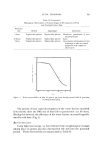
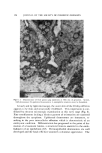
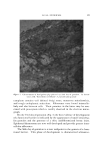
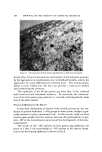
120 JOURNAL OF THE SOCIETY OF COSMETIC CHEMISTS entry of foreign materials from the environment, particularly microor- ganisms and noxious substances. It has been confirmed by this labora- tory (1) that these barrier functions of the skin reside principally in the stratum comeurn. It has also been found that this barrier is present in all new-born mammals examined--man, rat, guinea pig. Water diffusion rate was used to evaluate the functional state of the skin barrier in these studies. Data indicate that this is probably the most sensitive measurement of barrier intactness. As an adjunct to these earlier studies, we undertook to study how and when the skin barrier formed in the course of intra-uterine life. In the work to be described, the elaboration of the stratum comeurn during fetal life was studied in the guinea pig and in the rat. Changes in the fine structure and sulfhydryl content of the epidermis were related to the water permeability of the developing skin barrier. The data reveal that genesis of the water barrier starts in the last quarter of gestation, and is concluded just before term. Concurrent with barrier formation, sulfur metabolism is intensified and the horny layer matures. MATERIALS AND METHODS Animals Guinea pig fetuses were obtained from females of the Lever colony, which was originally derived from Lederie and Deeroff stock. The day of fetal life was estimated by control on mating activity and by compari- son with photographs of fetuses of known age (2). More precise estimates were made on the assumption that crown-rump length increases ex- ponentially with time during the expected gestation period of 63 days. This assumption is supported by growth data for the rat (3) and mouse (4). Rat fetuses were t•rovided by females obtained from Hemlock Hol- low Farms. The extreme fragility exhibited by the skin of fetal rats earlier than the 18th day of gestation precluded studying the early stages of barrier formation in this species. The guinea pig fetus, on the other hand, provided skin that could be handled and assessed for barrier prop- erties over a large part of the gestation period. Permeability Measurements The in vitro water permeability of fetal skin was determined accord- ing to a gravimetric procedure originally described by Burch and Winsor (5). The skins were mounted on microdiffusion cells (area = 0.78 cm=,

FETAL EPIDERMIS 12l equilibrated over Drierite, ©* and the steady-state diffusion rates were measured at 25 øC. Determination o[ Epidermal Sul[hydryl Histochemical Portions of fetal skin were fixed in ethanolic trichloroacetic acid for histochemical demonstration of protein-bound sulfhydryl groups accord- ing to the DDD method of Barrnett and Seligman (6). In this method, sparse, widely-separated sulfhydryl groups react with the reagent to prod- uce a red or pink color (monocoupling) a blue color (dicoupling) indi- cates a •-eater concentration of sulfhydryl groups. Biochemical Each fetus was rinsed in physiological saline and in water, then skinned, and the epidermis was separated following exposure of the skin to ammonia vapor (7). Animals in an advanced stage of development were visibly hairy, a condition which necessitated epilation prior to am- monia treatment. Molten Paraplast ©* (56øC) was poured over the hairy skin surface and allowed to harden. The skin was then forcibly sepa- rated from the paraffin in which the hairs were trapped. Epidermal sulfhydryl (--SH) was determined using a modification of the Flesch and Kun method (8). The modified method involves measur- ing the disappearance of the --SH reagent, 1-(4-chloromercuriphenylazo)- naphthol-2 (CMPAN). The CMPAN was synthesized by the Lever Or- ganic Section using the procedure of Bennett and Yphantis (9). Deter- minations were made of both "free" --SH by reaction in water and of "total"--SH ("free" plus "masked") by reaction in 3M urea (10). The level of total --SH was found to be independent of urea concentration within the range 3-8M. To prevent oxidation of --SH by cyanate (11), the urea solution was freshly prepared. The modified method requires as little as 1 mg of epidermal tissue and is most suitable for use in the range 10 s to 10 -7 moles of sulfhydryl sulfur. A description of the modi- fied procedure follows. The reaction was carried out near 0øC in a 1.5-ml volume of either water (free --SH) or 3M urea (total --SH). All samples were first homog- * Drierite,© W. A. Hammond Drierite Co., Xenia, Ohio. t Paraplast© Tissue Embedding Medium, Sherwood Medical Industries, Inc., 1831 Olive St., St. Louis, Mo. 63103.
Purchased for the exclusive use of nofirst nolast (unknown)
From: SCC Media Library & Resource Center (library.scconline.org)