702 JOURNAL OF THE SOCIETY OF COSMETIC CHEMISTS process of moulting at any one time, any severe or sudden change in thermal insulation is avoided. In the adult human scalp each follicle appears to behave independently of its neighbours, so that there is a "mosaic" pattern of hair replacement (8, 10). Thus active follicles, and follicles containing club hairs, can be found in every part of the scalp at any time. Normally about 85% of the scalp follicles can be shown to be active at any one time. As the guinea-pig has also been stated to have a mosaic pattern of hair replacement (11), it is often suggested that it might be a more suitable animal for experiments on hair growth than rats or mice. The assumption is that the results would be more likely to be applicable to the human condition. Work on the guinea-pig dates from that of De Meijere (12), in which he noted the arrangement of the hairs in groups. Dawson (13), attempted to measure the normal rate of hair growth in three selected areas of the body, the shoulder, the hip and the mid renter. She was able to measure the rate of growth and show its cyclic nature in individual follicles, and she also endeavoured to find a possible correlation between the rates of hair growth, the types of hairs and the hair groups. Such work suffered, however, from the inaccuracy of the methods then available, and a lack of knowledge of the cycle in the hair follicle. Further studies on the guinea-pig have been carried out (14-19), yet none have attempted to elucidate further the over- all pattern of the moult. Elongation of hair can now be accurately measured by injection of 35S-cystine which is incorporated into the hair as it keratin- izes. By this method, it is possible also to determine the exact period for •vhich each group of follicles is active. MATERIALS AND METHODS Observations to be described here were made on. female short haired guinea-pigs, obtained between two and seven days after birth. They were kept at 18-20øC, subjected to a constant photoperiod of 12 h {07.00 to 19.00 h) since it is known that seasonal changes in hair growth may occur under less well controlled conditions {15), and fed on S.G.1. Oxoid diet, together with 30 g of carrots and/or cabbage per animal each morning. Water was supplied ad libitum. Within the first week of life, daily intraperitoneal injections of 2[tCi of L-36S9-cystine dihydrochloride, contained in 0.25 ml of 0.9% saline, were given at 10.45 h. The injections were continued until the guinea-pigs were 48 days old, when they were anaesthetized with ether and the hairs covering an area of skin approximately 56 mm2 were plucked from a region just to

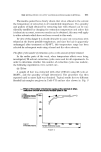
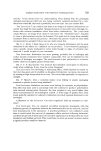
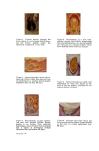
TYPE I TYPE 2 TYPE 3 Figure 1. Hair types, showing overall appearances and relative lengths and thicknesses Facing oeage 705
Purchased for the exclusive use of nofirst nolast (unknown)
From: SCC Media Library & Resource Center (library.scconline.org)