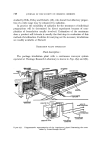
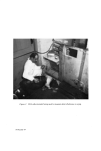
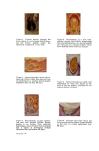
Figure I EEL reflectometer being used to measure skin reflectance on a pig. Facing page 727

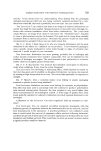
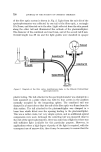
MEASUREMENT OF SKIN COLOUR IN VIVO 727 as pigs, as shown in Fig. 1. This instrument is most suitable for measuring changes in pigmentation it can be used to quantify erythema, but lacks sensitivity. When erythema is present, with or without changes in pigmen- tation, it is necessary to make measurements at two wavelengths, one of which should be sensitive to changes in the degree of erythema, and the other to pigmentation. Estimation of the degree of erythema present, is made by comparing the reflectance between erythematous and control sites, using light selected by the green filter which is heavily absorbed by blood. The extent of pigmentation is measured using red light where changes in blood content of the skin have little influence on reflectance. A number of workers have made measurements of this sort using commercially available instruments in order to study pigmentation in the presence of erythema, or to quantify erythema in patients with different basic skin colours. Daniels and Imbrie (1) in studies on erythema produced by sun- light used a Photovolt Meter Model t310 which is fitted with wide band glass colour filters similar to the EEL reflectometer a similar instrument was used by Kahn and Wilcox (2) for comparing in vivo sunscreen testing methods, and by Lerner and McGuire (3) in endocrinological studies on pigmentation. Studies have also been made using instruments constructed in workers' own laboratories, but based on similar principles to those described above. Tronnier (4) and Runge, McHugh and Johnson (5) used wide band red and green glass filters to isolate their measuring wavelengths, while Breit and Kligman (13) used narrow-band interference filters with peak transmissions at 542 nm and 13131 nm for measuring erythema and melanin respectively. The advantage of using interference filters, rather than glass filters, is that a much narrower band width is possible for a given trans- mission factor. This is useful when measuring the degree of erythema, but is of less importance with respect to melanin. Spectrophotometry To obtain the spectral reflectance curve of a coloured surface it is necessary to measure photoelectrically the amount of light reflected at each wavelength through the visible spectrum, and to compare this with the light reflected from a standard surface, at each wavelength. Though it is possible to get only a very approximate idea of the colour of an ob iect from the reflectance curve, nevertheless, the spectrophotometer is the funda- mental instrument for colour measurement since it gives complete in- formation about the spectral composition of light reflected from the sample.
Purchased for the exclusive use of nofirst nolast (unknown)
From: SCC Media Library & Resource Center (library.scconline.org)