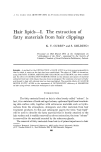
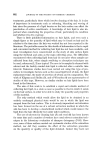
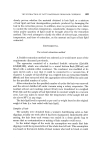
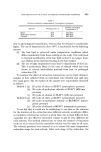
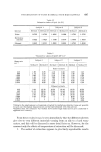
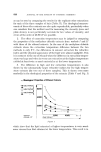
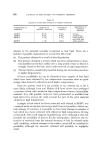
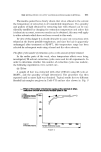
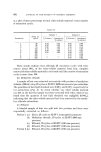
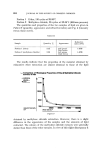
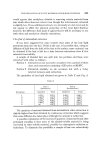
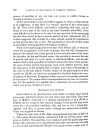
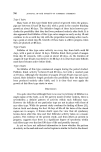
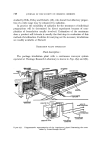
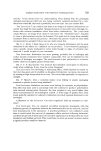
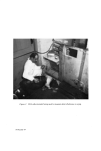
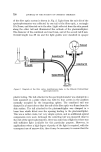
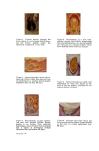
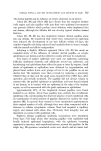
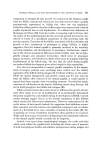
Figure 1 Vertical section through the lower region of a rat whisker follicle show- ing the dermal papilla within the epidermal component of the bulb Figure 2 Development of a new bulb, whisker growth and follicle lengthening following implantation of a derreal papilla into the base of a whisker follicle whose lower half had been removed. 21 days. Figure 8 Section through a newly devel- oped hair follicle which was induced from ear epidermis by a xvhiskcr derreal papilla implanted into ear skin. 35 days. Figure 4 Section through hair shaft, still ensheathed by inner root sheath at the level of the ear surface, produced by an induced follicle. 64 days. Figure 5 Recombinant of gum epithel- ium and blue stained whisker dermal papilla in ear dermis. Note epithelial hyperplasia, areas of yellow fibrous keratin and a region of developing stellate reticulum-like epithelimn. 62 days. Facit•g page 745 Figure 6 Aberrant hair bulb which has developed around a whisker dermal papilla in the wall of a labial epithelium cyst 62 days.

DERMAL PAPILLA AND THE DEVELOPMENT AND GROWTH OF HAIR 745 In the feather follicle Lillie and Wang (24, 25) and Wang (26), using tissue removal and implantation procedures, demonstrated that the dermal papilla is a permanent structural feature which periodically induces the growth of feathers. In progressive contrast to the work of Dhouailly (13, 14) on the embryo, they also seemed to demonstrate that tract specificity (the factors responsible for the type of feather which grows) is solely determined by the site of origin of the epidermis which invests the dermal papilla. Thus adult feather epidermis apparently provides another example of an intrinsically determined epidermis. Furthermore the dermal papilla was unable to induce feather growth when implanted into the superficial half of a follicle or under extrafollicular epidermis. Similarly, although not directly demonstrated, several authorities for various reasons thought that the dermal papilla is also primarily responsible for the growth of hair (27-31). In order to investigate this, and other inter- active possibilities, Cohen (31) devised techniques for the exposure and individual dissection of the comparatively large whisker follicles on the upper lip of the rat. THE ADULT RAT WHISKER FOLLICLE AS AN EXPERIMENTAL MODEL FOR INVESTIGATING DERMAL--EPIDERMAL INTERACTIONS IN HAIR GROWTH The basic structure of the whisker follicle in the rat has been described by Vincent (32). It is a large highly innervated hair follicle, serving a tactile function, which produces hair in a cyclic manner but with little shortening of the follicle associated with the very brief catagen phase (33). The dermal component is conspicuously represented by an outer collagenous capsule enclosing a blood sinus system and, surrounding the greater length of the epidermal component, the mesenchymal layer which is confluent with the dermal papilla (Fig. 1). This unique morphology is apparently an exaggeration and specialization of the structural elements present in the simplest of follicles to which the whisker follicle is anatomically related through a series of follicle types (34). Regeneration of the derreal papilla Simulating the work of Lillie and Wang (24-26), Oliver (33, 35) re- moved dermal papillae from the bases of whisker follicles and found that
Purchased for the exclusive use of nofirst nolast (unknown)
From: SCC Media Library & Resource Center (library.scconline.org)