712 JOURNAL OF THE SOCIETY OF COSMETIC CHEMISTS beta particle of energy up to 0.3 MeV and two gamma photons of 1.17 and 1.33 MeV, leaving an atom of stable nickel-60. The beta particles are absorbed within the cobalt-60 rod or its capsule and in practice products are treated with only gamma radiation with a mean energy of 1.25 MeV. This photon energy is well below the threshold for the production of radio- activity in elements in the material being irradiated and therefore no haz- ards exist in handling products no matter how high the dose applied. In the context of radiation processing the unit of dose is the rad,which is a unit of absorbed dose,and it is convenient to use the unit Mrad for 106 rad. A dose of 1 rad is obtained when 0.01J of radiation energy is absorbed per kilogram of material. A typical sterilizing dose is 2.5 Mrad and if it is assumed that all the absorbed energy, i.e. 2.5 X 10⁴Jkg-1 is converted to heat, then this would amount to only 25kJ kg-1 giving a temperature rise of 6øC in water. In practice a temperature rise of only a few øC is observed in products treated at this dose and hence the sterilizing process is essentially 'cold'. Gamma radiation is ionizing and most of the absorbed energy is used up in interaction with electrons in the orbits of atoms in the material. Some electrons may be ejected producing positive ions and free electrons which may become attached to other atoms forming negative ions. Other electrons may receive energy sufficient only to cause displacement into a different orbit, a process known as excitation. Molecules containing atoms so affected become very reactive, free radicals may be formed and complex chemical changes ensue. It is the chemical changes initiated in this way which lead on the one hand to the inactivation of micro-organisms, our concern in radiation sterilization, and on the other to the possibility of undesirable effects on products. Electrons from electrical machines may also be used for product sterilization. A description of such a machine and discussion of the proper- ties of the emitted electrons will not be included in this paper but may be found elsewhere (1). INACTIVATION OF MICRO-ORGANISMS Lethal effect In spite of considerable progress towards identification of the mechanism of inactivation of micro-organisms by ionising radiation, there still remains considerable doubt as to the nature of the critical lesions involved. It seems certain that the lethality is primarily the consequence of genetic damage

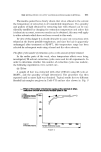
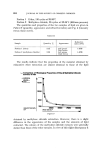
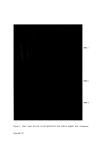
GAMMA RADIATION FOR PRODUCT STERILIZATION 713 with evidence pointing to induced changes in DNA as being responsible for inhibition of cell division. Apart from difficulties in location of the site of primary damage, there is still controversy as to whether the majority of radiation effects are due directly to ionization or to the indirect action of the radiolysis products of water. Whatever the detailed mechanisms involved, much is already known both qualitatively and quantitatively in relation to the radiation inactivation of microbial populations, lethality being measured by the loss by cells of colony forming ability in nutrient media. Comparative radiation resistance In general, viruses are more resistant than bacterial spores, resistance increasing with decreasing particle size, and in turn spores are more resistant than vegetative organisms, yeasts and moulds. For comparative purposes it is convenient to refer to dose/survival curves such as those presented in Fig. 1 for several vegetative bacteria and spores. Surviving fraction (number of surviving organisms expressed as a fraction of the original number) is plotted on a logarithmic scale against dose on a linear scale. The reduction in numbers of viable organisms with increasing dose follows an exponential law, i.e. with increasing dose there is a decreasing probability that there will be a survivor in a given sample. This relationship holds for other sterilization agents as pointed out in a comparison of radia- tion and heat (2). An outstanding exception to the above general statement on comparative resistance between micro-organisms can be seen in Fig. 1. The curve for Micrococcus radiodurans produced from data of Krabbenhoft, Andersen and Elliker (3), shows that this organism is more resistant than the spores illustrated and requires a radiation dose for a 5 log cycle reduction in a population which is 30 times that required for Pseudomonas sp. Fortunately this resistant organism is non-pathogenic and unlikely to occur as a con- taminant in the commercial products of current interest. However, Christen- sen et al (1) have drawn attention to the existence of other gram positive organisms of high resistance and in particular to strains of Streptococcus faecium. There are also examples of yeasts of high inherent resistance (4). Erdman, Thatcher and MacQueen (5), examining the comparative resistance of specific bacteria of public health significance, concluded that in broth suspension Streptococcus faecalis was more resistant than the staphylococci, salmonellae, coliforms and Micrococcus tuberculosis. It is important to note that because of the particularly low resistance to radiation of the coliforms,
Purchased for the exclusive use of nofirst nolast (unknown)
From: SCC Media Library & Resource Center (library.scconline.org)