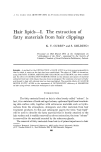
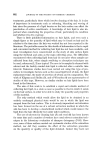
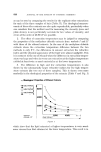
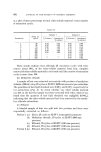
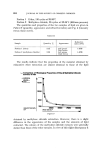
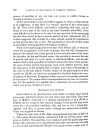
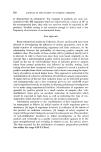
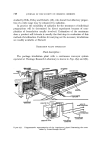
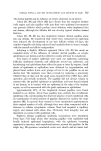
714 JOURNAL OF THE SOCIETY OF COSMETIC CHEMISTS i i I I I O Pseudomonc•s sp. • S. typhimurium (• Strep. f(•ecium A21 (• B. pumi[us (• Ci. botu[inum type A (• M. r(•diodur(3ns o 10 -2 z cc 10- 10 0-25 0-5 0.75 1.0 1.25 1.5 1.75 DOSE (M r(•d) Figure 1. The difference in radiation sensitivity between bacteria illustrated by dose survival curves prepared after irradiation of the organisms in buffer suspension in the presence of air. their absence after treatment should not be used as a measure of effective elimination of other pathogens as is sometimes used to check heat pasteur- i zation. Influence of environ•nent It is particularly relevant to the subject of product sterilization to stress the considerable influence of environment during irradiation on the resist-

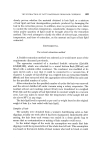
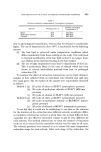
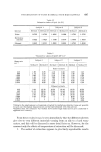
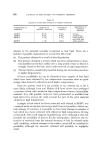
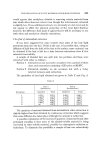
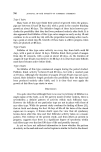
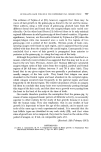
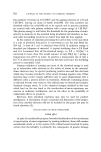
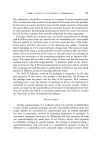
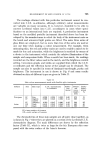
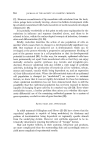
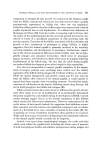
GAMMA RADIATION FOR PRODUCT STERILIZATION 715 ance of micro-organisms some examples are given in Table I. The influence of oxygen is obvious and other factors such as water content of organisms or chemical protection by the medium may also contribute. The situation is Table I. The influence of environment during irradiation on the dose required for reduction by a factor of 105 of populations of various vegetative bacteria and spores. Environment Organism Dose (Mrad) during irradiation S. typhimurium Strep. faecium A 21 0.1 0.3 0.5 0.6 1.9 3.0 buffer suspension in air buffer suspension anoxic dried in bone meal buffer suspension in air buffer suspension anoxic dried in serum I 0.9 buffer suspension in air B. pumilus 1.5 buffer suspension anoxic i 1.7 in grease Cl. tetani • 1.0 [ in talc in air further complicated by the fact that certain pre- and post-irradiation treatments of organisms can also influence inactivation. Aspects of radiation microbiology fundamental to sterilization are given in detail elsewhere (6). Choice of dose In practice the choice of dose for treatment of individual products has been made by combining a knowledge of the general resistance of organisms with the results of direct investigations on the products themselves. As a background to the choice of a dose of 2.5 Mrad for the sterilization of medical products, experiments involved inoculation with bacteria of items such as rubber gloves and plastic tubing (7), or materials simulating the situation which might occur with commercial products (8). However, it is impossible to exactly reproduce the natural situation of product contamination and the necessity for extrapolation from laboratory contrived situations has led to some disparity in the choice of dose for medical product sterilization (9). The margin of safety aimed at in sterilization is very high and it is difficult
Purchased for the exclusive use of nofirst nolast (unknown)
From: SCC Media Library & Resource Center (library.scconline.org)