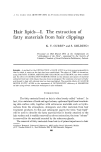
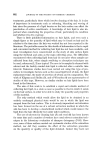
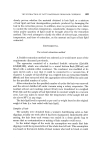
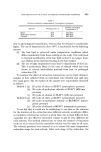
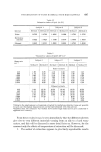
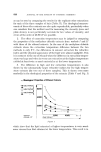
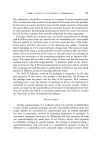
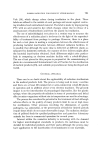
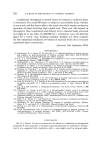
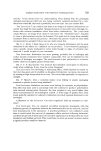
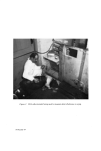
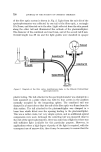
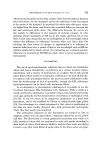
MEASUREMENT OF SKIN COLOUR IN VIVO 731 light from the exit slit is accurately focused on to the end of the light guide. The light guides attached to the spectrophotometer and photomultiplier unit are shown in Fig. $. Light guides 2O 0 400 450 500 550 600 650 /00 nm Wavelength Figure 4 Spectrophotometric curves from standard surface obtained with integrating sphere and light guides. An examination of the performance of the light guides throughout the visible spectrum was made by comparing reflectance curves from 400-700 nm (in steps of 10 nm) using the light guides and the integrating sphere. The specimen was a standard magnesium carbonate block and the reading was set at 100% reflectance at 520 nm (the peak response of the system) with the integrating sphere in position. All other measurements were made relative to this point and the results are shown in Fig. 4. It is clear that the light guides distort the colour of the substrate compared with the integrating sphere but this is not important if the instrument is calibrated on a standard surface.

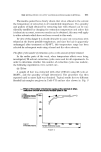
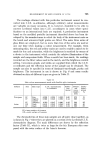
732 JOURNAL OF THE SOCIETY OF COSMETIC CHEMISTS 85 ELropean forehead European arm European sun tanned arm Asian arm 15 •oo •o &o •o •o Wavelength (nm) Figure 5 Spectrophotometric curves from human skin. Spectrophotometric reflectance curves obtained on European and Asian skins are shown in Fig. 5. The 'ann' curves were obtained with the
Purchased for the exclusive use of nofirst nolast (unknown)
From: SCC Media Library & Resource Center (library.scconline.org)