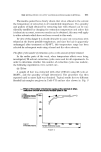
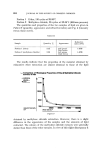
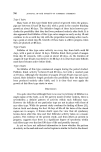
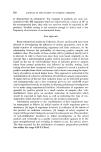
720 JOURNAL OF THE SOCIETY OF COSMETIC CHEMISTS dosimetry procedures used in standard source measurement include calorimetry and chemical methods such as the measurement of the oxidation of ferrous to ferric ions. For a package of given density the uniformity of dose will depend on package thickness and in practice as previously mentioned, the packages are treated with half the required dose given from one side and half from the opposite side. An example of dose distribution achieved in this way is illustrated in Fig. 4. It is important to realize •vhen a package is stated to have been given a certain dose this is the minimum dose which is received 3.0 • ot(•[ dose ' 2.0 / _ ol-5- 10 20 30 PACKAGE DEPTH (crn) Figure •t. Dose distribution in a package of density 0.5 folloxving cobalt-60 gamma radiation (to a minimum dose of 2.5 Mrad) with half the dose given from one side and half from the opposite side. at the centre and overdosing at the outside is often of the order of 20% higher. Dosimetry procedures are normally the responsibility of the plant operator. For the convenience of the operator and the user of irradiated products small adhesive indicator labels have been developed, Farrell and

GAMMA RADIATION FOR PRODUCT STERILIZATION 721 Vale (14), which change colour during irradiation in the plant. These labels are affixed to the outside of each package and ensure against confus- ing irradiated and unirradiated material. The label is made by impregnating PVC with an acid sensitive dye which changes colour due to release of a small amount of hydrochloric acid from the plastic by irradiation. The use of microbiological test pieces in a routine way to measure the effectiveness of a radiation plant is irrelevant in the light of the reproduci- bility of treatment from package to package. However, there is a place for such a test piece in making a comparison between the effectiveness of producing bacterial inactivation between different radiation facilities. It is possible that although the same dose is delivered at different plants as measured by dosimetry methods, the manner of dose delivery might affect the bacterial inactivation obtained. Such differences might arise particu- larly in comparing an electron machine facility with a cobalt-60 plant. The use of test pieces for this purpose is proposed at the commissioning of plants in a recommended International Code of Practice for the sterilization of medical products (15), and suitable preparations are being developed and tested. GENERAL APPRAISAL There can be no doubt about the applicability of radiation sterilization in the medical products field. The process is being used in many countries and there are at least 20 commercial or semi-commercial cobalt-60 plants in operation and in addition about seven electron machines. The greatest impact is on the introduction of pre-packaged disposables. like the plastic syringe, where the properties of radiation in terms of penetration and lethal effect on micro-organisms without rise in temperature are used to advantage. The process has considerable potential in the treatment of food although adverse effects on the quality of many products limit its use at high doses for sterilization. Other processes involving the elimination of specific pathogens, e.g. salmonellae, or the preservation of foods for limited periods require doses which do not cause observable change. The radiation steriliza- tion of pelleted feeds for specified-pathogen-free and germ-free laboratory animals has been in commercial operation for several years. Interest within the cosmetics industry is increasing with the demand for higher microbiological standards in products. Its usefulness must be decided for individual products and their packs although the process may have application to the inactivation of contaminants in raw materials.
Purchased for the exclusive use of nofirst nolast (unknown)
From: SCC Media Library & Resource Center (library.scconline.org)