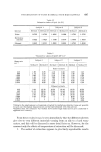
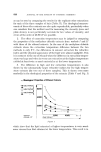
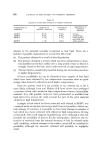
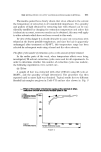
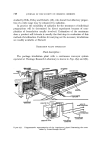
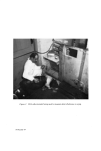
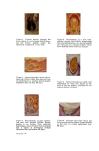
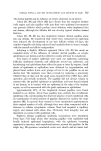
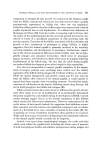
Figure 8. Interior of the 'batch' package irradiation plant at Wantage Research Laboratory showing boxes being loaded on to the monorail conveyor system. This plant currently contains 200 kCi of cobalt-60. Facing page 719

GAMMA RADIATION FOR PRODUCT STERILIZATION 719 The radioactive cobalt-60 is contained in a number of sealed stainless steel tubes mounted in a frame which can be raised and lowered. The safe position for the source is a water pond 6 m deep and the simple operation of lowering the source allows safe entry for personnel into the chamber for maintenance or other purposes. Interlocking mechanisms between the source movement devices and the entrance door provide safeguards for plant operators. Packages, which are a standard size, are loaded manually on to a storage rack and from there they are carried into the irradiation cell. Once inside they are pushed by hydraulic rams to and fro across one face of the radio- active source and they then move to the other face for similar treatment before emerging on to the post-treatment storage rack. The system is made more efficient by using a second parallel conveyor system so that two thick- nesses of box are presented to the source at the same time in an attempt to increase the absorption of the penetrating radiation and so improve effic- iency. The plant will provide a wide range of dose and the two conveyor systems can be operated independently. A radiation plant of the 'batch' type is shown in Fig. 3. The monorail system of conveyance allows versatil- ity in package size and this plant is particularly suitable for use with small batches of different products requiring different doses. The dose of radiation received by packages is dependent on the size and geometry of the source, the density of the material, the distance of the package from the source and the time of its exposure. In a routinely operating plant, once the density of packages is known the dose given is controlled by merely altering the speed of the conveyor system. Adjust- ments are made for the gradual decay of the source which amounts to one per cent per month and which is accurately predictable the source is 'topped up' from time to time to maintain throughput. Process control During commissioning of a radiation plant the pattern of distribution of dose within standard packages and the relationship between dose and target density are established by experimental runs. In routine operation the dose is constantly checked by including dosimeters in packages. A convenient dosimeter developed by Whittaker (13) and currently in wide use, consists simply of a small piece of red Perspex which, after exposure to radiation, changes in optical density. The change is measured using a spectrophotometer and converted to a quantitative measure of dose by reference to a calibration curve prepared using a standard source. Basic
Purchased for the exclusive use of nofirst nolast (unknown)
From: SCC Media Library & Resource Center (library.scconline.org)