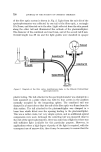
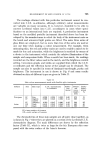
MEASUREMENT OF SKIN COLOUR IN VIVO 729 taining the optical system and photocell, and a mirror galvanometer. The head measures 11 X 9 X 8 cm and weighs 675 g, so although it can be used on humans, care has to be taken that the weight does not blanch the skin. Jarrett (12) has also used this instrument for the measurement of skin pigmentation, although it was modified by the addition of a uv light source and uv transmitting filter to enable measurements to be taken at 360 nm, where melanin absorbs heavily. Although the reflectance head of the EEL spectrophotometer is rela- tively small, it is, nevertheless, very difficult to make measurements on the face owing to difficulties in positioning the instrument correctly. It is also impossible to make measurements on small animals such as guinea-pigs or rats. The problems of correct positioning of a reflectance head on the skin of humans and small animals, without causing colour changes due to defor- mation of the skin surface, have been solved largely by the use of flexible fibre optics light guides. Fibre optics The essential principles of fibre optics are that smooth filaments of transparent materials, such as glass, conduct light with high efficiency by means of total internal reflections along the filament walls, and fibres in a bundle conduct this light independently of one another. In practice, fibres are coated with a thin layer of glass of lower refractive index than the core. Without this coating light would be lost owing to minute imperfections on the surface of the fibre and this would become serious in a fibre where each ray may undergo hundreds of thousands of reflections. Fibres can be pro- duced with a diameter as small as 2 i•m, but a diameter of 50 I•m is common in flexible light guides as this size gives a useful combination of flexibility with strength. A practical light guide consists of a bundle of several thou- sand fibres cemented together at the ends the faces of the bundle are optically polished, and the whole structure is protected by a plastic sheath or a flexible metallic spiral tube. A Hitachi Perkin-Elmer model 139 spectrophotometer was modified using a two-tailed flexible light guide (Sunbury Glass Works Ltd., Ted- dington, Middx.). An integrating sphere is usually attached to the instru- ment when making measurements of diffuse reflectance from surfaces, but the design of the sphere is such that it is possible to position only small flat samples against the sphere's aperture. The attachment was therefore removed from the instrument and replaced by the light guide. A diagram

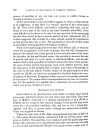
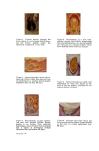
730 JOURNAL OF THE SOCIETY OF COSMETIC CHEMISTS of the fibre optic system is shown in Fig. 2. Light from the exit slit of the spectrophotometer was collected by one tail of the fibre optic, a rectangle 10 X 2 mm, and directed on to the skin. Light reflected from the skin passed along the other tail and illuminated the cathode of the photomultiplier. The diameter of the combined end was 6 mm, and of the second tail 3 mm. Overall length was 35 cm and the light guides were sheathed in opaque (• Phot lluminat!Tail L•F Tail. o Figure 2 Diagram of the fibre optics modifications made to the Hitachi Perkin-Ehner spectrophotometer. plastic tubing. The tail attached to the spectrophotometer was clamped in a tube mounted on a plate which was held by four screws in the position normally occupied by the integrating sphere. The combined end was clamped in a brass tube so that the end of the fibre optic was 3 mm from the skin surface. The tail attached to the photomultiplier was clamped in a brass boss which fitted over the opening leading to the photomultiplier. This was a rather crude, but very simple system, and no additional optical components were used. Although the collecting tail was mounted close to the exit of the spectrophotometer, there was some loss of light but there was still sufficient light available for this particular purpose. However, in applications where a high degree of purity of the light is required, with the consequent use of narrow slits, then it may be necessary to ensure that the
Purchased for the exclusive use of nofirst nolast (unknown)
From: SCC Media Library & Resource Center (library.scconline.org)