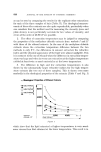
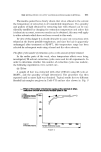
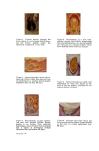
732 JOURNAL OF THE SOCIETY OF COSMETIC CHEMISTS 85 ELropean forehead European arm European sun tanned arm Asian arm 15 •oo •o &o •o •o Wavelength (nm) Figure 5 Spectrophotometric curves from human skin. Spectrophotometric reflectance curves obtained on European and Asian skins are shown in Fig. 5. The 'ann' curves were obtained with the

MEASUREMENT OF SKIN COLOUR IN VIVO 733 reflectance head placed on the inner surface of the forearm midway between wrist and elbow for the 'forehead' curves the reflectance head was placed in the centre of the forehead. As expected the white skin reflectance values are higher than the Asian, and there is also a marked difference between the fair and suntanned white skins. The differences between the curves are due mainly to differences in the amount of melanin present. In vitro melanins absorb maximally at 410 nm in the visible spectrum but in vivo there is also some absportion due to haemoglobin at this wavelength which reduces the difference in reflectance between white and Asian skin. For studying the time course of changes in pigmentation it is sufficient to measure reflectance over a period of time at one wavelength such as 650 nm which is unaffected by blood content. For estimating any erythema present, reflectance is measured at 550-560 nm where there is heavy absorption by haemoglobin. COLORIMETRY The use of spectrophotometric reflection data to obtain the tristimulus values and hence chromaticity co-ordinates of a surface involves tedious calculations, and a number of instruments are availab'e fitted with special colour filters which enable the tristimulus coefficients to be read off directly. In common with spectrophotometers the most accurate colorimeters suffer from the disadvantage of lack of portability, though the EEL reflectance spectrophotometer can be fitted with tristimulus filters. As an alternative to photoelectric colorimeters it is possible to use the Lovibond Tintometer (The Tintometer Ltd., Salisbury, Wilts.), which is a visual, subtractive colorimeter. A portable version was manufactured some years ago, primarily for the measurement of erythema in radiological work (13, 14). It was too heavy to be completely satisfactory as a hand held instrument, and it was modified by Gibson by fitting flexible light guides (15). One advantage of a visual instrument is that errors in positioning on the skin are more readily detected than with photoelectric instruments where they may easily pass unnoticed. The subtractive primaries in the Tintometer are formed by sets of magenta, yellow and cyan glass filters, commonly referred to as red, yellow and blue. The filters form an evenly graduated series from near white to a fully saturated colour and are numbered in units and tenths according to their depth of colour. Each series is additive, and the three series are related in such a way that when filters of equal value in the three series are super-
Purchased for the exclusive use of nofirst nolast (unknown)
From: SCC Media Library & Resource Center (library.scconline.org)