744 JOURNAL OF THE SOCIETY OF COSMETIC CHEMISTS 17). However recombinants of lip mesoderm with ectoderm from the back, where pelage hairs normally develop, showed no follicle development while lip ectoderm recombined with back mesoderm or tooth mesoderm developed whiskers (17, 18). It is probably worthwhile at this point to seek some explanation for the variations in influence and response described above, and those to be referred to later, within the embryological concepts of induction, determin- ation and differentiation (19, 20). Briefly, induction describes the action of one population of cells on another which causes them to change in a developmentally significant way (20). One resultant of an inductive act is determination which can be envisaged as the process whereby a progressive and permanent blocking of part of the genome occurs in a cell population so that its developmental potential is restricted (20). In this way, for example, epidermal cells have been permanently set apart from mesodermal cells so that they can enjoy mutually exclusive specific syntheses (e.g. keratin and myoglobin pro- duction). However epidermal cells also exhibit a wide range of synthetic activities, including the production of keratin (in all its varieties), sebum, mucus and enamel, exactly which being dependent on, and an expression of, their differentiated state. Where the differentiated status of an epidermal cell population is changed (or "modulated") on exposure to extrinsic factors, we know that it was not rigidly determined. In those few instances where epidermal modulation has not been demonstrated there is still the possibility that the epidermal population has not been exposed to factors capable of changing its gene activity in a marked way (21-23). Even where modulation occurs, a further problem then arises as to whether this repre- sents differential use of the remaining unblocked genome by a system of gene repression, or relative rates of gene function (20). ADULT SKIN AND APPENDAGES In adult mammals Billingham and Silvers (21-23) have shown that the superficial epidermis is capable of being modulated its thickness and pattern of keratinization being dependent on regionally specific stimuli from the underlying dermis. However oral epithelia appeared to be in- trinsically determined, resisting the influence of "foreign" dermis. Hair and feather follicles, in their anatomy, behaviour and products, are more complicated than the surrounding skin and accordingly seem to yield more complicated experimental results.

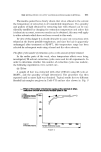
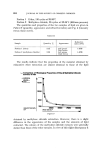
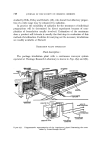
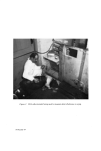
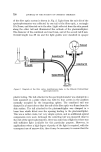
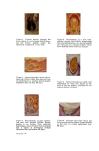
Figure 1 Vertical section through the lower region of a rat whisker follicle show- ing the dermal papilla within the epidermal component of the bulb Figure 2 Development of a new bulb, whisker growth and follicle lengthening following implantation of a derreal papilla into the base of a whisker follicle whose lower half had been removed. 21 days. Figure 8 Section through a newly devel- oped hair follicle which was induced from ear epidermis by a xvhiskcr derreal papilla implanted into ear skin. 35 days. Figure 4 Section through hair shaft, still ensheathed by inner root sheath at the level of the ear surface, produced by an induced follicle. 64 days. Figure 5 Recombinant of gum epithel- ium and blue stained whisker dermal papilla in ear dermis. Note epithelial hyperplasia, areas of yellow fibrous keratin and a region of developing stellate reticulum-like epithelimn. 62 days. Facit•g page 745 Figure 6 Aberrant hair bulb which has developed around a whisker dermal papilla in the wall of a labial epithelium cyst 62 days.
Purchased for the exclusive use of nofirst nolast (unknown)
From: SCC Media Library & Resource Center (library.scconline.org)