]. Soc. Cosmet. Chem., 23, 89-97 (February 3, 1972) Induced Pseudomonas Keratitis as Related to Cosmetics F. N. MARZULLI, Ph.D.,* J. R. EVANS, M.S.,* and P. D. YODER, B.A.* Synopsis--The potential hazard to consumers from use of EYE-AREA COSMETICS contami- nated with PSEUDOMONAS AERUGINOSA was evaluated. The development of pseudo- monas KERATITIS in rabbit and monkey eyes could only be achieved consistently when or- ganisms were introduced into eyes whose corneal epithelium was not intact. Data are also presented which compare the effects of introducing viable organisms and ENDOTOXIN (a pscudomonas lipopolysaccharide) into CORNEA with those obtained on SCLERA and DERMIS by topical application and injecti,on techniques. The RABBIT EYE appears to be more sensitive to the virulent effects of P. aeruginosa than the MONKEY EYE. Finally, experimental results suggest that corneal destruction by P. aeruginosa results from the or- ganism's elaboration of a COLLAGENOLYTIC ENZYME, which may be activated in vivo during the infectire process. When endotoxin prepared from P. aeruginosa is injected into the cornea, it produces corneal changes resembling pseudomonas keratitis. The endotoxin also appears to be capable of stimulating the release of a collagenolytic enzyme. Further work is needed to establish the precise mechanisms of tissue destruction. INTRODUCTION Pseudomonas aeruginosa is an ubiquitous gram-negative, rod- shaped bacterium, which poses a serious threat to vision in the damaged or infected eye. Once the organism has established itself in the cornea, disease progresses rapidly, producing total corneal destruction and irre- versible visual loss in man within 24 to 96 hours (1-3). It is possible for this motile organism to enter the eye through the use of microbially contaminated eye-area cosmetics. If the cornea is not in- * Division of Toxicology, Bureau of Foods, Food and Drug Administration, U.S. Depart- merit of Health, Education, and Welfare, Washingtonl D.C. 20204. t Division of Microbiology, Bureau of Foods. Present address: Division of Drug Biol,ogy, Bureau of Drugs. 89

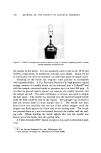
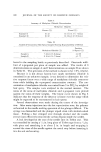
90 JOURNAL OF THE SOCIETY OF COSMETIC CHEMISTS tact, the organism could then become established in the cornea. Thus, cosmetics intended for the eye area must be free of these opportunistic pathogens when marketed. The removal of this hazard from such prod- ucts requires the use of preservative systems that are bac.teriostatic and even bactericidal to any microorganisms that might be introduced during subsequent consumer use (4, 5). The present investigation was conducted in order to assess the hazards that contaminated cosmetics might pose to consumers. The approach used was to find out under what experimental conditions contamination of the conjunctival sacs of rabbit eyes with viable Pseudomonas aerugi- nosa (DM-1167) results in infection of the corneal stroma, keratitis, and pyocyanic sequellae. EXPERIMENTAL Animals New Zealand White rabbits of either sex, weighing 3 to 5 kg, were used. Commercial rabbit pellets and water were allowed ad libitum. Cynamologus monkeys of 1 to 2 kg were used. They were fed monkey chow containing 25% protein. Inocula P. aeruginosa DM-1167, isolated from a contaminated bath oil, was the seed organism for viable cell preparations and for endotoxin. The viable cells were a saline wash of an 18-hr BHI Agar slant grown at 37øC and adjusted to 85% T at 550 nm with the B 8c L Spectronic 20 spectrophotometer (1.5 X 10 s cells/ml). Endotoxin • was prepared from cells grown in a synthetic medium (6), extracted with trichloroacetic acid (7), and purified by alcoholic frac- rionation (8). Exploratory Studies In exploratory studies to establish conditions for a positive control, it was demonstrated that ocular instillation* of even large numbers of P. aeruginosa was ineffective in consistently producing infection in intact rabbit eyes. This led to a variety of attempts to aid entry of the organism * 0.25 mg of (Lowry) protein/ml 0.12 mg of (Kjeldahl) nitrogen/ml LD•o= 1.2 mg of protein/kg intravenously. • In all experiments, the lids were held closed for I sec following instillation in the con- junctival sac.
Purchased for the exclusive use of nofirst nolast (unknown)
From: SCC Media Library & Resource Center (library.scconline.org)