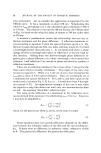
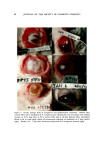
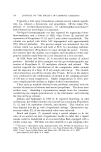
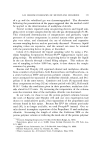
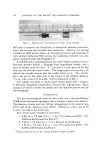
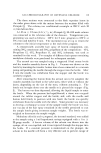
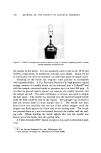
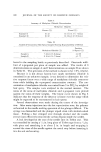
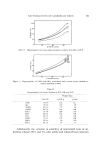
GAS CHROMATOGRAPHY OF METHYLENE CHLORIDE 121 'TIME l, igure 3. Gas chromatographic curve of liquid hair spray sample. Peaks are: 1, Propellant 12 2, isobutane 3, n-butane 4, ethanol 5, Propellant 11 6, methylene chloride and 7, n- propanol RESULTS AND DISCUSSION Figure $ is the chromatogram of a hair spray to which methylene chloride and n-propanol have been added as described above. The re- tenti(•n times of the peaks are: Propellant 12, 116 sec isobutane, 171 sec ethanol, 241 sec Propellant 11, 296 sec methylene chloride, 349 sec and n-propanol, 430 sec. The reproducibility of sampling was calculated from the area count of the Propellant 12 peak when analyzed repeatedly. On two samples, the reproducibility was shown to be --+5%. Two samples of hair spray containing known amounts of methylene chloride were analyzed in replicate to determine the accuracy of the procedure. These results are shown in Table I. From these standards under the instrumental conditions used, the relative response of the methylene chloride compared to n-propanol was found to be 0.810. The two commercial hair sprays containing methylene chloride were analyzed repeatedly. Approximately 2 to 5 g of hair spray was trans-

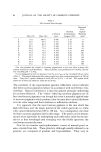
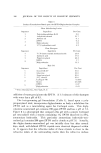
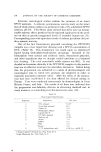
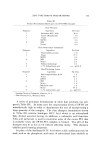
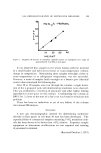
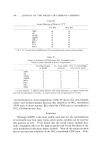
122 JOURNAL OF THE SOCIETY OF COSMETIC CHEMISTS Table I Accuracy of Methylene Chloride Determination Methylene Chloride Known (%) Found (%) Standard I 10.12 Standard II 10.32 10.11-4-0.17 ( 7 detns) 10. 324-0.32 (10 detns) Table II Analysis of Commercial Hair Spray Samples Showing Reproducibility of Method Precision Methylene Chloride (%) (1 Sigma) (%) Sample A 7.224-0.15 (8 detns) 4-2.08 Sample B 8.104-0.15 (7 detns) 4-1.79 ferred to the sampling bottle as previously described. One-tenth milli- liter of n-propanol per gram of sample was added. The results of 8 determinations on sample A and 7 determinations on sample B are shown in Table II. The precision of the method is shown to be +---2% relative. Because it is not always known how much methylene chloride is contained in an unknown sample, it was desired to determine the rela- tive response factor over a wide range of methylene chloride concentra- tions while holding the n-propanol concentration constant. The con- centration of methylene chloride was varied from 3 to 20% by weight of hair spray. The samples were analyzed in the normal manner. The ratios of the areas of methylene chloride and n-propanol were plotted against the ratios of their weights. The linear curve shown in Fig. 4 indicates that the response of the detector is linear over the range which might be expected to be encountered in hair sprays. Several observations were made during the course of the investiga- tion. After many injections into the hot vaporization zone, the polymer carbonized in the needle making operation of the plunger difficult. The syringe was dismantled and the plunger wiped clean with alcohol-soaked tissue. Pulling a fine crimped wire through alcohol and the needle several times effectively removed the carbon deposit inside the needle. A leak developed at the seat of the needle into its Teflon seal. This was remedied by cutting a I/s-in. long piece of Teflon tape from a 1/2-in. wide piece and stretching it to about 2 in. in length and wrapping it around the stem of the needle against the metal stop before inserting it into the seal and securing.
Purchased for the exclusive use of nofirst nolast (unknown)
From: SCC Media Library & Resource Center (library.scconline.org)