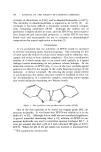
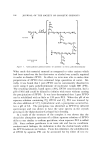
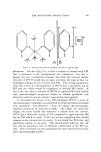
ZINC PYRITHIONE PREPARATIONS 101 the growth of small, fine crystals had formed throughout the media. Thus, what in effect we were able to do was to prepare a near-saturated, saturated, or supersaturated solution of ZPTO relatively quickly and without the presence of an equilibrating solid. The mechanism by which ZPTO produces a therapeutic effect on seborrheic dermatitis is not understood. If one postulates that the mechanism of the action of ZPTO is through epidermal penetration, then one must conclude that it is not the ZPTO particles but rather the molecules themselves that penetrate the epidermis. One can then reason that the use of a saturated solution of ZPTO can give correspond- ing effects as a suspension of the solid in contact with its supernatant liquor. If a 1% suspension of ZPTO contains only 0.01% (100 ppm) available material for epidermal penetration, then the remaining 0.99% dispersed solid can be considered unavailable for penetration into the skin. Hence, theoretically, the clear Carbopol gel that was prepared containing 0.01% solubilized ZPTO can be just as efficient a preparation in relieving seborrheic dermatitis as an opaque preparation containing 99-fold more ZPTO as suspended material. This statement is conjec- ,ture and no attempt has been made to determine its validity either experimentally or clinically at this time. EXPERIMENTAL The procedure for determining solubility was rapid, but only ap- proximate, since the ultimate end of the testing was not the elucidation of solubility data, but the formulation of hair products. Thus, 1 g of ZPTO was dissolved into 9 g of the amine in question with gentle heating, if necessary. The ease with which the ZPTO was dissolved was noted along with the quantity of residual insolubles at room tempera- ture. An estimation of the solubility of ZPTO in the amine was then made. Besides ammonium hydroxide, the following common labora- tory amines were tested for their solvent effect on ZPTO: triisopropanolamine triethanolamine N-methyldiethanolamine N N-dime thylaminoethanol N-ethyldiethanolamine N,N-diethylaminoethanol These amines have several characteristics in common. All are tertiary amines they have difunctionality in the form of alkanol groups that

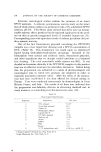
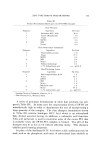
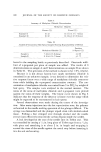
102 JOURNAL OF THE SOCIETY OF COSMETIC CHEMISTS lower their basicity through an inductance effect they are all very poor solvents for ZPTO. Other amines which proved ,to be poor solvents were trilaurylamine, ethoxylated cocoamine-15 moles ETO, and morpholine. It was found that the following compounds containing primary amino functional groups made excellent solvents: n-dodecylamine 1,3-diaminopropane N-(3-aminopropyl) 1,3-propanediamine N- (3-aminopropyl)N-methyl- 1,3-propanediamine bis(2-aminoethyl)sulfide All of these amines were capable of dissolving over 10% ZPTO. There were also a number of oxyamino compounds that showed very good solvent properties. These were: ethanolamine diglycolamine 3-methoxy-n-propyl amine 3-(2-ethoxyethoxy)-n-propyl amine 3-[ 2-(2-e thoxye thoxy)e thoxy] -n-pro pylamine Diglycolamine,* or 2-hydroxy-2'-aminodiethylether, was singled out for its unique solvent properties: it can dissolve 42% ZPTO. Of course, the fact that this amine itself was water soluble was also con- sidered favorable. In relation to the ethoxylated propylamines, it was observed that increasing the ethoxylation function lowers their solvent capacities. Thus, while 3-(2-ethoxyethoxy)-n-propylamine was able to dissolve over 10% of ZPTO, the solubility capacity of 3-[2-(2-ethoxy- ethoxy) ethoxy]-n-propylamine was approximately 8%. A number of primary amines that were expected to be good solvents but failed to be were: N,N-dimethyl- 1,3-propanediam ine N-(3-aminopropyl)cyclohexylamine bis(3-aminopropyl)piperazine 4-(3-aminopropyl)morpholine ethylenediamine cyclohexylamine * Jefferson Chemical Co., Houston, Tex.
Purchased for the exclusive use of nofirst nolast (unknown)
From: SCC Media Library & Resource Center (library.scconline.org)