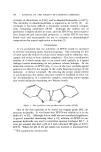
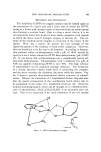
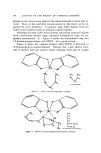
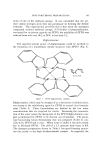
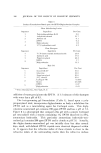
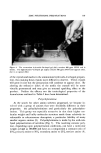
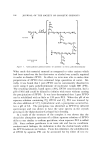
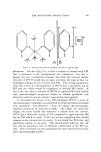
ZINC PYRITHIONE PREPARATIONS 113 imine of molecular weight 300. It is interesting that the building block of these •nolecules, ethylenediamine itself, does not dissolve ZPTO either with or without water. This is not unusual when one realizes that ethylenedia•nine is considered the weakest base among the polymethyl- enedia•nines, NH2(CH2)•NH2, due to its high inductive effect, its elec- trostatic repulsion effect, and intra•nolecular hydrogen bonding that should give the ethylenedia•nine •nolecule a •nost stable 54ne•nbered cyclic structure (13). CONCLUSION It was shown that clear hair preparations containing ZPTO can be prepared by first complexing the ZPTO in a variety of organic amines. Its solvation •nay be looked upon as an acid-base reaction in which the solubility of the ZPTO is a function of the amine cmnplexant. Among the factors that affect this solubility are the base strength of the amine, its steric hindrance, the formation of chelate rings, and its inductance and electrostatic effects, all of which contribute to the stability or in- stability of the complex. It is shown that if the proper precautions are taken, safe and effective clear preparations can be prepared. What should be determined is the minionurn concentration of complexed soluble ZPTO in such dear preparations that would be effective against dandruff. ACKNOWLEDGMENT The author would like to acknowledge and thank the following individuals who have contributed to the findings: Dr. Earle W. Brauer, Mr. Clyde M. Burnett, Mr. Bernard L. Kabacoff, and Mr. Radhakrishna B. Kasat. (Received May 28, 1971) REFERENCES (1) Brauer, E. W., Opdyke, D. L., and Burnett, C. M., Antiseborrheic qualities of zinc pyrithione in a cream vehicle, J. Invest. Dermatol., 47, 174 (1966). (2) Zinc and Sodium Compounds of Omadine, Tech. Bull., Olin Chemicals, New York, N.Y. (g) Opdyke, D. L., and Burnett, C. M., Private communication, Revlon Research Center, Aug. 25, 1965. (4) Baslo, F., and Johnson, R., Coordination Chemistry, W. A. Benjamin, Inc., New York, 1964, p. 126. (5) Yukawa, Y., Handboob of Organic Structural Analysis, W. A. Benjamin, Inc., New York, 1965, p. 584.

114 JOURNAL OF THE SOCIETY OF COSMETIC CHEMISTS (6) Martell, A. E., and Calvin, M., Chemistry o[ the Metal Chelate Compounds, Prentice- Hall, Inc., Englewood Cliffs, N.J., 1959, p. 254. (7) Irving, H., Williams, R. J. P., Ferrett, D. J., and Williams, A. E., The influence of ring size upon the stability of metal chelates, J. Chem. Soc., 1954, p. 3494. (8) Patty, F. A., Irish, D., and Fasset, D. W., Industrial Hygiene and Toxicology, Vol. II, Interscience Publishers, New York, 1963, p. 2037. (9) PEI--The Versatile Polymer, Tech. Bull., The Dow Chemical Co., Midland, Mich. (10) Kabacoff, B. L., Intern. Rept., Revlon Research Center. (11) Burnett, C. M., Intern. Rept., Revlon Research Center. (12) Brauer, E. W., Intern. Rept., Revlon Research Center. (13) Gero, A., Inductive effect and hydrogen bonding as factors in the base strength of polymethylenediamines, J. Amer. Chem. Soc., 76, 5159 (1954).
Purchased for the exclusive use of nofirst nolast (unknown)
From: SCC Media Library & Resource Center (library.scconline.org)