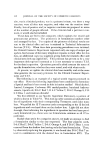
538 JOURNAL OF THE SOCIETY OF COSMETIC CHEMISTS being the same as formulation number 205-37. However, the perfume in the latter has been replaced with Fra•ance #2-4931. We are unable to process this formulation until we pull formulation card 205-37 which contains the a,ctual ingredients used. A similar situation arises when a frequently used base is incorporated into a new formulation. Rather than rewrite the original ingredients, the cosmetic chemist indicates "same as base in formulation 123." Again, we must go to our card files to obtain the actual ingredients used in preparation of the base. In the near future we plan to assign term num'bers to all ingTedients. Such a move will enable us to keypnnch a five-digit term number, from

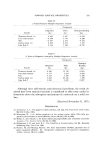
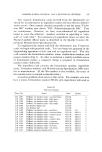
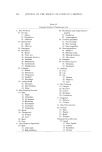
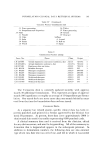
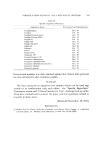
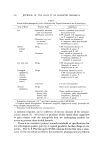
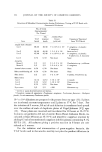
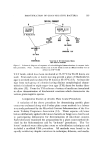
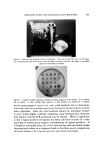
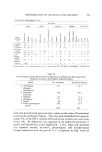
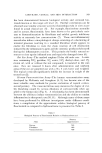
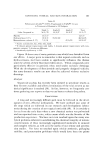
FORMULATION-CLINICAL DATA RETRIEVAL SYSTEMS 539 a check list, rather than having to keypunch the entire ingredient natne. In addition to facilitating the keypunch operation, it then becomes easier to sort and separate ingredients for drilling. It is much faster to sort a five-digit term number on the IBM card sorter than it is to sort a 41-char- acter alpha-numeric field. Also, a given ingredient may have a number ot• names or synonyms. A single term number will relate all synonyms to the otticial MS name. For example: Carbowax 400 and PEG 400 will be preprinted on a checklist with a .common term number. Thus, regard- less of which synonym is used, only one term number will be assigned. In order to maintain complete search flexibility, we not only use the broadest possible ingredient term, but we also enter the most specific in- gredient name for a broad class. For example, there presently exist ap- proximately 10 different varieties of talc in our system, each of which has been assigned a separate term card. In addition, we have a general talc card into which all talcs are drilled. Therefore, each variety of talc can be selected separately or all found collectively. On occasion, a search re- quest is submitted and the requestor is not certain which variety of talc he should seek. In such an instance we would pull the general talc Ter- martex card. On the other hand, someone may desire all formulations containing talc No. 1621. We would therefore use the Termatrex card containing talc No. 1621 formulations only. This technique is employed whenever we encounter different varieties of the same ingredient. As a next step, a decision had to be made regarding which ingredients should be assigned Termatrex cards for drilling. Only when an ingredi- ent appeared in 5 or more formulations would it be assigned a Termatrex card. Until that frequency was reached, an alphabetized listing of unas- signed ingredients would be maintained for manual search purposes. A classification number is assigned to all formulations by the cosmetic chemist in the laboratory. The Cosmetic Product Classification List (Table IV) can be added to as new categories are prepared in the labs. It is used as follows: A typical classification number on a data card might be C 10.11. This would indicate that it is a skin product (C), a bath prod- uct (10), and finally, that it is physically a clear liquid (.11). Presently, although keypunched, the .classification number is not drilled into Ter- martex cards however, we do maintain a listing in classification number order for manual look-up (Table V). At present, our system contains 6.9,0 specific ingredient term cards covering approximately 4300 cosmetic formulations. On input it repre- sents 40,000 punched cards.
Purchased for the exclusive use of nofirst nolast (unknown)
From: SCC Media Library & Resource Center (library.scconline.org)