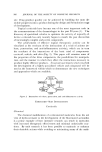
CORTICOID, VEHICLE, AND SKIN INTERACTION 579 and the vehicle components affect the permeability of the stratum corneum in a favorable manner. Other Physical-Chemical Considerations Although we have concentrated primarily on the solubility param- eters of drug and vehicle in the foregoing section, it should be empha- sized that many other physical-chemical properties can have a significant effect on release. Dissociation Constant In the case of ionic comp. ounds, only the un-ionized form of the drug may penetrate the skin to any degree. Thus, the dissociation constant for the drug and the pH of aqueous vehicles are important considerations in determining the actual effectiv, e concentration of the diffusing species (24). Particle Size A reduction in the particle size of a suspended drug can promote the rate of dissolution and release. The effect of particle size reduction in enhancing the therapeutic potency of corticoids has been demonstrated (25). Polymorphism Since polymorphs of the same drug entity may differ significantly in many of their physical properties, including solubility, careful considera- ticn must be given to this phenomenon in any pharmaceutical delivery system in which the drug exists in the solid state (26). Viscosity When a poorly soluble drug is suspended in an ointment vehicle, rela- tively minor changes in vehicle composition, to reduce the viscosity (thus favorably changing the diffusion coefficient) and/or increase the solu- bility, may markedly increase the release rate. Emulsion Systems Most topical vehicles that serve as drug carriers are hererogenous systems consisting of two or more distinct phases and containing a num- ber of additives that contribute to the overall effectiveness and/or ac- ceptability of the product. The physical and chemical environment in which the drug is placed and its distribution in the various phases of

580 JOURNAL OF THE SOCIETY OF COSMETIC CHEMISTS the vehicle are all factors influencing drug release. The distribution coefficient of drug between the internal and external phases of an emul- sion system, as well as total concentration, defines the concentration gradi- ent between the vehicle and the skin surface. Binding The drug may be bound by adsorption onto solid adjuvants contained in the vehicle or complexed by soluble, vehicle constituents. Either of these general interactions could reduce the quantity of free drug available and lower the release rate from the formulation. Volatility Another important factor to consider is changes which may occur in the vehicle immediately following application. Loss of a volatile compo- nent, uptake of water from the skin or atmosphere, phase inversion of an emulsion--all are factors that may produce an entirely different effective drug concentration s.o far as drag transport into the skin is concerned. Concentration changes due to loss of a volatile component in the vehicle were exploited by Coldman et al. (22) to facilitate steroid penetration. Barrier A Iteration As a further ,extension of the dependence of skin penetrability and in vivo response to vehicle composition, Ostrenga et al. (27) have studied the possible effects of propylene glycol vehicle composition on barrier permeability and st.eroid binding within the barrier. The results sug- gested that high amounts of propylene glycol decreased the permeability of the barrier and that there was little or no binding of steroid within the barrier. This alteration of the barrier by the vehicle could involve in- corporation of vehicle components by the barrier and/or dehydration or extraction of barrier components by the vehicle at high proportions of glycol. Conclusion These data for gels, cream, and ointments have illustrated the relative significance of drug release and skin penetrability. The nature of both diffusional processes are a consequence of the physical-chemical proper- ties of both the drug and t,he vehicle. This negates the possibility of a universal vehicle and stresses the need for proper design in the formula- tion of efficacious topical products.
Purchased for the exclusive use of nofirst nolast (unknown)
From: SCC Media Library & Resource Center (library.scconline.org)