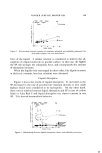
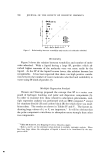
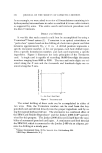
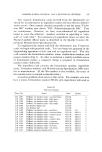
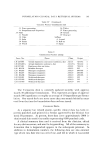
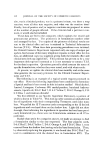
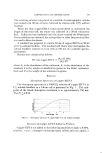
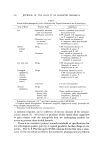
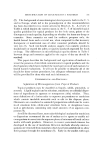
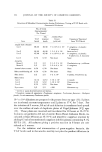
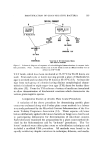
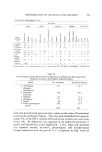
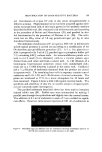
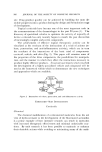
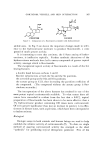
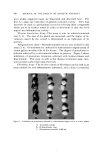
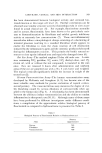
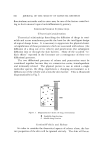
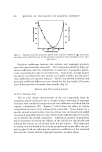
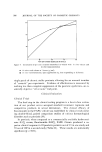
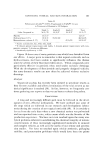
IDENTIFICATION OF GRAM-NEGATIVE BACTERIA 553 of polysorbate 20 as recommended in the First Edition of the Bacteriolog- ical Analytical Manual of the Food and Drug Administration (10) com- bined with the comments of Kohn et al. (11) that polysorbate 20 was a more effective inactivator of parabens than was polysorbate 80, a decision was made to use polysorbate 20 in the initial enrichment medium. Since the group had had good experience with azolectin * as a neutralizing agent for quaternary ammonium compounds (10), a tryptone* (2%), azolectin (0.5%), polysorbate 20 (4%) broth (TAT broth) was developed and tested as the initial enrichment medium for topical products. Inoculation of TAT broth with low cell numbers (less than 50 cells per 40 ml of medium) of each of a wide spectrum of gram-negative bac- teria of interest yielded excellent growth of all test strains. Since the be- havior (recovery) of microorganisms that develop naturally in preserved products can be quite different from that of broth cultures or of labora- tory strains added to preserved products, TAT broth was used for a pe- riod of 3 months to evaluate gram-negative contamination in a series of market samples of topical and oral products. The data in Table II are illustrative of the ability of TAT broth to allow the enrichment and eventual isolation of one or more gram-negative species from a contami- nated topical product. Whether TAT broth is effective in the recovery of anaerobic vegetative cells and spores remains to be determined. Current Isolation Procedure Microbiological determinations currently performed include an aero- bic sterility test in TAT broth, an aerobic bacterial plate count, a plate count of yeast and molds, the indicated number and isolation of gram- negative bacteria, and counts of S. aureus (Fig. 1). For the aerobic steril- ity test, 1-g portions of product are inoculated into 40 ml of TAT broth and incubated at 35-37øC for 5 days, and then at room temperature for an additional 5 days. If no growth is evident, the sample is reported as sterile. If microscopic examination of any suspect growth shows only gram-negative bacteria, the S. aureus and yeast and mold determinations are omitted. All nonsterile samples are diluted serially in the range of 10 -• to 10 -6 in TAT broth. The 10 -x dilution is 10 g of sample (can be a composite of 1-5-g samples for raw materials) into 90 ml o't• TAT broth. For the aerobic plate count, duplicate pour plates of each dilution are prepared with soy bean-casein digest (SCD) agar (12) and incubated at 30-35øC for 48 hours. For yeast and mold counts, 4 pour plates of the ß Associated Concentrates, Inc., 32-30 61st St., Woodside, N.Y. ? Difco Laboraotries, Detroit, Michigan.

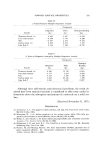
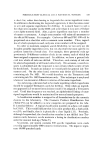
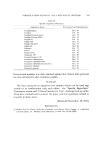
554 JOURNAL OF THE SOCIETY OF COSMETIC CHEMISTS Table II Detection of Microbial Contamination during Preliminary Testing of TAT Broth with Commercial Products • No. of Units Contaminated/ No. Tested 2% Aerobic Plate TAT tryptone Count Organisms ø Speciated Item broth broth (cells/ml) from TAT Broth Liquid bath cleanser Lot 1 48/48 48/48 9 X 10⁴-2 X 10 • P. aeruginosa A. faecalis S. marcgscens Lot 2 48/48 48/48 1.3-5.8 X 10 • Same as lot 1 Lot 3 45/48 45/48 6 X 10a-8 X 10 • P. aeruginosa A. faecalis P. fluorescens S. marcescens Lot 4 0/72 0/72 Not done None Antacids Brand 1 2/2 2,/2 2.1-2.9 X 10• Flavobacterium sp. coilforms Brand 2 2/2 2/2 3.2-4.0 X 10⁶ P. aeruginosa Aerosol shave cream 0/30 0/30 Not done None Baby conditioning oil 0/30 0/30 Not done None Skin lotion 2/2 2/2 1-2 X 10⁴ P. putida Pseudomonas sp. Baby lotion Lot 1 12/12 12/12 1-10 X 10,• A. faecalis Lot 2 5/12 5/12 1-10 X 102 Micrococcus sp. Lot 3 0/12 0/12 Not done None Eye cream 2/2 2/2 100 •*licrococcus sp. • Levels or types of preservatives not known. b Complete names of organisms: Pseudomonas aeruginosa P•eudomonas fluorescens Alcaligenes f aecalis Serratia marcescens Pseudomonas putida. 10 • to 10 -4 dilutions are prepared with potato dextrose agar (13) 2 plates are incubated at room temperature and 2 plates at 37øC for 7 days. For the isolation of S. aureus, 0.5 ml of each dilution is transferred and spread over the surface of each of duplicate plates of Vogel-Johnson (V-J) agar (13). These plates are inverted and incubated for 48 hours at 35-37øC. Colonies are picked to 0.3 ml of sterile Brain Heart Infusion Broth, in- cubated at least 18 hours at 35-37øC and tested for coagulase reaction by adding 0.5 mI of reconstituted coagulase (rabbit) plasma containing 0.1% EDTA (13). All cultures giving a positive reaction in 6 hours are con- sidered as S. aureus. For the isolation and enumeration of gram-negative bacteria, the TAT broth used in the aerobic sterility test plus the product dilutions in
Purchased for the exclusive use of nofirst nolast (unknown)
From: SCC Media Library & Resource Center (library.scconline.org)