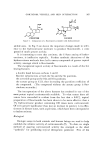
CORTICOID, VEHICLE, AND SKIN INTERACTION 581 VEHICLE-SKIN INTERACTIONS Vehicle Effects The human epidermis exists in a constant state of flux due to its in- teraction with the external environment. The temperature, relative hu- midity, and rate of movement ol/the air at the skin surface are probably the most important natural, external factors that influence the physical state of the skin. Application of a cream, lotion, ointment, or any phar- maceutical vehicle may induce changes in the skin that are reflected by an alteration in skin permeability. The mechanism by which a given ve- hicle may affect skin permeability most likely will involve one or more of the following: effect on the hydration state of the stratum comeurn, effect on the skin temperature, or solvent effects on the stratum comeurn. Hydration Idson has reviewed the effects of emollient creams and moisture on the skin (28). A water content of 10 to 20% must be maintained in the s[ratum corneum layer of the skin in order to maintain its normal softness and pliability. Below this critical level, the stratum corneum becomes brittle and readily cracks. This water deficiency in the cornified epi- thelium can only be remedied by restoring the normal water content. Fats and other oily materials do not alleviate this condition unless they are sufficiently occlusive to reduce the water loss into the air and permit the buildup of the moisture in the skin. The water-binding properties of stratum comeurn appear to resttit from the presence of certain water- soluble substances present in the horny layer (29). Occlusion It is recognized that maceration of the skin by soaking in water or by occluding the skin surface by covering with an impermeable material promotes drug absorption and reduces resistance to skin irritants. A topically applied vehicle has the potential to either increase or decrease the quantity of water in the upper layers of the epidermis. Powers and Fox (30) have shown that water-insoluble oily materials such as petro- latum, lanolin, and isopropyl myristate significantly retard the rate ot• loss of water from the skin surface while certain emulsifiers and humectants (e.g., propylene glycol and glycerin) increase the rate ot• moisture loss. It has been demonstrated in many studies that significant increases in permeability can be induced in vivo by increasing the hydration state

582 JOURNAL OF THE SOCIETY OF COSMETIC CHEMISTS normal human skin. For example, Wurster (31) found that the absorp- tion rate through human skin for a group of salicylate esters was greatest under hydrous conditions. The magnitude of the hydration effect on the penetration rates of the three compounds was proportional to the oil/ water distribution coefficients and water solubilities. The technique of using thin, plastic films as occlusive dressings for topically applied drugs has been exploited to the greatest extent with the topical corticosteroids. Scholtz (32) and other's have shown that this is a valuable new technique in improving the efficacy of corficosteroids in a number of dermatoses. McKenzie (8, 9) used the vasoconstriction ac- tivity of topically applied corticosteroids to demonstrate that the pene- tration of these compounds under occlusion was apparently 100-fold greater than that obtained by simple topical application. Temperature El•tects One can conclude from the evidence in the literature that there is a real and direct relationship between temperature and skin premeability, but temperature effects in topical therapy probably are of minor im- portance. It is true that a solvent which has a low boiling point will cool the skin as it evaporates. This effect is transitory, however, and the normal skin temperature is quickly restored after the liquid has com- pletely evaporated. An occlusive covering on the skin will tend to in- crease the skin temperature by a few degrees by preventing evapora- tion of sweat and also by reducing loss of heat by radiation. However, the permeability change produced by an increase in temperature by occlusion probably is slight relative to the permeability changes restfir- ing from increased hydration of the stratum comeurn. Penetration Enhancers The possibility that a safe, nontoxic substance might someday be found that can be used to temporarily abolish the barrier property of the skin is one that has intrigued clinical investigators (and chemical warfare experts) for many years. Such an agent would have obvious potential in the practice of dermatology. It would also open the door for the use of topically applied drugs to elicit systemic effects. We use the term "pene- tration enhancer" to apply to agents that apparently have a direct effect on the Pe?meab!lit•y of the skin barrier. While some substances ob- viously act by direct chemical insult on the skin, the exact mechauism by which others work is rather obscure. In many cases reported in the literature, the increased percutaneous absorption of drugs observed with
Purchased for the exclusive use of nofirst nolast (unknown)
From: SCC Media Library & Resource Center (library.scconline.org)