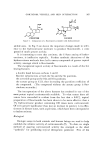
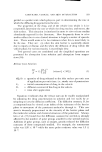
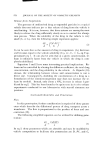
CORTICOID, VEHICLE, AND SKIN INTERACTION 575 (h denoting effective thickness of the skin barrier). The diffusion co- efficient, D, of the drug in the barrier can be minimally modified by the influence of the vehicle components on the nature of the barrier. The partition coefficient, PC, of the drug between the skin and the vehicle can be optimized by decreasing its solubility in the vehicle. The con- centration of diffnsible drug in the vehicle, C,,, for a given labeled strength can be optimized by insuring that all of the drug is in solution. Partition Coe•icient Numerous investigators have found that a special relationship exists between the permeability of skin to penerrants and their partition co- efficients determined in some arbitrarily selected two-phase system. Katz and Shaikh (19) found a correlation between the vasoconstrictor p.otency of a ser .es of topical corticosteroids with partition coefficient and aqueous solubility. Realistically, the only partition coefficient measurement [or a pene- rrant that can be surely related to its rate of diffusion through the skin is a PC value determined [or the equilibrium distribution of the pene- rrant between the stratum corneum and the vehicle. Measurements of this type have recently been made by Scheuplein (20) and are of immense value in relating the physical and chemical properties of a compound to its pentration rate. It is useful to view the partition coefficient of a drug between the skin and the vehicle as an index of mutual affinity between the drug and vehicle. A large PC value thus indicates the vehicle has poor affinity for the drug. A low PC value would indicate a high degree of mutual interaction and reflects the tendency of the drug to remain in the vehicle. Solubility and Partition Coelficient In order to investigate the possible effect of vehicle composition on drug penetration, we studied s,ome very simple pro_p_y_!..•n_•glycol-water mixtures gelled with Carbopol ©* resin as model vehicles for corticoste- roids. In many respects, these sinrole vehicles were ideal because the solu- bility of the corticosteroids could be varied considerably by varying the concentration of propylene glycol in the gel formulation. For instance, the solubility of fluocinolone acetonide varied from approximately 0.06 mg/ml in pure water to 16.8 mg/ml in pure propylene glycol, a 2800-fold difference. * Carboxy vinyl copolymer, B. F. Goodrich Co., Cleveland, Ohio.

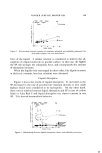
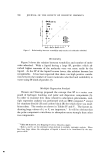
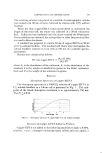
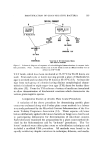
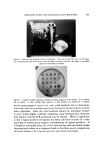
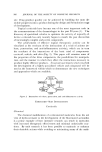
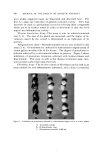
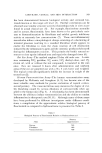
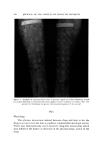
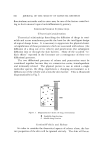
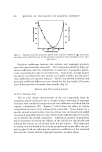
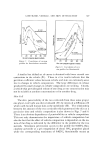
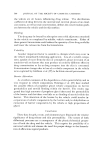
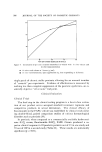
576 JOURNAL OF THE SOCIETY OF COSMETIC CHEMISTS ,.z, 4o • =o C- 20 _ ß •-0 40 60 80 % PROPYLENE GLYCOL 0.8 0.6 • 0.4 • 0.2 Figure 6. Isopropyl myristate/propylene glycol-water partition coefficients (0) and propyl- ene glycol-water solubilities (O) for fiuocinonide (reproduced with permission of the copy- right owner) Partition coefficients between the vehicles and isopropyl myristate were also experimentally measured. The compound exhibited high par- tition coefficients and low solubilities in mixtures of propylene glycol- water containing low glycol concentrations. Conversely, at high propyl- ene glycol concentrations, the steroid was highly soluble, but the parti- tion coefficients were greatly reduced. Similar but shifted solubility and partition coefficient differences were found for the less soluble 21-acetate ester of fiuocinolone acetonide, fiuocinonide (Fig. 6). Release and Penetration Studies Vitro Release Cell The in vitro release characteristics of the two compounds from the propylene glycol-water gels into a receptor phase consisting of isopropyl myristate were studied by means of an in vitro diffusion cell which did not require a membrane (21). Figures 7 and 8 show the effect of vehicle composition on the in vitro release of the corticoids. It was found, for a specific steroid concentration, that the release rate increased with added amounts of propylene glycol in the vehicle until sufficient glycol was pres- ent to dissolve the st'eroid completely. Additional amounts of propylene glycol thereafter increased the affinity of the vehicle for the steroid and reduced the release rate of steroid from the gel vehicle. This reduction in release rate was found to be directly proportional to the effect the pro- i)ylene glycol had on reducing the partition coeffici.ent of the corticoid between the vehicle and the isopropyl myristate receptor phase.
Purchased for the exclusive use of nofirst nolast (unknown)
From: SCC Media Library & Resource Center (library.scconline.org)