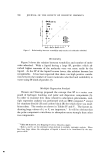
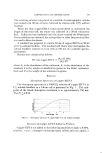
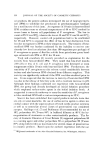
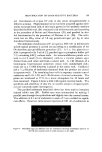
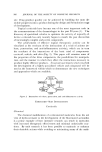
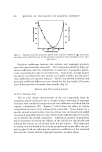
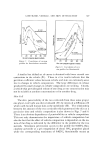
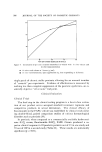
C¸RTIC¸ID, VEHICLE, AND SKIN INTERACTI¸N 58,5 vehicle formulation of maximizing the release rate without unfavorably altering other relevant vehicle properties. Since the solubility of a drug in its vehicle is an important factor determining availability, this param- eter was particularly considered in the design of topical vehicles (35). For this paper, we have selected four vehicles which show a broad range of corticoid solubilization. One product (A) was a conventional oil-in-water vanishing cream in which most of the steroid was present as undissolved, small particles of solid drug. The other three cream formulations were variations of a novel topical vehicle which appears to be particularly well suited as a delivery system for poorly soluble compounds such as topical corticosteroids. The vehicles may be des.cribed as two-phase systems in which a continuous, solubilizing phase of glycols and polyols is distrib- uted in a solid matrix of fatty alcohols (36). These vehicles, which we call FAPG©, * are described as cream/gels, since they combine the physical properties of gels with the cream-like appearance and consistency of emul- sion systems. Selec,tive changes in components can provide a wide solu- bilization range. Three vehi.cles were selected which solubilized 48, 68, and 100•o of the drug, respectively. Release and Penetration In vitro release profiles as well as in vivo vasoconstriction tests were carried out. The results are presented in Fig. 9. Correlation was ob- tained between release, per cent drug solubilized, and vasoconstrictor response for the creams. The results demonstrated (a) the significance of vehicle composition, (b) importance of drug solubility in the vehicle, and (c) the usefulness of in vitro release studies in predicting vehicle effi- cacy. Clinical Pharmacology After passing through all of the previous in vitro. and in vivo trials, the carefully designed formulation must now be tested under clinical conditions. Here, too, careful design is needed to provide highly objec- tive and statistically significant results. A semiquantitative, objective, clinical assay of efficacy has been devel- oped to identify formulations which can produce significant results in clinical therapy. This is the Scholtz-Dumas psoriatic assay (37) which utilizes many of the features of our modified vasoconstrictor assay (10, 23). By means of this technique, several formulations can be screened on a * Sy•tex Laboratories, Inc., Palo Alto, Calif.

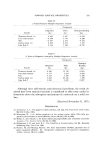
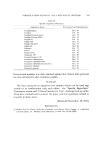
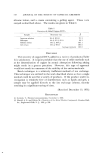
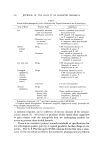
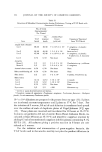
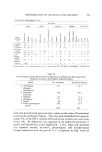
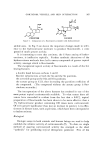
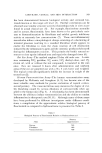
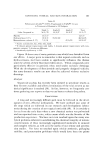
586 JOURNAL OF THE SOCIETY OF COSMETIC CHEMISTS ß 40 20 PER CENT STEROID SOLUBILIZED IN VEHICLE Figure 9. Correlation o[ per cent corticoid solubilized in vehicle with in vitro release and in vivo vasoconstriction ß In vitro total release at 7 hours (q,/cm =) ß In vivo vasoconstriction, open application (% sites responding at 32 hours) single patch of chronic stable psoriasis, allowing for an unusual number of "controls" per experiment. Evidence of effectiveness is measured by nothing less than complete suppression of the psoriatic epidermis--an es- sentially objective "all or none" end point. Clinical Evaluation Clinical Trials The final step in the clinical testing program is a face-to-face evalua- tion of our product versus accepted standard treatment regimens and competitive products in actual dermatoses. The clinical efficacy of fluocinonide in the FAPG vehicle was established by clinical trials utiliz- ing double-blind, paired comparison studies of various dermatologicaI disorders such as psoriasis (38). In psoriasis, when compared to a commercially available hydrocorti- sone 0.5% cream, fluocinonide 0.05% FAPG Cream produced a su- perior clinical response in 10 pso?iat.ic patients out of 13 in one study and 70 out of 102 in a second study (Table II). These results are statistically significant (p 0.01).
Purchased for the exclusive use of nofirst nolast (unknown)
From: SCC Media Library & Resource Center (library.scconline.org)