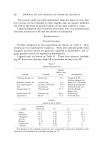
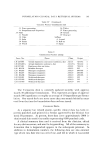
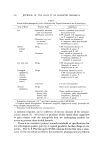
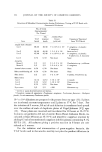
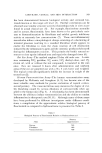
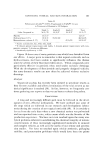
IDENTIFICATION OF GRAM-NEGATIVE BACTERIA 551 (2). The background of microbiological developments, both in the U.S. and in Europe, which led to the promulgation of this recommendation has been described in two recent articles by Bruch (1, 3). A review of Table I, which depicts the current status in the U. $. of microbiological quality guidelines for topical products for five body areas, points to the discrepancy in such quality, depending on whether the items are drugs or cosinetics. Since cosinetics are used for aesthetic purposes only, the health hazard from such a trivial use, when compared to the necessary therapeutic or nutritional uses of other consumer products, should be very low (3). Such risk:benefit analyses suggest that cosmetic products should meet or exceed the safety or quality standards expected for foods or drugs. The differences in microbiological quality shown in Table I between drugs and cosmetics applied to the region of the eye should be resolved. This paper describes the background and application of methods to reveal the presence of microbial contaminants in topical products and the developments which have enabled the rapid speciation of such isolates for health hazard evaluations. It will not be possible to describe all of the details for these various procedures, but adequate references and sources will be provided for those who seek such information• EXPERIMENTAL AND DISCUSSION Separation of Microorganisms from, Topical Products Topical products may be classified as liquids, solids, semisolids, or aerosols. Liquid topicals can be solutions, emulsions, or colloidal disper- sions of ingredients in aqueous or nonaqueous (oily) vehicles. Thus, most definitions of a lotion refer to aqueous preparations or emulsions which contain insoluble materials such as oils in the disperse phase. Ointments are considered as semisolid preparations which can be water- in-oil emulsion forin, oil-in-water emulsion form, or oleaginous bases, such as petrolatum, containing only small amounts of an aqueous com- ponent (4). As will be discussed later, most microbiological analyses for emulsions or dispersions recommend the use of surface-active agents to enable mi- croorganisms to move into the aqueous phase of mixtures of broth culture media with such products. However, in recent years much interest has developed in the use of membrane filtration methods whereby microor- ganisms are removed from materials which have been solubilized to allow their passage through the membrane (5). Early in the studies with topi-

552 JOURNAL OF THE SOCIETY OF COSMETIC CHEMISTS cal products, the present authors investigated the use of isopropyl myris- rate (IPM) to solubilize the petrolatum in petrolatum-gauze bandages for a sterility test of this item. An exposure ot• 10 min in heat-sterilized IPM at either room or .elevated temperatures of 48 or 52øC resulted in severe losses to known cell populations of P. aeruginosa. The loss in count at 25øC was 92%, whereas the loss at 48 and 52øC was 94 and 87%, respectively. However, control cell populations had to be established for 48 and 52øC to separate the effect of loss by heat destruction from loss due to exposure to IPM at these temperatures. The toxicity of heat- sterilized IPM was further confirmed by the inability to recover con- sistently low level inoculations (less than 100 organisms per package) of P. aeruginosa or spores of Bacillus subtills from petrolatum gauze band- ages extracted with IPM at 52øC for 10 min. Tsuji and coworkers (6) recently provided an explanation for the toxicity from heat-sterilized IPM. They noted that low-level inocula (100 cells or less) of E. coli and P. aeruginosa were destroyed at room temperature within 10 min with heat-sterilized IPM. Furthermore, the sensitivity of P. aeruginosa to this solvent varied considerably between isolates and also between IPM obtained from different suppliers. This toxicity was significantly reduced if the IPM was filter-sterilized prior to use. It was suspected that the increase in toxicity of heat-sterilized IPM was due to the release of free fatty acids with a resultant decrease in pH. Although these findings confirmed our experience with heat-sterilized IPM, our group had already developed an initial isolation procedure which employed surface-active agents in the initial isolation broth. A reappraisal is currently underway to assay the sensitivity of P. aeruginosa to filter-sterilized IPM held at various temperatures up to 52 øC. Since it has been established that topical products include items that are oily or water-insoluble, the use of surface-active agents to allow mi- crobial contact with the aqueous phase of broth media product mixtures as well as to neutralize several classes of preservatives was considered apropos. Kallings et al. (7) and Buhlmann (8) recommended the use of 10% polysorbate 80 (Tween 80 •) in buffered diluents at 40øC for ho- mogenization of ointments or other water-insoluble products. The So- ciety of Cosmetic Chemists of Great Britain (9) suggested polysorbate 80 as a wetting agent and either polysorbate 80 or polysorbate 20 (Tween 20 •) along with lecithin as inactivators for several classes of preservatives in cosmetic products. Based upon the authors' experience with the use *Registered trademarks of the Atlas Chemical Industries, Inc. Wilmington, Delaware.
Purchased for the exclusive use of nofirst nolast (unknown)
From: SCC Media Library & Resource Center (library.scconline.org)