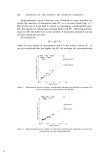
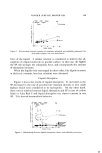
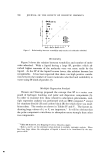
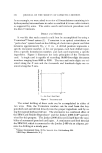
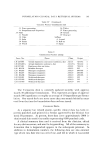
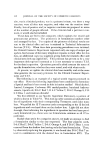
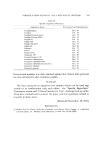
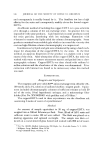
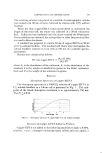
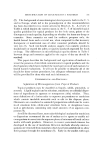
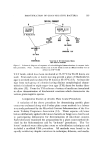
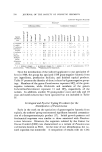
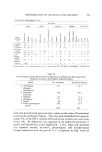
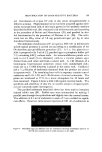
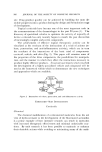
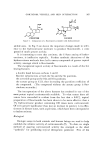
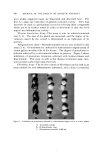
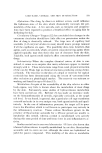
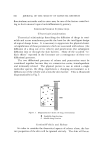
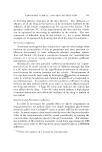
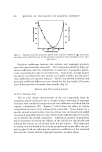
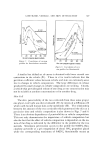
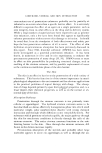
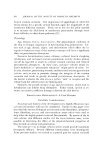
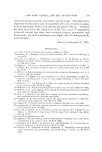
CORTICOiD, VEttlCLE, AND SKIN INTERACTION 577 • .t• IN VlVO ! • / ..:',. \. •VASOCONSTRICTION :. b.• %. ".. \ '"'",..,,."'... \ PENETRATION THEORETICAL \ ( PC x C v) io ' 0 40 60 80 I00 Per cent propylene glycol in vehicle Figure 7. Correlation of various profiles for fluocinolone acetonide / I ß / F .'"' / • 0 /&• / '.. • ?IN VITR0 ....' • // n' h / i i I I I 20 40 60 80 100 Per ,cent pmpylene glycol in vehicle Figure 8. Correlation of vari- ous profiles for tluocinonide A similar but shifted set of curves is obtained with lower steroid con- centrations in the vehicle (21). These in vitro results indicate that the partition coefficient values between vehicle and skin are extremely sensi- tive to changes in vehicle composition. The large differences in release produced by small changes in vehicle composition are striking. Clearly, a vehicle that provides good release of one drug at one concentration may not be suitable at another concentration or for another drug. Shin Cell The skin penetrability of the two corticoids from these same propyl- one glycol-water gels was then evaluated (21) by means of a diffusion cell which used excised human skin as the membrane (22). The relationship between the amount of the two corticoids which penetrated the skin at a particular time and vehicle composition is also shown in Figs. 7 and 8. There is an obvious dependence of penetrability cn vehicle composition. This not only demonstrates the importance of vehicle composition but also the fact that the effect of vehicle composition is dependent on the na- ture of the drug as indicated by the difference in the profiles for the two steroids. Maximum penetration occurs in the profile for 0.025% fluo- cinolone acetonide at a gel composition of about g0% propylene glycol while the corresponding maximum of 0.025% fluocinonide occurs a,t

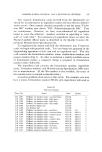
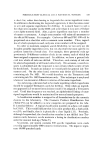
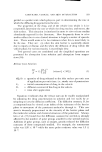
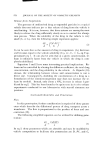
578 JOURNAL OF THE SOCIETY OF COSMETIC CHEMISTS about 75%. These maxima correspond to that minimal glycol composi- tion which is necessary to solubilize these concentrations of each steroid as may be ascertained from the solubility data in Fig. 6. Human Vasoconstriction Assay Once the phyiscal properties of several vehicles were ascertained re- garding release and penetration, their effectiveness was next evaluated by the in vivo vasoconstriction assay (23). The results obtained are also shown in Fig. 7 and 8. The per cent of sites responding 32 hours after application is plotted versus the gel composition. This profile strongly resembles the corresponding profiles for release and penetration. Comparison ol • the Product o.f Solubility and Partition Coefficient As can be seen from these release, penetration, and vasoconstriction profiles, the dependence on composi,tion was not necessarily simple. However, if one utilizes eq 3 and actually calculates the quantity (PC)C,, from propylene glycol-water solubility data and isopropyl myristate-ve- hicle partition coefficients (Fig. 6) and then plots this value versus vehicle composition in Figs. 7 and 8, the profile obtained closely parallels those obtained experimentally. A closer relation might have resulted if parti- tion coefficients between the stratum corneum and the v.ehicle were avail- able. Formulation Guidelines The data obtained illustrate the dependence of release rate, skin pene- tration, and in vivo vasoconstrictor response on vehicle composition for two steroids which have significantly different physical properties. The relationships between the physical properties of the drug and ve- hicle were shown to correlate well with the profiles of release, skin pene- tration, and vasoconstriction. The correlations have led to a working hypothesis which enables us to utilize the results of in vitro experimenta- tion with vehicle composition to aid in the design of clinically efficacious topical dosage forms. In general, an efficacious topical gel preparation is one in which: the concentration of diffusible drug in the vehicle, C•, for a given la- beled strength is optimized by insuring that all of the drug is in solu- tion the minimum amount of solvent is used to dissolve the drug completely and yet maintain a favorable partition coefficient
Purchased for the exclusive use of nofirst nolast (unknown)
From: SCC Media Library & Resource Center (library.scconline.org)