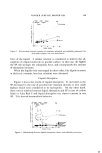
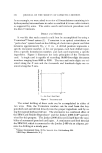
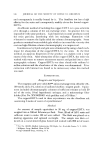
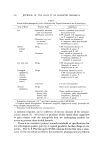
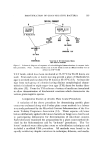
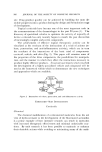
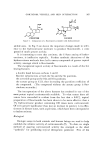
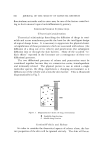
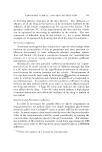
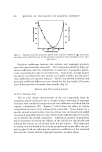
572 JOURNAL OF THE SOCIETY OF COSMETIC CHEMISTS fiuocinolone aceton[de and its esters may be one of the factors contribut- ing to their unusual topical anti-inflammatory potency. CORTICOID-VEHICLE INTERACTIONS Theoretical Considerations Theoretical relationships describing the diffusion o[ drugs in semi- solids and across membranes provide the basis for the intelligent design of topical dosage forms. It is necessary to appreciate the physical-chemi- cal significance of those parameters which are associated with release (the diffusion of a drug out of its vehicle) and penetration (the subsequent diffusion into or through the skin barrier). Many of the so-called "ve- hicle effects" reported in the literature are a consequence ooe these two diffusional processes. The ,two diffusional processes of release and penetration must be considered together because they are consecutive events, interdependent and intimately related. The physical picture is one in which a single molecular species, the drug, experiences a changing environment as it diffuses out of the vehicle and across the skin barrier. This is illustrated diagramat[tally in Fig. 5. BARRIER VEHICLE ß ß O-- O O O O O-•- O O ß ß o ß • I•O SINK Figure 5. Diagrammatical sketch of drug environment ß Insoluble drug fraction 0 Soluble drug fraction Corticoid-Vehicle and Release In order to consider the theoretical aspects of release alone, the bar- rier properties of the skin will be ignored entirely. The skin will be re-

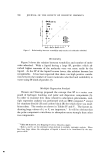
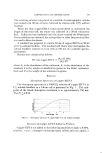
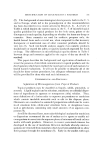
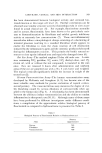
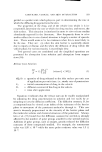
CORTICOID, VEHICLE, AND SKIN INTERACTION 573 garded as a perfect sink which plays no part in determining the rate at which the diffusing drug penetrates the skin. The properties of the drug, and of the vehicle into which it is in-, corporated, determine the rate at which the drug reaches, and enters, the skin surface. This situation is simulated in most in vitro release studies abundantly reported in the literature. How frequently these in vitro studies reflect the in vivo clinical situation is largely a matter of specula- tion. There would seem to be two instances when this is most likely to be the case. They are: (a) when the skin barrier is essentially absent due to injury or disease, and (b) when the diffusion of drug within the vehicle phase, for various reasons, is exceedingly slow. Two general cases are considered and the simplified equations are presented for absorption from solution and absorption from suspen- sions (16). Release from Solution dt - Co\/ (where Q 30%) (1) dQ/dt -- quantity of drug released to the skin surface per unit area of application per unit time i.e., steady rate of penetration. Co = initial concentrati•on of .drug in the vehicle. D,, -- diffusion constant of the drug in the vehicle. t : time after application Equation 1 indicates that the release rate can be readily manipulated by adjusting the drug concentration in solution and less easily by at- tempting to vary the diffusion coefficient. The diffusion constant, D, for a compound may be viewed as an index of the resistance of the barrier phase to movement of the penerrant molecules through it. This con- stant is inversely proportional to the viscosity of the barrier phase and the molecular volume and chemical structure of the penerrant. Scheup- lein et al. (17) found that the diffusion constant for steroids is strongly affected by the number of polar groups attached to the steroid nucleus. Addition of polar groups, such as oxygen, greatly reduced the diffusion constants of those compounds studied. For example, the testosterone value was 1.95 X 10 -• while the more polar cortisone value was 1.3 X 10-•- ø.
Purchased for the exclusive use of nofirst nolast (unknown)
From: SCC Media Library & Resource Center (library.scconline.org)