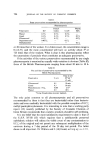
PRESERVATIVES FOR PHARMACEUTICALS 705 REQUIREMENTS OF PRESERVATIVES 'What constitutes satisfactory preservation?' is a question that has been asked by many and indeed was the subject of a paper presented in 1958 (6). The inclusion in a product of a bacteriostatic concentration of a preservative has often been regarded as adequate and many examples can be found of recommended concentrations of preservatives being at the level indicated in tests for minimum inhibitory concentrations. One does not have to seek far for the reason. It is that because the fundamental meta- bolism of all cells is essentially similar, a compound which shows marked toxicity to microbial cells is likely to show at least some toxicity to human cells, depending upon the mode of application. This philosophy, though understandable, does not necessarily make for adequate preservation. As far as the preservation of ophthalmic solutions is concerned a very definite shift in attitude is detectable. Crompton (7) originally suggested that ophthalmic solutions should incorporate a bacteriostatic and indeed reconunended 0.005•o chlorhexidine which is certainly bacteriostatic rather than bactericidal (7). He later declared (8) that reliance on bacteriostatics can be hazardous and maintained that ophthalmic solutions should contain a quickly acting bactericide, and Williams and Boehm (9) criticized the Solution for Eye Drops (B.P.C. 1959) on the grounds that it was not bactericidal. Perhaps the most categorical statement is due to Kohn, Gershenfeld and Barr (10) who believe that any substance having a steriliz- ing time greater than 1 h is too slow-acting for use as a preservative in ophthalmic solutions. I am happy to observe that the preservatives cur- rently recommended by the British Pharmaceutical Codex for eye drops appear in most situations to meet this requirement and furthermore they do so without there having been criticisms of their use on the grounds of toxicity or irritancy. There are, however, exceptions to this general state- ment. For example, Ridley (11) found 0.0045/0 phenylmercuric nitrate to be necessary in eye drops to ensure freedom from contamination a concen- tration four times that recommended by the Codex. There is nothing like the weight of authoritative advice for products other than ophthalmic solutions but it is instructive to consider what are regarded as adequate preservatives by several pharmacopoeias (Table I). Of the preservatives shown there is agreement only on the recommended concentration for phenol. In the case of cresol the specified concentrations range from 0.30 to 0.50•o and since the concentration exponent for cresol is about six the activity of the more concentrated solution is about (1.66) 6

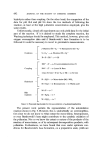
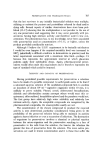
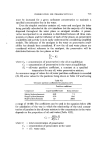
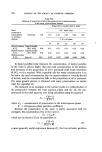
706 JOURNAL OF THE SOCIETY OF COSMETIC CHEMISTS Table I Some preservatives recommended by pharmacopoeias Pharmacopoeia French Pharm. Preservative B.P. Codex U.S.P. Helv. Phenol 0.5 • 0.5 •o 0.5 • -- Cresol 0.3 % 0.3 % 0.5 % 0.3 •o Chlorocresol 0.1 •o 0.3 % -- 0.2 % Organomercurial 0.001% -- 0.1% -- Methylparaben -- -- -- O. 1% or 20 times that of the weaker. For chlorocresol, the concentration range is 0.1-0.3• and the most concentrated will have an activity about 30 or 725 times that of the weakest. What is clear is that pharmacopoeias reflect the uncertainty of precisely what constitutes an adequate preservative. If the activities of the various preservatives recommended by any single pharmacopoeia is examined an equally wide variation is obvious (Table Ii), those of the British Pharmacopoeia ranging from about 10 min to 10 h. Table II The activities of preservatives recommended by the British Pharmacopoeia Preservative %w/v Time to kill 10 a ml-1 E. coli Chlorocresol 0.1 10 min Cresol 0.3 30 min Phenylmercuric NO a 0.001 2 h* Phenol 0.5 10 h *Using thioglycolate recovery medium. The only point common to all pharmacopoeias and all preservatives recommended by them is that they are bactericidal rather than bacterio- static and even markedly bactericidal with the possible exception of 0.1•o methyl parahydroxybenzoate. It is interesting to note that a working party report (12) recently published by the Society of Cosmetic Chemists of Great Britain recommends that cosmetic products should be self sterilizing. It is my belief that the most satisfactory requirement to date is that of the U.S.P. XVIII (13) which requires that a satisfactorily preserved ophthalmic solution will reduce the viable count of any contamination to 0.1}/o of the original and not permit any subsequent multiplication of the survivors during a 7 day period of the 28 day test period. The latter clause is all important. Dr Walters and I (14) found, as long ag• a• 1)55,
Purchased for the exclusive use of nofirst nolast (unknown)
From: SCC Media Library & Resource Center (library.scconline.org)