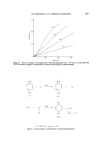
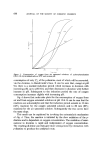
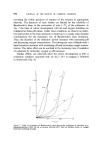
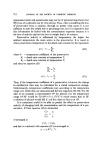
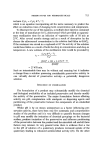
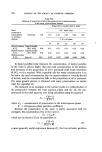
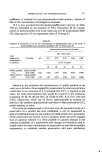
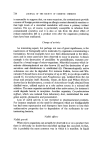
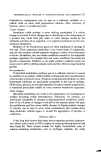
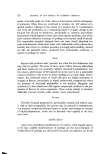
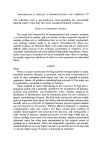
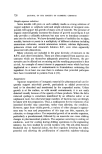
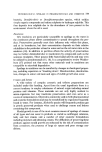
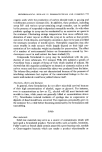
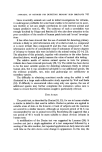
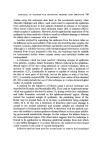
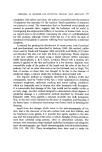
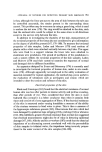
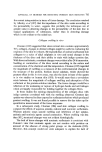
PRESERVATIVES FOR PHARMACEUTICALS 713 we have Cx•tx = C•.,,t•. 0(v:- Vl ) which is an equation incorporating all the terms necessary to predict the effect on extinction time of changing both concentration and temperature. To illustrate the use of the equation, a multiple dose injection contained at the time of manufacture 0.1•o chlorocresol which provided an approxi- mate sterilization time for an infection of vegetative cells of 10 min at 25øC. After several months storage and as a result of absorption by the closure the chlorocresol concentration in the solution had fallen to 0.04•o. If the container was stored in a cupboard at 10 ø the activity of the solution would have fallen as a result of both the drop in concentration and drop in temperature. A new estimate of the sterilization time would be provided by Cxntl 0(•':- tz = C2 n (0.1) ø x 10 x -- -- (0.04)0 = 27 470 min. Such an interminable time may be without real meaning but it indicates a change from a solution possessing considerable preservative activity to one virtually devoid of preservative activity--a potentially dangerous solution. INFLUENCE OF FORMULATION The formulation of a product may substantially modify the chemical and biological availability of an included preservative and thereby modify the activity of the preservative. The major formulation factors affecting activity are pH, complexation with emulgents or dispersing agents and partitioning of the preservative between the components of an emulsified product. Whilst pH is by no means unimportant as a factor influencing pre- servative activity, there have been very few systematic and comprehensive studies of the problem and it is very difficult to quantify because changes in pH may modify the ionization of chemical groupings on the bacterial surface, produce ionization of the preservative and influence partitioning of the preservative between the product and the microbial cell and all three factors may interact. In very general terms there is evidence that a rise in the pH of solution of a quaternary produces increased uptake of the quaternary leading to enhanced antimicrobial activity (21). On the other

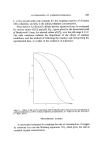
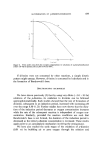
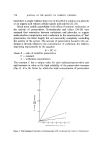
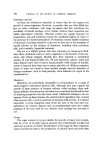
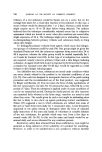
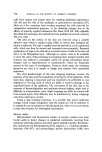
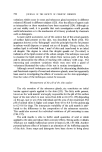
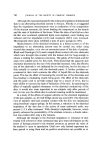
714 JOURNAL OF THE SOCIETY OF COSMETIC CHEMISTS hand there is ample evidence that a rise in the pH of a solution of a phenolic or an organic acid reduces cellular uptake and activity (22, 23). Much more readily quantifiable is the effect of nonionic surfactants on the activity of preservatives. Kostenbauder and others (24-26) have assumed that interaction between surfactants and phenolics or organic acids involves complexation and a reduction in the concentration of 'free' preservative, the latter largely but not necessarily completely controlling the activity of the system. The amount of preservative bound to the sur- factant is directly related to the concentration of surfactant, the relation- ship being representable by the equation R = SC+I where R = ratio of total/free preservative C -- constant $ = surfactant concentration. The constant C has a unique value for each surfactant-preservative pair and increases in value as the lipid solubility of the preservative increases (Fig. 3). R is the factor by which the total concentration of preservative 2O c 40- 3o B A 0 I I I I I I I 2 4 6 8 I0 12 I• Cetommcrogol conch (% w/v) Figure 3. The binding of phenolics to Cetomacrogol (27). A, phenol B, cresol C, chlorocresol.
Purchased for the exclusive use of nofirst nolast (unknown)
From: SCC Media Library & Resource Center (library.scconline.org)