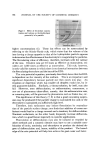
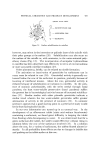
J. Soc. Cosmet. Chem., 25, 853-861 (December 6, 1972) Gooxidation of p-Phenylenediamine and Resorcinol in Hair Dyes MUKUND J. SHAH, Ph.D.,* WILLIAM S. TOLGYESI, Ph.D.,* and A.D. BRITT, Ph.D.J' Presented November 9, 1971, before the Mid-Atlantic Chapter, Baltimore, Md. Synopsis--The COOXIDATION of P-PHENYLENEDIAMINE and RESORCINOL with hydrogen peroxide was investigated in alkaline solutions. A major specific product compo- nent was separated by thin-layer and column CHROMATOGRAPHY and identified to be a TRINUCLEAR PRODUCT. The role of this component in HAIR DYEING is discussed. INTRODUCTION Over the years, several publications have appeared (1-15) dealing with the oxidation of p-phenylenediamine (PPD), and the structure of the major product, Bandrowski's base, was defined by various workers (16-18). The total product composition from the oxidation of PPD was analyzed by Dolinsky et al. (17). On the other hand, the literature dealing with compositions containing more than one dye precursor is very limited, although many other components, especially resorcinol, are important components of oxidative hair dyes and are used as modifiers in conjunction with PPD. In 1940, Cox (19) suggested the formation of indophenols from the oxidation of PPD and resor½inol mixtures, which on further oxidation yield oxazines (Fig. 1). The evidence for oxazines by Cox was based on the qualitative color reactions. * The Gillette Research Institute, 1413 Research Blvd., Rockville, Md. 20850. J- Department of Chemistry, The George Washington University. Washington, D.C. 20006. 853

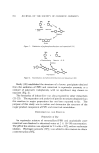
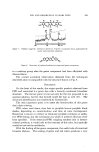
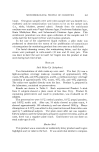
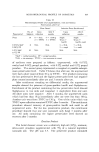
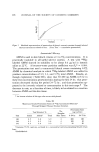
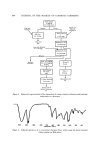
854 JOURNAL OF THE SOCIETY OF COSMETIC CHEMISTS Figure 7. NH 2 p - Phenylenedi- Resorcinol amine H2N_•..N •O Indophenol Oxazine Oxidation ofp-phenylenediamine and resorcinol (19) Figure 2. NH2 OH NH2 p- Phenylenediamine Resorcinol ( 1:1 ) .•, 1 øxidatiøn Polyindophenol Cooxidation ofp-phenylenediamine and resorcinol (20) Brody (20) established the structure of a brown precipitate obtained from the oxidation of PPD and resorcinol in equimolar amounts, as a mixture of polymeric indophenols, with no significant ring closure to oxazines (Fig. 2). The formation of indoaniline was also proposed by other researchers (21-23). The separation and analysis of specific structures obtained from this reaction in major proportions has not been reported so far. The purpose of this study was to isolate and determine the structure of the major product component of PPD and resorcinol cooxidation. EXPERIMENTAt, AND RES[?LTS Preparation of Dye An equimolar mixture of recrystallized PPD and analytically pure resorcinol was dissolved in deionized water at 2 X 10-"M concentration. The pH of the solution was adjusted to 9.5 with a 20% sodiron carbonate solution. Hydrogen peroxide (30%) was added to this mixture to obtain a concentration of 3%.
Purchased for the exclusive use of nofirst nolast (unknown)
From: SCC Media Library & Resource Center (library.scconline.org)