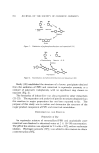
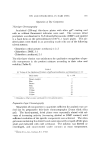
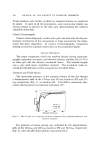
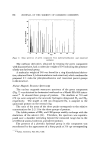
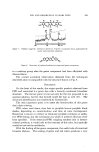
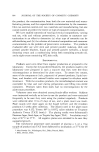
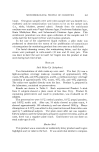
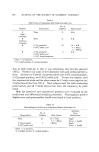
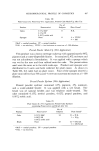
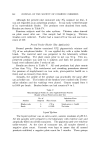
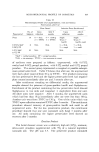
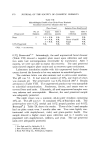
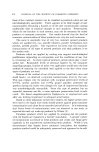
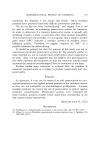
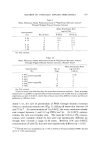
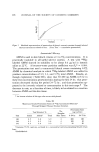
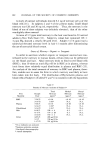
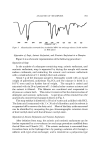
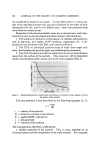
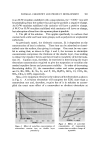
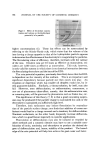
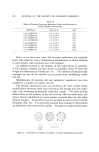
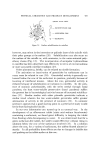
HAZARDS OF TOPICALLY APPLIED MERCURIALS Table I Mean Maximum Steady Penetration Rates of 2øaHg Phenyl Mercuric Acetate a Through Stripped Human Stratum Corneum 877 Mean Penetration Rate Concentration (ng/cm2/hr) (%) No. of Tests 0-24 hr 24-72 hr 0.06 4 0.2 0.1 0.13 4 0.3 0.1 8 4 O.2 0.25 8 2 0.3 0.50 12 3 1 1.00 12 2 1 a In 95% alcohol. Table II Mean Maximum Steady Penetration Rates of 2øgrig Phenyl Mercuric Acetate • Through Stripped Human Stratum Corneum (Parallel Tests) b Mean Penetration Rate Concentration No. of (ng/cm•/hr) (%) Tests 0-24 hr 0.001) 5 0 03 0631 tested in parallel ' 0 5 2 0.063) 11 .125/ d 7 2 0.250• teste inparallel 0 8 5 0.500J 10 2 • In 95% alcohol. b Tested at same time with discs from the same sheet of stratum corneum. Error is thereby reduced and it is possible to separate effects of concentration more readily than in a nonparallel experiment, as done in Table I, where discs of tissue come from different sources and tests are performed at different times. about 1 hr, the rate of penetration of PMA through stratum corneum rises to a maximum steady rate (Fig. 1), falling off somewhat between 24 and 72 hr.* At concentrations of 1 to 0.06%, the mean maximum steady rate ranged between 5 and 0.2 ng PMA/cm2/hr. At 0.001% concen- tration, the rate was virtually zero. The rates for 0.06 to 1.0% concen- tration were variable (Table I), but were not significantly different al- though they covered a range of 20 times. Between 0.06 and 0.001% concentration (Table II), the rates were significantly different (p 0.02). * The fall off in rate is significant (p 0.05) at 0.25% or less concentration of PMA but not .at 0.5 or 1.0% concentration.

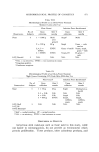
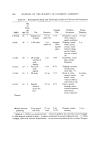
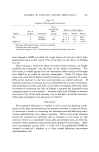
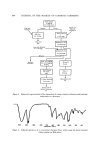
878 JOURNAL OF THE SOCIETY OF COSMETIC CHEMISTS Time (heurs) Figure I. Idealized representation of penetration of phenyl mercuric acetate through isolated stratum corneum as related to time. (Cum. Pen. = cumulative penetration) Ammoniated Mercury AMM is used in skin bleach creams at 1 to 5% concentrations. It is practically insoluble in all useful solvent systems. A test with 2øaHg- labeled AMM showed its solubility to be about 0.6 t•g/ml in isotonic saline at 22 øC. A benzene-water partition coefficient was Ka 25 = 0.004. The penetration test used a commercial bleach cream containing 0.9% AMM by chemical analysis to which 2øaHg-labeled AMM was added to produce concentrations of 3.9, 5.4, and 9.9% total AMM. Results, al- though exploratory (Table III), show that 50-200 ng AMM/cm2/hr in these test concentrations penetrated skin during the first 24 hr that pene- tration decreased during the period 24-72 hr and that penetration ap- peared to be inversely related to concentration in this test range.* The decrease in rate, as a function of time, is likely to be related to a reaction between AMM and the skin tissue. * An inverse relation of this type also occurs with phenol. Table III Maximum Steady Penetration Rates of :øaHg Ammoniated Mercury a Through Stripped Human Stratum Corneum Penetration Rate Test Material, % No. (ng/cm2/hr) Samples Test Initial Added b Total Skin Tissue 0-24 hr 24-72 hr 140 0.9 3.0 3.9 4 200 100 144 0.9 4.5 5.4 4 100 50 141 0.9 9.0 9.9 5 50 20 a Contains 79.6% mercury, as found in a commercial mercury-containing bleach cream base. b Radiolabeled.
Purchased for the exclusive use of nofirst nolast (unknown)
From: SCC Media Library & Resource Center (library.scconline.org)