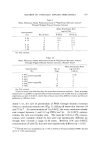
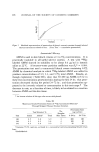
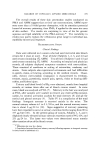
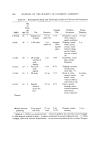
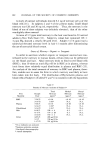
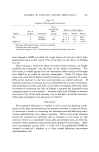
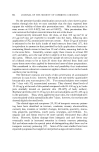
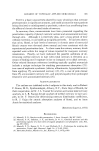
HAZARDS OF TOPICALLY APPLIED MERCURIALS 885 There is a basic unawareness shared by many physicians that mercury penetrates skin in significant amounts, and could account for some patients being dismissed or misdiagnosed as psychotic, rather than as suffering from the effects of chronic elevated intake of mercury. In summary then, measurements have been presented regarding the penetration capacity of phenyl mercuric acetate and ammoniated mercury through skin. Although it is extremely slow, over a long period of time without excretion, it can build up to significant levels. It has been shown that urine, blood, or hair levels of mercury in chronic users of mercurial bleach creams were elevated above normal and were consistent with the experimental penetration data. In three cases the urinary mercury levels reported were within the range of values reported for inorganic mercury intoxication. Finally, we have indicated the possible usefulness of de- termining methyl mercury in hair when total mercury is elevated, as a means of finding out if exposure is due to inorganic or to alkyl mercury. Other related literature references involving topically applied mercurials include a unique technique for studying percutaneous absorption (21). two cases of nephrotic syndrome (edema, albuminuria, hypoproteinemia) from applying 5% ammoniated mercury (22, 23), a case of pink disease from 2% ammoniated mercury (24), and polyneuropathy from prolonged treatment with ammoniated mercury (25). ACKNO!NLEDGMENTS The authors are indebted to the 6 subjects in this study and to Robert F. Korns, M.D., Epidemiologist, Albany, N.Y., State Dept of Health, for their cooperation, to Dr. J. L. Tanner for neutron activation total mercury analyses, to L. R. Kamps for glc analyses of methyl mercury in hair sam- ples, to Dr. F. Demerj for determining mercury distribution coefficients, to R. J. Gajan for atomic absorption analyses of blood, and to Anne Amsie for statistical analyses. (Received June 12, 1972) REFERENCES (1) Marzulli, F. N., Barriers to skin penetration, J. Invest. Dermatol., 39• 387 (1962). (2) Marzulli, F. N., Callahan, J. F., and Brown, D. W. C., Chemical structure and skin penetrating capacity of a short series of organic phosphates and phosphoric acid, Ibid., 44, 339 (1965). (3) Marzulli, F. N., Brown, D. W. C., and Maibach, H. I., Techniques for studying skin penetration, Toxicol. Appl. Pharmacol., Suppl. No. 3, 76-83 (1969). (4) MerckIndex, 8th Ed., Merck & Co., Inc., Rahway, N.J., 1972, p. 818.

886 JOURNAL OF THE SOCIETY OF COSMETIC CHEMISTS (lO) (11) (12) (18) (19) (20) (21) (22) (22) (24) (25) (5) Marzulli, F. N., and Maibach, H. I., Antimicrobials: Contact sensitization in man, Brit. J. Cosmet. Sci., scheduled for publication, April 1973. (6) Goldwater, L. J., Jacobs, M. B., and Ladd, A. C., Absorption and excretion of mercury in man, Arch. Environ. Health, 5, 537-54 (1962). (7) Hatch, W. R., and Ott, W. L., Determination of submicrogram quantities of mercury by atomic absorption spectrometry, Anal. Chem., 48, 2085 (1968). (8) Margosis, M., and Tanner, J. T., Determination of mercury in pharmaceutical products by neutron activation analysis, J. Pharm. Sci., 61,936 (1972). (9) Kamps, L., and McMahon, B., Utilization of the West66 procedure for the determination of methyl mercury in fish by gas-liquid chromatography, J. Ass. Offc. Anal. Chem., 55,590 (1972). Sollman, T., A. Manual of Pharmacology and Its Application to Therapeutics and Toxicology, 8th Ed., W. B. Saunders, Philadelphia, Pa., 1957, pp. 1314, 1319. Nelson, N., et al., Hazards of mercury: Special report to the Secretary's Pesticide Ad- visory Committee, DHEW, Environ. Res., 4, 21 (1971 ). Letter from Robert F. Korns, M.D., State of N.Y. Dept. of Health, New Scotland Ave., Albany, N.Y. 12201, to W. W. Elledge, M.D., medical epidemiologist, P.O. Box 709, Olympia Airport, Olympia, Wash., August 5, 1971. (13) Swensson, A., Lundgren, K. D., and Lindstrom, O., Distribution and excretion of mer- cury compounds after single injection, Arch. Ind. Health, 20, 432 (1959). (14) West66, G., Determination of methyl mercury compounds in foodstuffs, Acta Chem. &and., 20, 2131 (1966). (15) Methyl mercury in fish, Nord. Hyg. Tidskr., Suppl. 4, Stockholm (1971). (16) Maibach, H. I., University of California Medical Center, San Francisco, Contract No. CPF 69-28, 1969. (17) Clarkson, T. W., and Shapiro, R. E., The absorption of mercury from food, its significance and new methods of reinoving mercury from the body, Proc. Syrup. on Mercury in Man's Environment, The Royal Society of Canada, Ottawa, Canada, February 15-16, 1971. Frithz, A., Cellular changes in the psoriatic epidermis, Acta Dermato-Venereol. (Stockholm), 50, 345 (1970). Eyl, T. B., Organic mercury food poisoning, New Engl. J. Med., 284, 706 (April 1971 ). Browning, E. C., Toxicity of Industrial Metals, Butterworths, London, 1969, pp. 226-42. Silberberg, I., Percutaneous absorption in man, J. Invest. Dermacol., 50, 323-31 (1968). Williams, N. E., and Bridge, H. G. T., Nephrotic syndrome after the application of mer- cury ointment, Lancet, 2, 602 (1968). Silverberg, D. S., McCall, J. T., and Hunt, J. C., Nephrotic syndrome with use of am- moniated mercury, Arch. Int. Med., 120, 581 (1967). Ward, O. C., and Hingerty, D., Pink disease from cutaneous absorption of mercury, J. It. Med. Ass., 60, 94 (1967). Ross, A. T., Mercuric polyneuropathy with albumino-cytologic dissociation and eosino- philia, J. Amer. Med. Ass., 188, 830 (1964).
Purchased for the exclusive use of nofirst nolast (unknown)
From: SCC Media Library & Resource Center (library.scconline.org)